One and Done
Signal Lost: The One-Album Career of an AOR Band That Arrived Two Years Too Late
In April 1989, four working Los Angeles musicians finished recording one of the most accomplished AOR albums of the decade at Fantasy Studios in Berkeley. Their producer believed it was the best work he had ever done. Their label dropped them within months of its release. The lead vocalist — already established through King Kobra, soon to be established through Unruly Child — would later transition and lose access to the music industry that had built her career. A retrospective on Signal's Loud and Clear, the album that should have sold millions, and on Marcie Michelle Free, the singer who carried its eight months of work into the rest of her life until her death in October 2025.
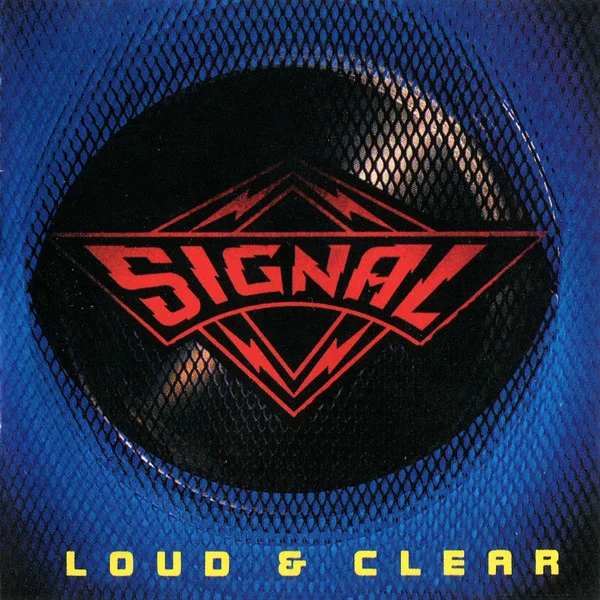
The third installment of the One and Done section engages with the album the section’s framework was substantially built to recognize. Most of the bands the section has covered — Tuff, Femme Fatale — released their one major-label record into commercial conditions the standard rock-history vocabulary at least had language for: imperfect bands, uneven albums, complex but documentable causes of the one-album truncation. Signal’s Loud and Clear, released by EMI in 1989, fits the structural pattern only in its commercial outcome. The album itself sits in a different category entirely. By essentially every measure AOR operated under during its commercial peak, it is one of the most accomplished examples the genre ever produced. It sold trivially. The label dropped the band within months. And it has remained continuously available, sold and resold across decades to a dedicated audience that has consistently understood what the original 1989 release did not.
This piece treats Loud and Clear as the artifact that audience has always known it to be — substantive work by professional musicians at the peak of their individual capabilities, that the marketplace was simply not prepared to receive in the specific moment of mid-to-late 1989. It also engages seriously with Marcie Michelle Free, the lead vocalist whose pre-Signal career (King Kobra), Signal moment, post-Signal career (Unruly Child), and post-1993 personal transition together constitute one of the more genuinely interesting careers in late-period American melodic rock. Free died on October 24, 2025, at age 71 — recently enough that the broader assessment of her career has not yet been completed. What this piece can do, in lieu of that assessment, is take the Signal moment seriously as the discrete artifact it has been for thirty-six years: a snapshot of what one configuration of musicians, one producer, and one A&R relationship could accomplish in the narrow window between the AOR peak the album was engineered to fit alongside and the cultural reorganization already making AOR a structurally untenable proposition.
The Pre-Signal Career: King Kobra and What Came Before
Mark Edward Free was born on April 12, 1954, in South Bend, Indiana, and by nineteen — living in Flint, Michigan, in 1973 — had begun singing professionally. The 1970s arc was the kind the American rock infrastructure produced in abundance: regional bands, club work, a gradual relocation toward Los Angeles in the early 1980s, the slow accumulation of credibility across years of unglamorous work, with no clear marker of whether the breakthrough would ever come.
It came through Carmine Appice. The drummer — Vanilla Fudge, Cactus, the Rod Stewart band, Beck, Bogert & Appice — was assembling King Kobra in 1984, initially as a solo album before deciding to recruit a full band, and brought Free in as lead vocalist. The band signed to Capitol that same year and recorded two albums during Free’s tenure, Ready to Strike (1985) and Thrill of a Lifetime (1986), both reaching modest but real visibility. Free’s performances across them established one of the more distinctive voices in mid-1980s American melodic hard rock — an unusual range, substantial dynamic control, and the upper-register power the AOR template specifically required. Free left King Kobra in November 1986, at twenty-eight, in no acrimonious sense — wanting other interests, the band’s trajectory never producing the platinum breakthrough Capitol had hoped for. The next major project would, in retrospect, be the one that should have carried the career into the tier King Kobra had not quite reached.
The Fugitive Kind Becomes Signal
The project that became Signal was originally something else. In 1987, producer Peter McIan — whose CV included substantial work with Men at Work — began assembling a solo project under the working name “The Fugitive Kind,” bringing in keyboardist-bassist-producer Erik Scott (Alice Cooper, Kim Carnes, Carl Palmer’s PM), who in turn brought in songwriter Mark Baker, with drummer Jan Uvena (Alcatrazz) completing the rhythm section. Free joined later in 1987, after substantial preliminary work, and the arrival shifted the project’s identity from “McIan solo project with backing musicians” toward a full band — significant enough that the working name no longer described what it had become.
The rename came through Ron Fair, then a new senior A&R figure at EMI, who called the group Signal; Free had proposed alternatives, one of them “Unruly Child,” a name she would eventually use for the band she formed after Signal. Fair’s choice prevailed, and the band that signed to EMI in late 1987 or early 1988 bore a name none of its four primary members had chosen. The fourth member was guitarist Danny Jacob, recruited afterward (a sideman with Sheena Easton and Stan Bush & Barrage), completing the recording configuration — Free on vocals, Jacob on guitar, Scott on bass and keyboards, Uvena on drums. The irony of the imposed name — the band’s identity coming from the A&R man rather than any of the musicians — would, in retrospect, foreshadow the broader relationship the band had with the label across the album’s commercial cycle.
Fantasy Studios, January Through April 1989
Recording took place at Fantasy Studios in Berkeley, from the first week of January 1989 to the third week of April, with EMI assigning Kevin Elson to produce — a man whose CV by 1989 included Journey’s Frontiers and Raised on Radio, Europe’s The Final Countdown, and Mr. Big’s debut (recorded earlier that year at the same studio). Bringing Elson in was, by every commercial measure, the label’s signal of how seriously it took the project; he was one of the most accomplished commercial-rock producers operating, with a record of delivering platinum AOR. The budget Free has documented captures the commitment: a $182,500 advance, Elson’s fee of $90,000 plus roughly two to three percent of sales, with studio costs consuming most of the rest. After production costs, Free recalled receiving about $5,000 in personal compensation — a figure she said was “possibly even stretching it a bit.” The band lived together in rented condos in Emeryville for the duration.
Elson’s approach was less experimental than the era’s template might suggest. The band had pre-rehearsed extensively in Burbank, and Scott had pre-produced and arranged substantial portions before Elson arrived; as Free put it in a 2010 RockUnited interview, “Erik Scott had a grip on the reigns and kept Kevin pretty much on the plan he had for how we were to sound.” Elson contributed the technical expertise — microphone placement, the mixing approach, the decisions that shaped how the performances translated to record — with the vocals done in about two weeks and the remaining time given to guitar overdubs and keyboard layering. One decision Free remembered clearly was the microphone Elson reserved for her vocals, the vintage tube AKG C-12; her reaction was mixed, the mic “looked great” but had not “knocked her out,” lacking, in her assessment, “richness and body.” It captures something about the broader approach: the album is polished and professional, but it does not sound like a record that took particular sonic risks. The polish is its strength and, in a more critical reading, its limitation. Mastering was completed by Bob Ludwig at Masterdisk in New York — another credit that signaled the label was treating Loud and Clear as a major debut expected to compete with the established AOR catalog.
The Album
Loud and Clear was released by EMI in 1989 — ten tracks, about forty-two minutes. It opens with “Arms of a Stranger,” a slower ballad Free co-wrote and named as one of her favorites, followed by the lead single “Does It Feel Like Love”; the rest run “My Mistake,” “This Love This Time,” “Wake Up You Little Fool,” “Liar,” “Could This Be Love,” “You Won’t See Me Cry,” “Go,” and “Run Into the Night.” Two further session recordings — “You and I Need Love” (a Free co-write with Peter Glenister) and “Runaway” (Jacob, Scott, Free) — did not make the sequence.
Heard in 2026, it is a substantially accomplished AOR record doing nearly everything the template required, executed by professionals at their peak. The arrangements are tight, the production polished, the keyboard work (Scott, with additional programming by Tom Coster Jr.) supplying the textural depth late-1980s AOR demanded, Jacob’s guitar and Uvena’s drumming both restrained in the best sideman sense — supporting the song without overworking it. The standout performances are unambiguous. “Arms of a Stranger” is the emotional centerpiece, Free’s vocal carrying it through multiple registers from restrained verse to expansive chorus; “Does It Feel Like Love” is the most commercially direct track, built for radio in the Journey/Foreigner/Bad English lineage; “Wake Up You Little Fool” shows the harder edge; “Go” and “Run Into the Night” push toward rock-radio closers; and “Liar,” darker and more pointed than the album’s romantic material, is the most surprising track, suggesting an editorial range the songwriting rarely let surface. What the record lacks, in the specific sense the era required, is a weak point — ten tracks of remarkably consistent quality, no obvious filler, nothing the dedicated listener skips, more cohesive than substantial portions of its more successful peers (Bad English’s sixty-two-minute debut, out the same summer, works less consistently). The one friction worth noting: “My Mistake,” the track Free named as her least favorite, was an outside song the label insisted the band record — common enough across the era’s AOR debuts, but a small, real index of the gap between the album EMI released and the one the band would have made on its own terms.
The clearest endorsement came not from the press but from Elson himself, who has reportedly called the Signal album his best mix and production work — a substantial claim from a man with multiple multi-platinum Journey records behind him. The musicians who made it, and the producer who supervised it, believed they had made something significant. The marketplace did not reward the belief.
The Orphaning
What happened between the 1989 release and the band’s dissolution in late 1990 is the fact the standard vocabulary has the hardest time engaging. The album did not fail the way most one-album debuts fail — through weak songwriting, poor production, or structural problems with the material. It failed because EMI, having committed substantial production resources, then declined to commit the promotional resources the release needed to find its audience.
The A&R dynamic is documented. The EMI executive who signed Signal was Bruce Dickinson — a senior figure in the label’s commercial-rock division, and not the Iron Maiden vocalist of the same name, but a separate music-industry figure entirely — who signed the band on his enthusiasm and the calculation that AOR was still viable in 1988 and 1989. Shortly after, Dickinson left EMI for a Vice President position at MCA, and the project was, in Free’s term, “orphaned”: the champion whose enthusiasm had produced the signing was gone, and the band’s continuing development had no internal owner. The replacement structure was far less invested; VP of A&R Jerry Griffith took some interest near the end of the band’s tenure, but, in Free’s framing, “the writing was on the wall.” Promotion was limited to the lead single; a planned second single, “Arms of a Stranger,” was never released; the marketing campaign was abandoned within months.
The orphaning compounded a deeper timing problem. The AOR template Loud and Clear had been built for was already declining as the dominant register by mid-1989 — the Foreigner/Loverboy/Journey peak had passed earlier in the decade, and rock radio was increasingly programming against the established catalog toward the harder material the hair metal peak was making visible. Slaughter’s Stick It to Ya, out a few months later, became the benchmark by which labels were measuring new signings — a different calculation entirely from the one that had produced the Signal deal. Free captured it directly in 2010: “Slaughter was the flavor of the month as we were both released about the same time… That gives you an idea what we were up against. Had I come out with King Kobra then we may have had a shot.” The combination was enough to ensure a trajectory far below what the album’s quality warranted. By late 1989 EMI had effectively stopped promoting it; Signal played live only five or six times, mostly label-organized showcases, despite a live capability Free remembered as substantial. The band never became a touring concern because the label never funded one. By October 1990, Free had left, and the band dissolved soon after.
Critical Reception, Then and Now
The contemporary reception was muted in essentially every measurable sense — limited reviews, little attention from the magazines that covered the era’s major AOR releases, trade coverage focused on the album’s disappearance from EMI’s priorities rather than its content. The retrospective reception, particularly over the past two decades, has been the opposite. The dedicated AOR and melodic rock community has consistently identified Loud and Clear as one of the genre’s most accomplished and overlooked releases, ranked “amongst the greatest albums of US AOR” by Metal Jukebox and described by the Rock Candy Records reissue as a classic “no self respecting fan of the genre should be without.” The 2000 Axe Killer remaster and subsequent Rock Candy reissues have kept it in circulation for a quarter-century. The recurring framing — that the record “should have sold a billion copies” — captures what it has come to represent: not a forgotten classic so much as a continuously rediscovered one, the AOR album the marketplace failed to support when it should have. That failure was a feature of the commercial conditions it was released into, not a verdict on what the album actually was.
The Post-Signal Career: Unruly Child
The next project carried the name Free had unsuccessfully proposed for Signal itself. Unruly Child, formed in 1991, paired her with guitarist Bruce Gowdy (formerly of Stone Fury), keyboardist Guy Allison, bassist Larry Antonino, and drummer Jay Schellen — a more genuinely collaborative configuration than the one assembled around an existing solo project. They signed to Interscope and released a self-titled debut in 1992. By most assessments it should have extended Free’s career: stronger material, a more aligned production approach, a real portion of the AOR audience reached. But the same reorganization that took down the broader hair metal cohort constrained it — modest sales, a limited tour, visibility at roughly the scale Signal had occupied.
What happened next changed the trajectory entirely. In November 1993, about a year and a half after the Unruly Child debut, Free came out as a trans woman, taking the name Marcie Michelle Free — the resolution, by her own accounts, of gender dysphoria she had carried through her entire prior career. She has been candid about the cost. After coming out, in her framing, her “whole musical world quickly fell apart”; the industry relationships she had built through King Kobra, Signal, and Unruly Child substantially withdrew. She characterized the transition as a “decision between life and death” — a step she described as structurally necessary for her survival, whatever its professional consequences, and those consequences were severe. By 1995 she had moved to Michigan to be near family, largely withdrawn from the industry, and taken work with a mortgage company, recording only sporadically through the following years (including solo material titled Tormented); the prolific career the Signal and Unruly Child records had documented effectively paused for nearly fifteen years.
What brought her back was Unruly Child itself. The 2009 reactivation — the same 1992 lineup, eighteen years older — produced Worlds Collide (2010), framed as the long-delayed sequel to the debut, followed by Down the Rabbit Hole (2014), Can’t Go Home (2017), and Big Blue World (2019): a sustained collaboration that ran roughly fifteen years until her death, reaching the small but committed melodic rock audience that had engaged with her work across the whole arc.
What October 24, 2025 Meant
Marcie Michelle Free died on October 24, 2025, at age 71; the cause has not been publicly documented. Her death was announced by Jay Schellen, the Unruly Child drummer who had worked with her across more than three decades, in a statement that captured what those closest to her had long recognized.
Carmine Appice, who had given Free her first major-label opportunity in 1984, also acknowledged her death, and the broader melodic rock community responded with the kind of outpouring that demonstrated her actual standing within the genre — a standing the wider rock-criticism vocabulary outside that community had consistently underestimated. What the death does to the assessment of Loud and Clear specifically is something that vocabulary is still working through. The album no longer exists as an artifact whose reception could be shaped by the singer’s ongoing decisions. The work is complete: the performances, the vocal capabilities across the ten-track sequence, the editorial scope she found within the constraints of outside-written material — all now historically fixed in a way they had not been across a continuing career. The discrete moment is now bounded on the other side by the conclusion of the career it briefly defined.
What the Album Is Now and the One and Done Frame
The Signal moment lasted, commercially, about fifteen months — from the January 1989 sessions to the October 1990 dissolution. The album has operated as an active artifact for thirty-six years since, sustained by the Axe Killer and Rock Candy reissues and the audience that has continued to find them. That gap between brief commercial life and long cultural life is precisely what the One and Done section is built to recognize — and it is worth being exact about what the category is and is not. It is not “bands whose only album wasn’t very good.” It is “bands whose only album existed under structural conditions that foreclosed the reception it deserved.” Signal fits it cleanly. The album was not commercially unsuccessful because it was unsuccessful work; it was unsuccessful because the orphaned A&R relationship, the shifting genre template, and the structural retreat from AOR as a label priority had together foreclosed the reception the music should have produced. The marketplace’s failure to support Loud and Clear in 1989 was a feature of the conditions it landed in, not a judgment of what it was.
Coda
The name change from Mark to Marcie came in November 1993, four years after the album — the public marker of a transition substantially complete in private before it. The performances on Loud and Clear, recorded in early 1989, do not change; the artist’s relationship to them does. The record exists in two valid relational positions — the work of Mark Free in its original release context, and the work of Marcie Michelle Free in the subsequent recognition of her actual identity — and in 2026 can be encountered through either. The encounter does not change the work.
She was 71 when she died, a musician for fifty-two years, with roughly a dozen studio albums across King Kobra, Signal, Unruly Child, and her own name, none of them reaching the platinum scale her voice should have supported. The continuing career has now ended; the album remains. That is what Loud and Clear is in 2026, three months after her death — the artifact of one brief commercial moment, made by professional musicians at the peak of their capabilities, released into conditions the marketplace was not prepared to support, and continuously rediscovered by the audience that always understood what the original release did not. The album was always loud and clear. The marketplace, for thirty-six years and counting, has been substantially quieter in its recognition of what it actually accomplished.