One and Done
Hanging On a Heart Attack: Holly Knight's Device and the Album That Was Almost the One She Wanted
In 1986, one of the most accomplished songwriters of the MTV era assembled a band as her own creative vehicle, recruited a Mormon ex-missionary as lead vocalist, made a record at Cherokee Studios with Mike Chapman producing, watched the lead single reach number 35 on the Hot 100, and lost the project before the second single had finished its commercial cycle. A look at Device's 22B3 — the album where Holly Knight tried to be the artist rather than the writer, and the structural reasons the attempt did not produce the second album she had assumed would follow.
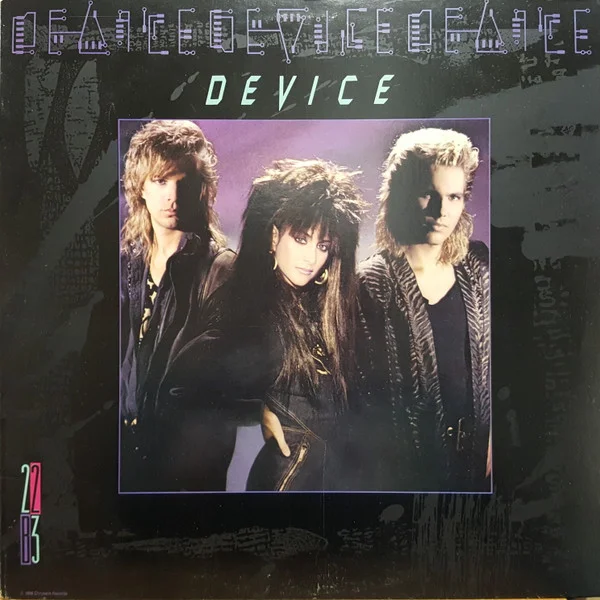
The fourth installment of this magazine’s One and Done section engages with a band whose specific structural identity makes the section’s framework necessary to take seriously. Most of the bands the section has covered — Tuff, Femme Fatale, Signal — were configured as working performing units that signed to major labels and produced their one album in the standard major-label commercial template. The band was the band. The album was the band’s first record. The dissolution was the dissolution of a working performing unit whose commercial trajectory had not produced the breakthrough the label had committed to.
Device was something else. The band was assembled specifically as a vehicle for Holly Knight — already, by 1985, one of the most commercially successful songwriters of the early-1980s MTV era — to make a record as the creative artist rather than as the song supplier. The lead vocalist was hired through demo tapes after substantial difficulty finding someone whose voice could carry the material Knight wanted to write. The guitarist was a session player whose pre-Device work had been almost entirely behind-the-scenes commercial-rock work. The producer was Knight’s longtime collaborator and mentor Mike Chapman — the British producer whose own commercial track record across the 1970s and 1980s had been substantial enough that bringing him in for Device’s debut was simultaneously a creative decision and a structural commercial signal. The band was Knight’s project in the substantive sense that the name itself acknowledged. She chose the name “Device” because, in her own framing in her 2022 memoir I Am the Warrior, she wanted “a device where I could write all the songs and music that I wanted as an artist.”
What this piece is going to do is take 22B3 — the only album the project produced — seriously on its own terms, and engage with the structural reasons the second Device album never happened. The standard One and Done framing covers some of the relevant editorial territory. The label-driven commercial conditions, the lead-singer recruitment difficulty, the brief commercial cycle, the dissolution before the second album could be developed — all of these elements fit the section’s broader category. But the Device version of the pattern is distinctive in one specific way that the broader category does not capture. Knight’s career after Device did not collapse. It expanded. The same musician whose Device project dissolved in 1986 went on to write some of the most commercially successful songs of the broader MTV era — material that the broader pop audience would associate with the artists who recorded the songs rather than with the woman who wrote them. The structural irony at the center of the Device story is not that the band’s commercial trajectory was foreclosed. It is that the woman whose project the band was had access to commercial registers, after the band dissolved, that the band itself had not been positioned to occupy. The One and Done framework engages with what Device was. The deeper Knight retrospective the magazine is developing for a subsequent issue engages with what came after. This piece operates at the intersection.
The Setup: Knight Before Device
By the time Holly Knight conceived of Device in 1985, she was no longer the working bandleader who had played keyboards in Spider across the late 1970s and early 1980s. The Spider arc — the New York post-punk band she had been part of from approximately 1978 through the band’s effective dissolution after their second album in 1981 — had ended in modest commercial circumstances. The band’s two studio albums had not produced the commercial trajectory the major-label apparatus required. The lead vocalist Amanda Blue had departed after the first record. The follow-up vocalist Anton Fig (who would later become better known as the long-running drummer for David Letterman’s Late Show band) had similarly not produced the commercial breakthrough the label had hoped for. By 1981, Spider had dissolved as a recording entity.
What had not dissolved, however, was Knight’s broader commercial trajectory. The Spider album had contained two songs that subsequently became substantial hits for other artists — “Better Be Good to Me,” which Tina Turner recorded for Private Dancer in 1984 and which became a top-five Hot 100 single, and “Change,” which John Waite recorded for No Brakes in 1984 alongside the album’s bigger commercial vehicle “Missing You.” Both Spider songs had performed substantially better in their cover versions than they had as Spider’s original recordings — a structural pattern that would, over the following years, become Knight’s defining commercial signature. The songs she wrote for her own performing projects consistently underperformed commercially. The same songs (or near-identical material) consistently overperformed when delivered by other vocalists.
The Spider-era partnership with Mike Chapman had been the structural fact that made the post-Spider career possible. Chapman, the British producer whose CV by the early 1980s included substantial work with Sweet, Suzi Quatro, Smokie, Mud, Blondie, The Knack, and Nick Gilder, had begun producing Spider after Knight had been actively shopping the band for a record deal. The partnership Knight developed with Chapman extended beyond the Spider sessions into a sustained songwriting collaboration that would produce the bulk of Knight’s commercial-peak hits — “Love Is a Battlefield” with Pat Benatar (1983), “The Warrior” with Patty Smyth (1984), “Obsession” with Animotion (written with Michael Des Barres in 1983, recorded by Animotion in 1984), and the various other major hits the Knight-Chapman partnership produced across the early-to-mid 1980s. By 1985, Knight was simultaneously one of the most commercially successful songwriters of the early MTV era and a musician whose own performing career had not yet produced the recognition her songwriting career had produced for other artists.
Device was the attempt to close that gap.
The Project: A Vehicle, Not a Band
Knight’s own framing of Device in her 2022 memoir is unusually direct about what the project was structurally trying to do. She had selected the name “Device” because she wanted the name to contain the letters D and V — letters whose visual character she found commercially appealing — and because the word itself communicated what the project was: “a device where I could write all the songs and music that I wanted as an artist.” The framing captures the structural fact that the broader rock-history vocabulary has typically obscured. Device was not a band that Knight joined or co-founded. Device was a vehicle that Knight assembled, on her own terms, with her own creative direction, with the explicit purpose of producing the kind of artist-driven material that her behind-the-scenes songwriting career had not been positioned to produce.
The configuration Knight assembled was deliberately compact. The band would be a trio — Knight on keyboards, bass, computer programming, and backing vocals; Gene Black on guitar; and a lead vocalist whose identity had not been settled at the point Knight conceived the project. Black, the guitarist Knight recruited, was a session player whose pre-Device career had included substantial behind-the-scenes commercial-rock work without the kind of band-level visibility that defined the era’s lead-guitarist tier. Knight had worked with Black on various sessions during the early 1980s, and the working relationship had developed sufficient creative compatibility that Black became Knight’s structural collaborator on the Device guitar arrangements. The two would co-write three of the album’s eventual ten tracks — “Pieces on the Ground,” “Tough and Tender,” and “When You’re Off, You’re On” — with Knight co-writing the remaining material with Mike Chapman.
The lead vocalist was the structural problem. Knight needed a voice that could carry the kind of material she wanted to write — substantial dynamic range, the capacity for both the harder rock register the songs would occasionally require and the more accessible mainstream pop register that the MTV-era commercial template required. The voice she needed was not immediately available. Knight cut some demos with Mike Chapman during the early development phase, exploring various potential vocalists, before eventually receiving a tape from Paul Engemann that demonstrated the specific vocal capabilities the project required. Engemann’s vocal style — controlled, dynamically capable, with the kind of upper-register power that the era’s commercial pop-rock template required — was, by Knight’s assessment, the voice the project needed.
Paul Engemann: The Vocalist She Hired
Engemann’s pre-Device career was substantial enough to make him the kind of professional vocalist Knight could realistically work with, and structurally distinctive enough that the working relationship would prove more complicated than the demos had initially suggested. Born October 15, 1957, the son of Capitol Records vice president Karl Engemann and back-up singer Geri Engemann, Engemann had grown up inside the broader American music industry in ways that very few of the era’s vocalists had. He had toured for two years as a young man with the Latter-day Saint stage play “Saturday’s Warrior” — a Mormon-themed musical that had been substantially significant within LDS culture during the 1970s. By age nineteen, Engemann had been offered a recording contract with PolyGram Records. He had postponed the contract to serve a two-year LDS mission in Peru. By the time he returned from the mission, the PolyGram contract had lapsed and his family had relocated from California to Utah.
What followed was the slow rebuilding of a recording career that had been substantially interrupted by the religious commitment. Engemann had relocated back to California, lived briefly with his older sister Shawn (who would later marry Larry King), and begun working with Giorgio Moroder — the Italian producer whose work on the Donna Summer catalog had made him one of the most commercially significant pop producers of the late 1970s and early 1980s. The Engemann-Moroder collaboration produced the song that became Engemann’s pre-Device commercial signature — “Scarface (Push It to the Limit),” recorded for the 1983 Scarface soundtrack and used in the film’s well-known montage sequence depicting Tony Montana’s rise to wealth. The song was, in its specific commercial context, a substantially visible work — the Scarface soundtrack was one of the more commercially successful film soundtracks of 1983, and Engemann’s vocal performance on the track became one of the era’s recognizable pop-soundtrack moments. The collaboration with Moroder continued with “Reach Out,” the 1984 Los Angeles Olympics official song, which reached number one in Germany and modest chart positions internationally.
By 1985, when Knight encountered Engemann through demo tapes, he was a professional vocalist with substantial recent visibility through the Moroder collaboration and a still-developing solo career. The voice was what Knight needed. The broader cultural fit between Knight’s creative project and Engemann’s personal background was a structural problem that would become visible only as the relationship developed.
Knight has documented the cultural distance with characteristic directness in I Am the Warrior. Engemann’s Mormon upbringing had produced a personal register that was substantially distant from the rock-and-roll commercial vocabulary the Device project required. Knight described having difficulty understanding the singer she had hired — Engemann’s strict religious background produced a working approach that did not, in Knight’s framing, instinctively connect with the rock-star posture the project’s commercial positioning required. Knight has documented multiple instances of having to coach Engemann on how to perform the kind of commercial-rock star role the project’s marketing apparatus would require. The coaching was, in retrospect, partly successful and partly not. Engemann could deliver the vocal performances at the technical level the material required. The broader cultural register the commercial positioning required was substantially less natural for him than for a vocalist who had been formed entirely within the rock-and-roll commercial vocabulary.
The Recording: Cherokee Studios, September 1985 — February 1986
The recording sessions for 22B3 took place at Cherokee Studios in Hollywood across approximately six months — beginning in September 1985 and concluding in February 1986. Mike Chapman produced the album and engineered the recording, with assistance from Brian Scheuble. Cherokee Studios — the Hollywood facility that had produced substantial portions of the era’s mainstream commercial-rock and pop catalog — was the structural choice that signaled what Chrysalis Records had committed to the project. Cherokee was not a budget studio. The label was investing in production resources commensurate with the commercial expectations the project’s positioning had generated.
The recording approach Chapman deployed was substantially more elaborate than the early-1980s commercial-rock production template typically required. Knight herself contributed substantial instrumental work to the recordings — keyboards across all ten tracks, bass on much of the material, the programmed sequencer lines that defined several of the album’s most distinctive arrangements, and the broader sonic architecture that her keyboard-based songwriting had produced. The arrangement detail Knight has documented in her memoir captures what the production work actually involved. The album’s opening track, “Hanging on a Heart Attack” — which would become the band’s commercial breakthrough — was built around what Knight described as “epic” opening textures: “cascading, intertwining sequencer lines and massive drums.” Knight had found an oboe sound and written a melody for the intro that, in her framing, sounded like “a snake charmer.” The bass line was sequenced rather than performed live. Gene Black’s guitar work — which Knight characterized in her memoir as showcasing his versatility — moved between “funky strumming in the verses” and the “stunning solos” that anchored the song’s choruses.
The compositional credit structure on the album captured how the relationships actually operated. Six of the album’s ten tracks were Knight-Chapman co-writes (“Hanging on a Heart Attack,” “Who Says,” “Pieces on the Ground” [partially], “Pieces on the Ground,” “Whatever It Takes,” “Who’s on the Line,” and “Didn’t I Read You Right”). Three tracks were Knight-Black co-writes (“Pieces on the Ground” [partially], “Tough and Tender,” “When You’re Off, You’re On”). One track was a Knight-Chapman-Black collaboration. The structural pattern — Knight as the constant on every track, Chapman as the primary commercial-writing partner, Black as the secondary collaborator on a smaller subset of the material — captured what the project actually was. Device was Knight’s vehicle, with two collaborators whose contributions were substantial but consistently subordinated to Knight’s broader creative direction.
The album was mixed by George Tukto and mastered at Sterling Sound in New York — both structural choices that signaled the label’s continuing investment in the production’s commercial polish. Bob Ludwig had not mastered this particular project (Sterling Sound used multiple mastering engineers), but the New York facility was the same structural tier of mastering work that the era’s most commercially successful releases had access to. The album’s overall production sounded, on release, substantially polished in ways that the broader commercial-rock vocabulary of mid-1986 required.
The Album
22B3 was released by Chrysalis Records in spring 1986. The album title itself was Mike Chapman’s idea. When Knight asked Chapman what the title meant, his response — in Knight’s memoir — was characteristically unhelpful: “When the record is a hit, I’ll tell you what it means.” The title remained unexplained through the album’s commercial cycle and beyond. Whether Chapman ever revealed the meaning to Knight after the album failed to become the kind of breakthrough hit that would have justified the disclosure has not been documented in any of Knight’s subsequent retrospective interviews. The title accumulated, across the decades, the kind of mythic obscurity that some album titles acquire when their original explanatory framework never quite materializes.
The album contained ten tracks running approximately forty-nine minutes. The opening track, “Hanging on a Heart Attack,” established what the project was structurally trying to be. The arrangement Knight has described in her memoir — the snake-charmer oboe intro, the sequenced bass line, the cascading keyboard textures, Black’s funk-influenced verse playing alternating with the more conventional rock guitar work in the choruses — produced one of the more genuinely distinctive opening tracks of mid-1980s commercial pop-rock. Knight has characterized the song in her memoir as the album’s central achievement. The framing is, by most reasonable assessments, accurate. “Hanging on a Heart Attack” works as the kind of single the era’s MTV commercial infrastructure was specifically designed to support — visually distinctive in ways the eventual video would amplify, sonically polished in ways the era’s broader pop-rock vocabulary required, and structured around the kind of hook that commercial radio would specifically respond to.
The remaining nine tracks operated at varying levels of commercial accomplishment. “Who Says,” the second single, worked within the same broader sonic vocabulary as the opener but with substantially less of the distinctive arrangement detail that made “Hanging on a Heart Attack” structurally distinctive. The song was competent without being similarly memorable. “Tough and Tender” — one of the Knight-Black co-writes — has been identified in some subsequent retrospective assessments as the album’s most consistently strong deep track. The arrangement is less Chapman-influenced than the rest of the album’s material, with more direct rock-and-roll vocabulary and less of the synth-pop production polish that defined the album’s commercial-radio singles. “Pieces on the Ground” and “Who’s on the Line” — the third and fourth singles, both released in 1986 — were structural attempts to extend the album’s commercial cycle beyond the lead-single moment that “Hanging on a Heart Attack” had briefly established.
What the album sounds like, listened to in 2026 with the benefit of subsequent perspective, is a substantially accomplished mid-1980s commercial pop-rock record made by professional musicians at substantial individual capability, with one structural limitation that became visible only in retrospect. Knight’s own retrospective assessment in her memoir captured the limitation directly. She was proud of the record — characterizing it as a “masterpiece” in the specific framing she has used in subsequent interviews — but she identified the vocals as the album’s weakest structural component. Engemann’s vocal performances were technically competent. The performances were not, in the broader commercial sense that the era’s most successful pop-rock records required, the kind of vocal performances that would carry the material into the broader cultural register the songs had been written to occupy. The voice was good. The voice was not, in the specific sense the album’s songwriting required, distinctive enough to make the material land at the commercial register Knight had been writing toward.
There is a specific incident Knight has documented in her memoir that captured the structural limitation with unusual clarity. Knight had played the album material for Madonna’s manager during the early promotional cycle — a contact relationship Knight had developed through her broader Los Angeles music-industry network. The manager’s response was direct. The band was “fake.” The singer sounded “robotic.” The framing was harsh enough that Knight has documented it across multiple subsequent retrospective contexts. It was also, in retrospect, partially accurate. The album’s commercial trajectory would, across the following months, demonstrate the limitation that Madonna’s manager had identified on first listen.
The Brian Grant / David Mallet Video
The music video for “Hanging on a Heart Attack” was the album’s central commercial vehicle, and the production decisions that went into the video signaled what Chrysalis Records had committed to the project’s MTV-era marketing apparatus. The video was directed by Brian Grant and David Mallet — the British directing duo whose existing CV by 1986 included The Buggles’ “Video Killed the Radio Star” (the literal first music video to ever air on MTV, August 1, 1981), Peter Gabriel’s “Sledgehammer” (released the same year as the Device video, May 1986, and which would win nine MTV Video Music Awards), and Billy Idol’s “White Wedding.” The Grant-Mallet collaboration had become, by 1986, one of the most commercially successful music video directing partnerships of the early MTV era. The decision to bring them in for the Device project signaled what the label had structurally committed to the project’s commercial positioning.
The video was filmed in London in an abandoned warehouse — the same warehouse, structurally, that produced the album cover photograph by Brian Aris. The visual language of the production drew on the broader industrial-aesthetic vocabulary that mid-1980s commercial pop-rock videos had been developing — concrete textures, industrial lighting, the kind of post-industrial visual framing that connected to the era’s broader new-wave-adjacent visual aesthetic. The video’s most memorable visual element — what subsequent retrospective viewers have characterized as the “dancing Death goth man” — was the kind of distinctive visual hook that the era’s MTV programming infrastructure specifically responded to. The video received substantial MTV rotation across the spring and summer of 1986.
The cumulative effect of the video and the lead single’s radio support produced the brief commercial moment that 22B3 would generate. “Hanging on a Heart Attack” reached number 35 on the Billboard Hot 100, with corresponding chart positions at number 26 on the Billboard Club Play Singles chart, number 33 on the West German GfK chart, and number 46 on the Australian Kent Music Report. The album peaked at number 73 on the Billboard 200 — a modest but real commercial performance that signaled the project had found at least some audience in the broader commercial-pop marketplace. The second single, “Who Says,” reached number 79 on the Hot 100 — a substantially less commercially successful follow-up that nonetheless extended the album’s brief commercial cycle into the latter half of 1986.
The Tour That Did Not Happen
What did not happen, after “Hanging on a Heart Attack” had peaked at number 35, was the broader touring infrastructure that the era’s commercial pop-rock template typically required for sustained album promotion. Device began looking for tour bookings during the spring of 1986. The bookings did not materialize at the scale the brief commercial moment had suggested they might. The structural problem was substantial. Engemann’s pre-Device career had been substantially studio-based — the Scarface soundtrack work, the Moroder collaboration, the various other projects that had built his commercial visibility without producing the kind of touring infrastructure that bands at his commercial tier typically developed. Knight’s pre-Device career through Spider had been substantially live-performance-based, but Spider had dissolved five years earlier, and Knight had spent the intervening years in the substantially different register of behind-the-scenes commercial songwriting. The Device live performance capability that the touring apparatus required had not been developed before the album’s release — and could not, in the compressed timeline that the commercial moment had created, be developed quickly enough to capitalize on the brief radio and MTV moment that the lead single had produced.
The label’s response to the commercial trajectory’s plateau was the standard major-label response to projects whose commercial momentum had failed to sustain the initial breakthrough. Chrysalis Records pulled promotional resources from the project. The second single’s commercial cycle ran its course without producing the kind of breakthrough that would have justified continued investment. By late 1986 and into 1987, Device had effectively been deprioritized in the label’s broader commercial calculation. Knight and Black have both documented in subsequent retrospective contexts that they discussed at this point whether the project should continue with a different vocalist. The discussions did not produce a structural resolution. The combination of the label’s diminished commitment, the absence of a sustained touring infrastructure, and the broader cultural moment’s shift toward different commercial-rock vocabularies meant that the second Device album the project would have required to continue its commercial trajectory was never developed.
By 1987, Device had effectively dissolved as a working concern. There would be no second album. The project that Knight had assembled specifically as her own creative vehicle had produced one album, one Top 40 hit, and one brief commercial moment that the broader cultural conversation about her career would substantially fail to register against the much larger volume of commercial work she would produce as a songwriter across the subsequent decades.
The Knight Assessment: A Footnote, Not a Career
Knight’s own retrospective assessment of the Device project in her 2022 memoir has been characteristically direct. The Device moment, in her framing, was a footnote of her broader career rather than a defining commercial moment in its own right. She has, in subsequent retrospective contexts, characterized her own role in the project’s commercial trajectory honestly. She had been more preoccupied with her ongoing songwriting commitments — the broader catalog of hits she was simultaneously producing for Pat Benatar, Heart, Tina Turner, Rod Stewart, KISS, and the other major artists whose material the Knight-Chapman partnership was supplying — than with the sustained band-level development that Device would have required. The Device project had received Knight’s substantial creative investment during the recording sessions. It had received substantially less of her sustained attention during the post-release period when the band’s commercial trajectory would have required the same kind of focused commitment that her songwriting career was simultaneously demanding.
In retrospect, Knight has acknowledged that she should have waited for a better vocalist than Engemann before committing the project to the major-label commercial template. The Engemann vocal limitation that Madonna’s manager had identified on first listen, and that subsequent commercial trajectory had partially confirmed, was the structural fact about the album that the project had been built around. A different vocalist — one with the broader commercial register that Knight’s songwriting required — might have produced a substantially different commercial outcome for the same material. The choice to commit the project to Engemann’s voice had been Knight’s choice, made under the time pressures that her broader career had created, and the structural consequences of the choice had been substantial.
What the broader Knight career did after the Device project’s dissolution is the editorial territory the magazine’s developing Holly Knight retrospective will engage with separately. The summary version is that Knight’s commercial trajectory expanded substantially across the late 1980s and into the 1990s. The hits she co-wrote across this period — “The Best” for Tina Turner (1989), “Invincible” for Pat Benatar (1985), the various other major-label commercial-pop and pop-rock hits the Knight-Chapman partnership produced — accumulated into a body of work substantial enough that Knight’s eventual induction into the Songwriters Hall of Fame in 2013 was the formal recognition of what had become, across the preceding three decades, one of the most consistently successful commercial-songwriting careers in mainstream American pop. Knight’s commercial success as a songwriter was, by essentially every reasonable measure, more substantial than the Device project’s brief commercial moment had been.
What Happened to Paul Engemann
The Engemann post-Device career took a substantially different trajectory than Knight’s. After the Device project’s dissolution in 1986-1987, Engemann joined Animotion as the band’s new male co-lead vocalist alongside actress Cynthia Rhodes (who had replaced original female vocalist Astrid Plane). The new Animotion configuration produced one studio album — the band’s 1989 self-titled third album on Polydor Records — which contained the modest top-ten hit “Room to Move,” a cover of a Climie Fisher song that had been featured on the soundtrack to the 1988 Dan Aykroyd vehicle My Stepmother Is an Alien. The Animotion moment was, in some ways, the closest Engemann came to the kind of sustained commercial-band success that the Device project had been attempting to generate. The new Animotion configuration dissolved in 1990. Engemann moved back to Utah, left the music business entirely, and eventually opened a design business with his wife Suzanne Barnes, which they ran for approximately seventeen years.
The Engemann arc, in retrospect, captured something specific about how the era’s commercial-pop infrastructure actually operated for the lead vocalists who occupied the structural position Engemann had occupied. The technically capable vocalist who could deliver the material the era’s commercial template required, without the broader creative-leadership identity that the era’s most commercially successful bands had been built around, was structurally a hireable position. The vocalist would deliver the technical performances. The vocalist’s name would not, in any sustained sense, become the brand around which the broader commercial trajectory would operate. Knight’s broader creative project — the songwriting career, the commercial visibility through other artists’ performances of her material, the eventual Songwriters Hall of Fame recognition — was substantially more durable than the vocalist’s career trajectory had been. The vocalist she had hired for the Device project had, by 1990, effectively retired from the music industry entirely. The songwriter who had assembled the project around him would continue to produce commercially successful work for another three decades.
Gene Black: The Quietest Subsequent Career
Gene Black’s post-Device trajectory was the third distinctive variation on the structural pattern. The guitarist returned substantially to session work after the Device project dissolved — the same broader register he had occupied before joining the band. Black’s subsequent commercial visibility was modest but sustained. He played on substantial portions of various artists’ commercial-rock catalogs across the late 1980s and into the 1990s. He continued his songwriting partnership with Knight, co-writing two top-ten hits in the years after Device dissolved — Heart’s “Never” (1985, which had actually been written before Device dissolved and which co-credits Knight, Black, and Spider’s Anton Fig) and Rod Stewart’s “Love Touch” (1986, the same year as the Device album). The Black-Knight co-write trajectory continued across the subsequent decades.
Black also recorded extensively with Tina Turner across the late 1980s and 1990s, eventually joining Joe Cocker’s touring band in 1997. His broader career, in retrospect, was substantially more sustained than the Device project’s brief commercial moment had been. The session musician whose Device contribution had been temporarily elevated to the band-member status continued to work as a session musician across decades, building the kind of cumulative catalog that the broader rock-history vocabulary typically fails to register as a meaningful career in its own right.
What 22B3 Is Now
The album has remained continuously available across the decades, reissued by Renaissance Records on CD in 1996 and again in 2007 with the same original track list. The dedicated audience that has continued to engage with the album has been small but committed, with consistent retrospective appreciation across the dedicated 1980s commercial-pop and AOR community. Various subsequent retrospective assessments have identified the album as an “underrated gem” of the era — a structural framing that captures both the genuine quality of the material and the brief commercial moment that prevented the broader cultural conversation from registering the album as substantially as the songwriting quality should have produced.
What 22B3 documents, in the broader editorial framework the One and Done section has been developing, is the structural irony at the center of mid-1980s commercial-pop production. The Knight songwriting capability that had produced Tina Turner’s biggest commercial peak, Pat Benatar’s most successful singles, and a substantial subsequent catalog of major-artist hits could not, when applied to a band Knight had assembled as her own creative vehicle, produce the sustained commercial trajectory that the same material consistently produced when delivered by other artists. The structural pattern — Knight’s songs working better in other artists’ performances than in her own — was the central commercial fact about her career. Device was the one substantial attempt to alter that pattern. The attempt produced one Top 40 hit and one accomplished album that the broader marketplace was not ultimately positioned to sustain.
The album exists. The “Hanging on a Heart Attack” video occasionally surfaces in subsequent MTV-era retrospectives. The album’s title — 22B3 — remains unexplained, three decades after Mike Chapman’s promise to disclose the meaning if the record became a hit. The record did not become the hit. The meaning has not been disclosed. The album continues to circulate in the discount-bin economy that the broader category captures, finding its small dedicated audience across generations, occasionally rediscovered by listeners who recognize Knight’s broader songwriting catalog and want to understand what the songwriter sounded like when she was the artist rather than the supplier.
What the album is, more specifically, is the document of one moment when Holly Knight tried to occupy the structural position that her songwriting career had been built around supplying. The attempt was creatively substantial. The commercial outcome was structurally modest. Knight’s continuing career across the subsequent decades demonstrated, repeatedly and substantially, that her actual structural position in the broader pop infrastructure was as the songwriter whose material would be elevated by other artists’ performances rather than as the artist whose performances would carry her own material. 22B3 is the brief moment when that broader structural fact was, briefly and not entirely successfully, contested. The contesting did not produce the alternative career trajectory the project had been positioned to generate. It did produce one substantial album that the dedicated audience has continued to engage with, three and a half decades after the brief commercial moment that the album represented.
Knight herself, in subsequent retrospective contexts, has been honest about what the Device project was and what it became. The project was a footnote of her broader career — not because the album was inadequate (it was substantial) but because the broader career was so substantial that the brief Device moment could not, in any reasonable proportional sense, occupy the structural position the project had been positioned to occupy.