Retrospective
The Band She Built: Vixen, Jan Kuehnemund, and the Limits of the Female Bon Jovi
She started the band in 1973 in a Saint Paul high school. She moved it to Los Angeles in 1981. She fought for it across four decades, through three substantially different lineups and one lawsuit she filed to keep the name. She died of cancer in 2013. The body of work she built — two commercial peaks separated by years of structural difficulty — represents one of the more under-credited careers in late hair metal. A retrospective on Vixen, the band that almost everyone called the female Bon Jovi, and on the guitarist whose forty-year creative project the band actually was.
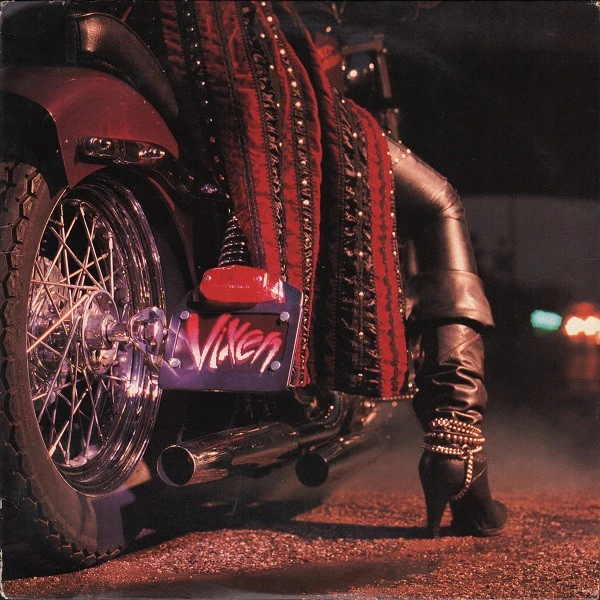
There is a category of band the standard rock-criticism vocabulary has consistently misunderstood, and Vixen are one of the cleanest American examples: a band whose continuous creative driver across decades was a single founding musician, whose identity was shaped by her decisions, and whose lineup changes and commercial complications all unfolded around her efforts to keep the project alive. The standard framing treats Vixen as a glam-era female-fronted proposition that briefly crested in 1988 and 1990, disbanded when the cultural moment for that proposition collapsed, then reformed sporadically as a nostalgia concern. That framing is not exactly wrong. It is also not quite the story. The story, told accurately, is Jan Kuehnemund’s — the guitarist who started the band in a Saint Paul high school in 1973, relocated the entire project to Los Angeles in 1981 because she had concluded that was what its commercial future required, shaped the lineup decisions across four decades, sued her own classic-lineup members in 1997 to retain control of the name she had been using for nearly twenty-five years, and died of cancer in 2013 having been the only continuous member of her band across its entire forty-year existence.
The two commercial-peak albums, Vixen (1988) and Rev It Up (1990), produced four Billboard Hot 100 entries and made the band one of the most visible all-female hard rock acts of the late 1980s. The post-EMI work — Tangerine (1998), Live & Learn (2006), the subsequent reformations — operated under conditions no band could have fully navigated: a continuing creative project that had outlasted its commercial moment without finding a comparable home. The standard framing flattens Kuehnemund’s specific role into the general “all-female band” category the era’s marketing developed. The accurate framing recognizes that the all-female band was, in the substantive sense that matters, Jan Kuehnemund’s band. The other members rotated in and out across forty years. She did not. This kind of reading becomes possible once a band’s actual creative center has died and the record is no longer shaped by ongoing commercial calculation. Kuehnemund died on October 10, 2013, in Colorado Springs, at 59 — nine months after a January diagnosis that had derailed the classic-lineup reunion she was then planning, the band’s first since the Bands Reunited television appearance in 2004. What this piece engages with is the body of work she actually built, and the project she conducted around it, from a 1973 Saint Paul high school to her death four decades later.
The Saint Paul Period: 1973–1981
Vixen formed in 1973 in Saint Paul, Minnesota, when Kuehnemund — born November 18, 1953, so nineteen or twenty at the time — was a high school student. The band’s original name was Lemon Pepper, and the earliest lineup rotated through a number of musicians around her: vocalist Nancy Shanks, drummers Marlene Peterson and Laurie Hedlund, bassist Gayle Erickson, others. By the available records it was the first established all-female rock band in the Twin Cities — a small but genuine achievement that placed Kuehnemund at the edge of a broader 1970s development in which female-fronted American rock acts were beginning to operate as serious bands rather than novelties. The Lemon Pepper name didn’t last; the band became Genesis in the mid-1970s, which predictably forced a change to Vixen by 1978 once the conflict with the British band became acute. Kuehnemund’s father, Carl, served as roadie — the kind of detail that captures how the band actually operated in the local venues that became its training ground: the Cabooze, Duffy’s, the Union, the broader Twin Cities circuit.
That first phase lasted less than two years; the original Vixen broke up in 1974. Kuehnemund spent the next six years on hiatus, developing her playing, before reactivating the band by 1980 and making, in 1981, the structural decision that would define the rest of her career: she moved the entire project to Los Angeles. She was twenty-seven, leaving Minnesota for the still-emerging glam metal scene, her father remaining involved in the support apparatus. It was the correct bet. The Twin Cities scene had no realistic path to major-label visibility for the music she was making; Los Angeles did. The bet would take seven more years to pay off in any substantive commercial sense.
The Hollywood Years: 1981–1987
What happened in Los Angeles between 1981 and 1987 is the story of a band slowly building a Sunset Strip reputation while its lineup cycled through enough changes that the eventual classic configuration was the product of multi-year evolution rather than initial stability. Kuehnemund was the constant; everything else changed. The earliest LA material featured Janet Gardner — born March 17, 1962 — on lead vocals from 1983, various bassists including Pia Maiocco (who would later marry guitarist Steve Vai), and various drummers including a brief return by Laurie Hedlund. By 1986 the band had stabilized on the lineup that would record the commercial-peak material: Kuehnemund on lead guitar, Gardner on lead vocals and rhythm guitar, Roxy Petrucci (formerly of Madam X) on drums, and Share Pedersen on bass.
A small but interesting detail from this period: in 1984 an earlier Vixen — Kuehnemund, Gardner, and Maiocco — appeared in the teen comedy Hardbodies as the on-screen band “Diaper Rash,” capturing them as a working LA act years before any breakthrough. The Maiocco–Vai connection places the band within the broader musician network of the era that produced essentially every successful late hair metal act. The band signed to EMI’s Manhattan Records subsidiary in 1987, after enough Sunset Strip work to attract A&R interest — and EMI’s commercial calculation, as it would become visible across the debut sessions, was that the band’s all-female configuration was the central asset, a calculation that would constrain Kuehnemund’s actual creative role.
Vixen (1988)
The debut, Vixen, was released August 31, 1988, produced by a team including Richard Marx, David Cole, Rick Neigher, and Spencer Proffer. Marx’s presence matters: in 1988 he was at the peak of his own pop career (“Don’t Mean Nothing” and “Should’ve Known Better” had been 1987 hits, and “Right Here Waiting” was a year away), and bringing him in to produce a hard rock debut was not the standard calculation. It was EMI’s specific strategy — Vixen would be produced more like a Richard Marx pop record than a Bon Jovi rock record, because the label had concluded the pop-radio crossover audience was the one the band’s future depended on.
The strategy produced “Edge of a Broken Heart,” written by Marx and Fee Waybill of The Tubes. Marx produced the track, played keyboards on it, and shaped the arrangement; by his own account in his 2021 memoir Stories to Tell, the band’s involvement was limited to adapting an external song to their performance — it existed before Vixen heard it, written specifically as the commercial vehicle EMI was building, and delivered as a finished product rather than developed collaboratively. And one detail from the memoir complicates the standard reading substantially.
The lead on “Edge of a Broken Heart” was played by Michael Landau, the session guitarist whose CV by 1988 included James Taylor and Joni Mitchell. The credit on the album, the performance in the video, the public’s understanding of the band’s capability — all of it operated independently of what had happened in the studio. This is the structural fact the “female Bon Jovi” framing misses. The lead single was an outside write by a pop songwriter; its lead guitar was a session musician; the production team’s specialty was pop crossover, not hard rock. Even three other tracks — “Cryin’,” “One Night Alone,” and the bonus “Charmed Life” — had previously appeared on Jeff Paris’s 1987 solo album Wired Up. The debut was, structurally, a collection of songs from external writers and producers, performed by Vixen in arrangements EMI’s apparatus had determined would maximize the band’s potential.
It worked, commercially. “Edge of a Broken Heart” peaked at number 26 on the Hot 100 in late 1988 (number 24 Mainstream Rock, number 51 UK), its video — directed by Mark Rezyka, who also worked with Cinderella, Kiss, and Winger, with a Richard Marx cameo — in heavy MTV rotation. “Cryin’,” the early-1989 second single, reached number 22, actually outperforming the lead single; “Love Made Me” added momentum. The album peaked at number 41 on the Billboard 200 and number 66 in the UK, charting across Europe, and was certified gold on February 6, 1989, for sales over 500,000 — but never reached platinum. That was substantially below what two top-30 singles would have suggested in most contexts: Bon Jovi’s Slippery When Wet was twelve-times platinum, Poison’s debut and Warrant’s debut both double platinum. Vixen’s debut was a success, not a breakthrough. The supporting tour took the band out opening for Ozzy Osbourne, the Scorpions, Deep Purple, Kiss, and Bon Jovi, and Kerrang! called Kuehnemund “the best female guitarist around” — real praise and a backhanded compliment at once, the gendered qualification limiting it to a category male guitarists were never measured against, even as it acknowledged that her playing merited the recognition.
Rev It Up (1990)
What Vixen did with their second album was the central decision of their trajectory, and more interesting than the “they couldn’t follow up the debut” framing suggests. Rev It Up, released July 31, 1990, was produced by Randy Nicklaus rather than the Marx-led team — a harder, more guitar-driven approach meant to give Kuehnemund’s playing the space the debut had denied it. The intention was defensible, and the execution produced an album that improved on the debut in essentially every musical measure the band would have wanted to improve on — and that performed substantially worse commercially.
The singles charted modestly: “How Much Love” at number 44, “Love Is a Killer” at number 71, with “Not a Minute Too Soon” reaching number 37 on the UK Singles Chart in 1991 without charting in the US. The album peaked at number 52 on the Billboard 200, well below the debut’s number 41, but reached number 20 in the UK and charted across Europe (number 14 in Finland and Switzerland, number 29 in Germany) — the international audience, by 1990, substantially more committed than the American mainstream that had peaked in 1988. And crucially, by every available account, Kuehnemund actually played the lead guitar on Rev It Up; the Landau substitution did not repeat. The songwriting was more genuinely the band’s — Gardner and Pedersen co-wrote “Not a Minute Too Soon,” Petrucci co-wrote “Love Is a Killer” with Harry Paress. In every measure of band-developed authorship the debut had lacked, this was the album the band would have wanted to make. The marketplace responded by paying less attention.
The reasons were structural, not musical. By mid-1990 the early stages of the reorganization Nevermind would consolidate fifteen months later were already visible, and the specific sweet spot “Edge of a Broken Heart” had occupied — pop-accessible, MTV-friendly, polished female-fronted hard rock — was no longer the dominant programming priority. The band had not made a worse album; the marketplace had become less receptive to what it was making. The tour ran through late 1990 into 1991, with the European audience again the more enthusiastic, but by mid-1991 EMI’s calculation had shifted decisively and the label dropped the band. Vixen dissolved acrimoniously by 1992 under the era’s standard pressures — touring without label support, accumulated personal disagreements, the uncertainty of the coming reorganization. What is worth being precise about is that Kuehnemund herself never accepted that the band had genuinely ended. The other members had been members of her band, and whatever they might want to do with the name, she retained — and would defend in court — ownership of what she had built.
Tangerine, the Lawsuit, and the First Reformation
In 1997, Gardner and Petrucci — two of the four classic-peak members — reformed Vixen without Kuehnemund and Pedersen, recruiting guitarist Gina Stile and bassist Mike Pisculli, and signed with CMC International in the US and Eagle Records in Europe, the working home for displaced hair metal bands by the late 1990s. The result was Tangerine, released May 1998, the band’s third album, recorded that year in Florida, Connecticut, and New York. It was a substantially different band: the genre framing shifted from glam metal to post-grunge, the sonic vocabulary moving toward the alternative-adjacent register Goo Goo Dolls and Matchbox 20 had made dominant, the songwriting primarily Gardner and Stile’s, the production less polished than the EMI era. It sold modestly — reaching a small dedicated audience without a broader moment, the post-grunge audience smaller than the AOR audience the earlier records had served and the existing Vixen base substantially fragmented by 1998.
The structural problem was not the album, which is a competent piece of 1998 post-grunge that has aged better than its reception. The problem was that Kuehnemund did not consent to the use of the name. She filed for copyright infringement, the suit ruled in her favor, and the Gardner-Petrucci configuration — despite including two original classic members — could not legally continue as Vixen; it stopped performing under the name in 1998 and dissolved. The decision established something specific about how Kuehnemund understood her project. She had founded the band, relocated it, shaped its direction, and been its only continuous member through every prior change. The structural authority that flowed from those facts was, when tested, recognized by the court.
Live & Learn (2006) and the Long Continuation
In 2001, Kuehnemund reactivated Vixen as a classic-lineup reunion — herself, Gardner, Petrucci, and new bassist Pat Holloway replacing Pedersen — but the lawsuit history had not produced full reconciliation, the configuration broke up partway through a national tour, and she had to find replacements quickly to meet the contractual obligations. Those replacements became the band’s longest-tenured lineup other than the classic one: vocalist Jenna Sanz-Agero, bassist Lynn Louise Lowrey, and drummer Kathrin “Kat” Kraft, who worked with Kuehnemund from 2001 through 2011. That configuration recorded the fourth album, Live & Learn, released November 6, 2006 in Europe and January 30, 2007 in the US, produced by Dennis MacKay on Demolition Records — eleven tracks co-written by Kuehnemund with Sanz-Agero plus outside collaborators, including a cover of David Bowie’s “Suffragette City.”
The reviews were uniformly polite and uniformly limited: PopMatters called it “a fans-only disc” that “might not make much commercial headway”; Metal Underground judged it “actually a pretty good one” while warning that listeners “expecting this album to sound like the Vixen of the 80’s” would be “surprised”; the Hard Rock 80 review called it “Vixen without being Vixen.” What they captured was the central fact of the post-2001 band: the project Kuehnemund had built across forty years had outlasted the commercial moment that defined its public identity. The work the audience associated with the name was the 1988 and 1990 work; the post-1991 catalog — Tangerine without her, Live & Learn under the configuration she actually controlled — operated under conditions in which no realistic path to a comparable audience existed. It was the work of musicians who had decided to keep making music rather than disappear, under conditions that had structurally changed.
The 2013 Death and the Continuing Band
Kuehnemund’s cancer was diagnosed in January 2013, derailing plans for a classic-lineup reunion in which she, Gardner, Petrucci, and Pedersen had intended to record together for the first time since 1990. The cancer progressed rapidly, and by October she was dead at 59. The three surviving classic members — Gardner, Petrucci, and Pedersen — negotiated with her estate over the name, concluding that they, together with Gina Stile, would continue Vixen as a touring concern: the ownership question the 1997 suit had resolved in Kuehnemund’s favor now resolved cooperatively rather than through further conflict.
The Vixen that has existed since 2013 has been a touring band. It released Live Fire and the unreleased-material compilation Rare Vintage in 2018 and toured intermittently. The most significant change came in January 2019, when Janet Gardner stepped down to focus on a solo career and was replaced by Lorraine Lewis — the same Lorraine Lewis whose 1988 Femme Fatale debut had been one of Vixen’s direct competitors during the classic era, and whose arc the magazine engaged with in the recent One and Done installment on Femme Fatale. The irony is substantial: two bands competing for the same commercial space in 1988 and 1989, and three decades later the lead singer of one performing the catalog of the other nightly. Lewis served from January 2019 through 2024, then left to reactivate Femme Fatale. Vixen recruited Rosa Laricchiuta in June 2024, and the current configuration — Roxy Petrucci on drums, Britt Lightning in the guitar position Kuehnemund occupied for the band’s entire history, Julia Lage on bass, Laricchiuta on vocals — continues to tour and release occasional new material. The fifty-year-old project Kuehnemund started in 1973 is, in 2026, still an active concern more than a decade after her death.
What the Story Actually Documents
The “female Bon Jovi” framing captures something real about the band’s commercial-peak positioning and misses everything that has made its actual fifty-year history interesting. It was a marketing construct EMI and the rock press deployed in 1988 to give the audience a vocabulary for what Vixen was. It worked for that moment. It does not describe what the band actually was, what it did with its catalog after 1991, or the structural identity it became across decades.
That identity was Jan Kuehnemund’s. The Michael Landau substitution and the Rev It Up reversal are the same story told twice. The label had identified the all-female configuration as the asset and built the marketing around Kuehnemund as the visible female lead guitarist — and then, on the song that launched the band, bypassed her playing in favor of a male session musician whose work went uncredited in the public-facing image. When the follow-up finally put her own lead guitar across an entire album, with the band’s own authorship more present, the marketplace paid less attention, and EMI extracted the lesson that the pop-crossover approach was preferable to the band’s actual identity — concluding, when the band-as-itself sold less than the band-as-construct had, that the band was no longer viable. The numbers were the numbers; the band was dropped. The Kerrang! line belongs to the same pattern: real praise, permanently qualified into a category her male peers never faced. The accurate amendment is simply to drop the gender from it.
This is what makes Vixen worth telling within the magazine’s female-voiced editorial commitment. The band was not a failed Bon Jovi clone but a forty-year project conducted by a lead guitarist whose playing was substantial, whose commitment to her band’s survival was unusual, whose ownership of her own project she defended successfully in court, and whose work has been consistently underrecognized by a vocabulary that defaulted to “all-female” in place of the specific recognition her catalog earned. The two commercial-peak albums sold somewhere over a million copies combined; the post-EMI catalog reaches the smaller audience that has stayed. Both exist; both are worth hearing; and the accurate framing, available only now that her death has freed the record from ongoing calculation, is that the band that made them was hers.
Her guitar and her collection of Vixen memorabilia are now part of the Minnesota History Center’s permanent collection. The state where she started the band in a high school in 1973 has formally acknowledged what she built as part of its cultural history. The band she built was real, and the recognition is what was owed.