Retrospective
The Cockroach Problem: How Danger Danger Lost Five Years to a Lawsuit
A gold debut, a respectable follow-up, and then the strangest stretch of legal and creative chaos in late hair metal. A retrospective on a band who recorded their third album twice, released the wrong version of it, and missed the only window they had left.
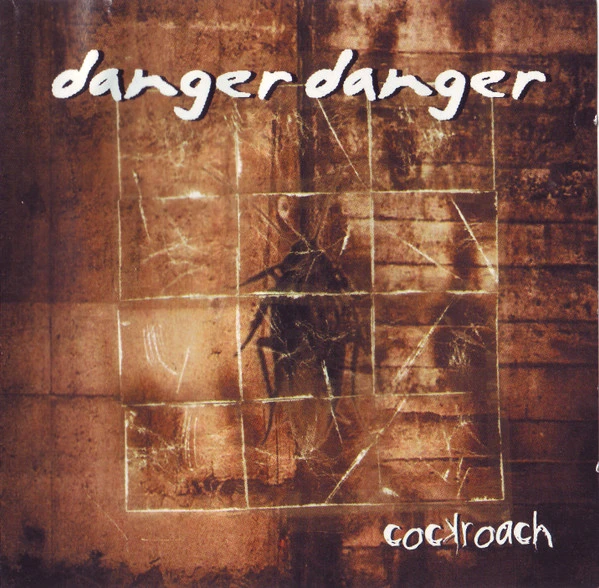
The strange thing about Danger Danger’s story is how little of it has to do with music. There is plenty of music in it — five studio albums between 1989 and 2001, two distinct lead singers, a back catalog that fans of the genre still defend with the particular fervor that attaches to second-tier bands they feel were robbed — but the spine of the story is contractual, not creative. From 1993 to 2001, the band’s third album sat unreleased — first because the man who had sung it sued to prevent its release, then because the label decided releasing it was no longer worth the effort, then because the band and the label had parted ways entirely. By the time the album finally came out, in two versions on a single 2001 release, Danger Danger had spent eight years effectively unable to function as the band the public knew. The window for hair metal nostalgia had not yet opened. The window for hair metal relevance had long since closed. They were stuck in between.
This is the story of how a band can do everything right musically, win the early rounds against considerable headwinds, and then lose the years that mattered most to a fight that had nothing to do with their songs.
The Setup: Queens, Bon Jovi, and the Last Window
Danger Danger formed in 1986 in Queens, New York, from the remains of a new wave band called Hotshot. Bassist Bruno Ravel and drummer Steve West were the founders and, crucially, the two principal songwriters; almost every track in the band’s catalog from the first album onward carries a Ravel/West writing credit. They added guitarist Al Pitrelli (briefly), keyboardist Kasey Smith, and ran through one singer named Mike Pont before settling on the man who would define the band’s first phase: a charismatic vocalist from New Jersey named Ted Poley.
By 1988, they had also added guitarist Andy Timmons — though, in a small detail that would prove characteristic of the band’s chaotic relationship with its own lineup, most of the lead guitar parts on the debut album were actually recorded by Tony “Bruno” Rey, who had originally been in the band but left to rejoin Saraya before tracking finished. Timmons appears in the videos and on the cover. Rey did most of the playing on the debut. This kind of half-publicized substitution was not unusual in late-1980s glam metal — most bands had similar stories — but it sets a tone for what Danger Danger would spend the next decade doing, which was operating as a band that was constantly half-itself.
Epic Records signed them in 1988. The label that had signed Cinderella, Ozzy, and a stable of established hard rock acts brought in producer Lance Quinn, whose CV included Bon Jovi’s first two albums — Bon Jovi (1984) and 7800° Fahrenheit (1985) — recorded at the same Philadelphia studio Danger Danger were now being routed to. Quinn was not the producer who had made Bon Jovi enormous; that was Bruce Fairbairn, who took over for Slippery When Wet in 1986. Quinn was the producer who had shaped the pre-superstar Bon Jovi sound — the slick, hook-driven, AOR-friendly template that made the leap possible. The session was tracked at The Warehouse in Philadelphia from late 1988 through early 1989.
Danger Danger (1989): A Gold Record, Sort Of
The self-titled debut was released on June 27, 1989. It eventually went gold, which by the math of late-1980s pop-metal is both a real accomplishment and a careful framing. Gold meant 500,000 copies sold in the United States. By 1989, that put Danger Danger below the platinum tier of glam metal stars — Bon Jovi, Mötley Crüe, Poison, Def Leppard, Warrant — but solidly in the upper-middle bracket of the genre. They were not, and never would be, headliners. They were the kind of band that opened for KISS and Alice Cooper, which is exactly what they did during the Hot in the Shade and Trash tour cycles.
The reception at the time was respectful without being enthusiastic. AllMusic, in its eventual retrospective summary, classified them as “party-hearty pop-metal with lots of catchy hooks and glitzy guitar riffs” — a phrase that captures both what was good about the record and what was generic about it. Sputnikmusic’s later review praised Ted Poley’s vocal delivery on “Naughty Naughty” and “Under the Gun” but faulted the album for sounding “derivative” of early Bon Jovi and Survivor. Classic Rock Revisited’s Jeb Wright gave it a B-minus, pointing to the skill of the playing and the “playful essence” of “Naughty Naughty” while flagging the lyrics as juvenile and the band’s market positioning as “opportunistic entry into an oversaturated market.” That last phrase, written years after the fact, captures the consensus better than any contemporary review. Danger Danger were, by mid-1989, late.
This lateness mattered more than it sounds like it should. The pop-metal genre had been in market expansion since roughly 1984, when Shout at the Devil and 1984 defined the template. By the time Danger Danger arrived on Epic in 1989, the audience was being asked to absorb a steady flow of bands that all sounded broadly similar, dressed broadly similar, and had broadly similar singles. To break out from that pack required either an exceptional song (“Every Rose Has Its Thorn”), an exceptional aesthetic (Skid Row’s anger, Cinderella’s bluesiness), or an exceptional star quality (Sebastian Bach, Bret Michaels). Danger Danger had professionalism, polish, and Ted Poley — a strong frontman with what one critic called “a particular timbre” but not the kind of singular voice that announces a new band as essential.
“Naughty Naughty” and “Bang Bang” got MTV play. “Under the Gun” and “Rock America” got radio play. The album went gold. They opened arenas for bigger acts. By any honest measure, this was a successful debut for a fourth-tier glam metal band in 1989. It was also, in retrospect, the high-water mark of the band’s commercial career — though they could not have known it at the time, because the album that should have been their breakthrough was already being written.
Screw It! (1991): The Right Record, the Wrong Year
The sophomore album is the one Danger Danger’s fans tend to defend most vigorously. Screw It! — and the title was, even at the time, a knowing self-parody of the genre’s lyrical preoccupations — was produced by Bruno Ravel and Steve West themselves, with Lance Quinn no longer involved. It was tracked in Fort Lauderdale rather than Philadelphia, and represented an audible step up in songwriting craft. The choruses were bigger, the production was cleaner, the ballads were better, and the album spawned two singles that should have been hits: “Monkey Business” and “I Still Think About You.”
Should have been. The album was released on October 1, 1991 — exactly one week after Nevermind.
Anyone who has read anything about late hair metal in the past thirty years knows what that timing means. Screw It! arrived in record stores during the seven-day window in which the cultural ground was actively shifting beneath the genre Danger Danger were playing. Nevermind did not, of course, end glam metal overnight; cultural shifts don’t work that cleanly. But the album whose release date is now treated as the symbolic end of the hair metal era preceded Screw It! by precisely seven days, which means Danger Danger were trying to sell a polished, hook-driven sophomore pop-metal record to an audience that was, in real time, being told by every cultural signal available that this kind of music was suddenly over.
The contemporary reviews tell the story with unusual clarity. The European hard rock press — already operating in a market with a longer tolerance for melodic American hard rock — was largely positive. Germany’s Rock Hard, in a review by Frank Albrecht, gave the album 8 out of 10, conceding that “many critics rightly accuse the group of lacking originality” but praising the production, the singles, and the album’s overall good cheer; the verdict, translated, was “nothing earth-shatteringly new, but very entertaining.” That’s a fair representation of how Screw It! read to ears that had been buying hair metal for the previous five years.
The North American mainstream press was a different story entirely. The Chicago Tribune’s Brenda Herrman gave it 1 star out of 4 in her October 17, 1991 column — a review that landed in record stores within two weeks of Nevermind’s release. The Calgary Herald’s Glen Miller graded it a C on November 3. These were not specialist hard rock publications; they were the mainstream newspapers whose pop-music columnists were, in October and November of 1991, also writing about the rising importance of Nevermind, Ten, Achtung Baby, and Use Your Illusion. To a generalist critic surveying the rock landscape of late 1991, Screw It! read as exactly the kind of record the culture was about to leave behind. The reviews were not hostile because the album was bad. They were hostile because the genre had aged out, and Screw It! was a particularly visible example of a band still doing what the genre was no longer for.
The album didn’t flop, exactly — it reached number 123 on the Billboard 200, the band toured with KISS again, and “Monkey Business” hit number 42 on the UK Singles Chart — but its commercial trajectory was the opposite of what a sophomore record was supposed to do. Instead of expanding the audience the debut had built, Screw It! inherited an audience that was, week by week, abandoning the genre entirely.
Keyboardist Kasey Smith left the band after the Screw It! tour to form his own project. The remaining four members — Ravel, West, Timmons, Poley — went back into the studio to write the third album. The plan was for it to come out in 1993.
It did not come out in 1993. It would not come out at all, in any official form, for another eight years.
Cockroach (1993, sort of): The Album That Did Not Exist
The Danger Danger album that was supposed to be called Cockroach was finished in 1993. It was produced by the band, with Lance Quinn no longer involved. Ted Poley sang it. Andy Timmons played guitar on it. The album was complete. Epic was preparing to release it.
And then, before the release, Bruno Ravel and Steve West fired Ted Poley.
The exact reasons for the firing have never been fully publicized, and the band has been careful in subsequent interviews to characterize it as a private dispute that has since been resolved. The 2004 press release announcing Poley’s eventual return to the band, signed by Ravel and West, referred only to “past differences” that had been “well documented” — though they have not, in fact, been particularly well documented anywhere — and added that “time truly does heal old wounds.” What is publicly known is that the firing happened in 1993, after the album was already recorded, and that it was acrimonious enough for Poley to immediately sue the band and, more importantly, the label.
The lawsuit’s mechanism was specific and devastating. Poley sought legal action to prevent the release of Cockroach in the form in which it had been recorded — which is to say, with his vocals on it. Whatever the precise legal theory (likely a combination of contract dispute, royalty claims, and possibly a personality-rights argument), the practical effect was that Epic could not release the album as recorded without potentially incurring damages. The label’s response was to do what labels do in these situations: nothing. Cockroach was shelved.
Ravel and West, faced with a finished album they couldn’t release and a frontman they couldn’t work with, made what was probably their only available decision. They hired a new singer, a Canadian vocalist named Paul Laine, and had him re-record all of Poley’s vocals on the existing tracks. Now they had two versions of Cockroach — one with Poley, one with Laine — and Epic was still not willing to release either. The label’s reasoning, according to subsequent Wikipedia documentation of the band’s history, was that the album’s release was no longer “in their best interest” given the changed musical climate and the lingering legal uncertainty. Shortly afterward, Epic and Danger Danger parted ways. Andy Timmons, looking at a band that was about to make a grunge-adjacent record with a new singer for no label, left to pursue a solo career and would eventually play guitar on both of Kip Winger’s solo albums.
By the end of 1993, Danger Danger were down to two original members — Ravel and West — plus their new hired singer, an album sitting in a vault that neither they nor their former label could release, and no record deal.
Dawn (1995): A Grunge Album From a Hair Metal Band
The decision Ravel and West made in 1994 is the kind that looks more defensible in context than out of it. With no label, no original frontman, no original guitarist, and the entire commercial landscape having moved decisively against the kind of music that had made them gold-record artists five years earlier, they made the same calculation a number of late-period hair metal bands made: they tried to become a different kind of band. The album they self-released in 1995, on their own Low Dice Records label, was called Dawn.
Dawn is the closest thing in the Danger Danger catalog to an honest record. It is also, by most reasonable assessments, a mistake. The album abandons the pop-metal template entirely in favor of a moody, mid-tempo sound that owes obvious debts to Alice in Chains and the slower side of grunge. The Louder Sound retrospective from 2016 calls it “a comically sour-faced neo-grunge album that owes more to Alice in Chains than any of the shiny-happy glam bands Danger Danger shared stages and fans with just five years earlier” — and then, in the most pointed line of the piece, adds: “It’s not even a bad grunge record, really, but who in the world would buy a grunge record from Danger Danger?”
This is the central problem with the Ultraphobic / Subhuman Race / Dawn generation of hair metal pivots, the records that bands like Warrant, Skid Row, and Danger Danger made in 1995 in an attempt to remain credible in a culture that had moved on. Even when the music itself was competent — and Dawn is, by most accounts, more competent than its critical reputation suggests — the audience equation was unworkable. Hair metal fans wanted hair metal records. Grunge fans wanted grunge records made by people whose grunge bona fides predated 1992. Nobody wanted a grunge record from the band that had recorded “Naughty Naughty.” Dawn was not bought, not heard, not really reviewed. It existed as a release in the most technical sense.
Paul Laine, to his credit, was reportedly an excellent vocalist and a real musical asset to the band during this period. His later work with Danger Danger is genuinely well-regarded by fans of melodic rock, and the 2 Loud 2 Old Music retrospective ranks his albums highly in the band’s catalog. But the audience that would have appreciated his contribution did not yet exist; they would not begin to exist until the European melodic rock revival of the 2000s gave bands like Danger Danger a second life. In 1995, Laine was singing in a band that was, commercially, in free fall, on an album that nobody had any reason to seek out.
Four the Hard Way (1997) and The Return of the Great Gildersleeves (2000): The Quiet Years
What followed Dawn is genuinely difficult to summarize, because so little of it broke through to any audience outside the band’s small loyal following. Four the Hard Way was released in 1997 on the band’s own D-Rock label. The Return of the Great Gildersleeves — the title a reference to a nearly-forgotten New York rock club where the band had played in their earliest days — came out in 2000. Both records leaned back toward the band’s melodic hard rock roots, abandoning the grunge experiment of Dawn and trying to do something closer to what Screw It! had done. Both were essentially invisible in the American market and were marketed primarily to the small but dedicated European melodic rock audience that, by the late 1990s, was the only commercially viable space for late-period hair metal bands.
The AllMusic and Apple Music summaries treat these years dismissively, listing the albums in a single sentence as part of a career that “failed to break the group through to the big time.” This is technically true but does not quite capture the strangeness of the situation. Danger Danger were not failing to break through; they had broken through, in 1989, and had then spent six years being unable to capitalize on that breakthrough because of a lawsuit and a misjudged genre pivot. By 1997, they were not a band trying to become famous. They were a band trying to remain a band, recording for an audience small enough that the math of the music business no longer applied to them.
Andy Timmons rejoined briefly in 1997, departed again in 2003. Kasey Smith came back for a stretch. The lineup was constantly partial. Ravel and West were the only two constants, and they kept the operation going essentially out of stubbornness.
Cockroach (2001): The Two-Disc Resolution
In 2001, Danger Danger and Epic Records finally reached an agreement to release Cockroach — the album that had been recorded eight years earlier and unreleased ever since. The resolution was as strange as the underlying dispute. The album was released as a two-disc set, with the original Ted Poley vocals on disc one and the Paul Laine re-recorded vocals on disc two. The track lists were essentially identical (Laine’s disc had one bonus track). The packaging acknowledged that fans had been waiting to hear both versions, and that the band had decided to let them.
This was, in 2001, a commercially absurd proposition. Hair metal nostalgia as a market category did not yet exist in any organized form; the Rocklahoma and Monsters of Rock cruise circuit that would eventually give bands like Danger Danger a sustainable touring economy was still years away. Releasing a double-disc compendium of an eight-year-old album that had been suppressed by a lawsuit was the kind of move that made sense only to the most loyal segment of the band’s fan base. That segment was real but small. The album did not chart, did not generate significant press, and did not solve any of the band’s commercial problems. What it did do was close the open loop. Cockroach was finally, officially, released. The band could move on.
The Long Coda
In 2004, Ted Poley returned to Danger Danger. Paul Laine left. The reunion press release was warm and conciliatory, with Ravel and West acknowledging that “after 11 years apart, we are very pleased to welcome Ted back” and crediting time with healing old wounds. The Sweden Rock Festival booking that accompanied the announcement was the first indication of what would become the band’s real second act: the European festival circuit, which by the mid-2000s had become a viable economic ecosystem for late-period American hard rock bands.
The story since then has been more familiar than the years that preceded it. Danger Danger released Revolve in 2009, an album the Louder Sound retrospective calls “a return-to-form” that “brought new traction in melodic-metal-mad Europe.” They have toured intermittently, played the nostalgia circuit, retained the same core of Ravel, West, and Poley, and made peace with being a band whose commercial life is essentially over but whose fan base remains genuinely committed. This is, in the broader landscape of hair metal survivors, a happy ending of sorts.
So What Happened?
The conventional answer — repeated in every casual write-up of the band, including their own Wikipedia page — is that Danger Danger enjoyed “moderate success” with their first two albums and then faded along with the genre. The phrase “moderate success” is doing an enormous amount of work in that summary. It captures the commercial outline correctly: a gold debut, a sophomore record that sold less, declining sales thereafter. But it does not capture what is actually distinctive about the band’s story, which is that almost none of the post-1991 decline can be explained by the standard hair-metal-collapse narrative.
Consider the counterfactual. Suppose Ted Poley had not been fired in 1993, or had been fired without legal action, or had reached a quick settlement that allowed Cockroach to be released on schedule. The album would have come out in 1993 or 1994, with the original lineup mostly intact, in a market that was hostile to glam metal but not yet completely closed to it. It would likely have sold worse than Screw It! — most late hair metal third albums did — but it would have been a real third album, with promotional support from Epic, that would have given the band a coherent commercial identity going into the late 1990s. From there, the band would have been positioned to do what bands like Slaughter and Warrant and FireHouse did: gradually transition into the European or Asian festival economy with their core audience intact.
Instead, they lost eight years. The years they lost were the years when their original lineup could have remained productive, when the Ted Poley voice that defined their commercial identity was still attached to the brand, when the album they had recorded in 1993 could have functioned as an actual album rather than an artifact. The lawsuit was not the only problem — Epic’s parallel disinterest, the Timmons departure, the Dawn misstep all contributed — but the lawsuit was the catalyzing event. Everything else that went wrong, went wrong in its shadow.
This is unusual. Most late-1980s hair metal bands have a single, identifiable cultural villain in their story: grunge, MTV’s pivot to alternative, the corporate consolidation of radio, the rise of Pearl Jam. Danger Danger’s story has all of those, but its primary villain is internal — a band relationship that broke down at exactly the moment when the band could least afford it, and a legal apparatus that turned that breakdown into a multi-year suspension of normal operations. The grunge revolution would have hurt Danger Danger badly under any circumstances. The lawsuit ensured that they were unable to fight it at all.
There is a version of this story in which it’s a cautionary tale about the music business — about how a single contract dispute can sterilize a band’s career for a decade. There is another version in which it’s about the personalities involved, and the inability of a small group of musicians to find a way through a disagreement that should have been manageable. Both are probably true. What is certainly true is that “moderate success,” as a summary of Danger Danger’s commercial outcome, papers over a story that is significantly stranger and significantly sadder than the phrase suggests. They had the songs. They had the production. They had the deal. They had a real shot. And then, for eight years, they didn’t have a band.