Retrospective
Two Eclipses: Hardline and the Album That Couldn't Be Followed
In April 1992, a Journey guitarist, two members of Bad English, and two brothers from Brooklyn released an arena-ready hard rock album into a marketplace that no longer existed. Ten years later, a different configuration of mostly the same band released the follow-up. Almost nobody heard either one. A look at Double Eclipse and II — the two albums that bracketed Hardline's actual commercial life, and the gap between them that made the second album the strange artifact it became.
There is a specific kind of band the late-1980s American major-label rock infrastructure produced in small numbers and discarded almost immediately when the cultural ground shifted in 1991. They were the bands assembled around demonstrably capable professionals — musicians whose résumés had already given them industry credibility, whose live capabilities were established, whose demos had been strong enough to attract serious major-label interest in a period when serious major-label interest in melodic hard rock was becoming a vanishing commodity. They were signed late, recorded carefully, released into the wrong moment, and then disappeared. The musicians moved on. The records sat in the catalog as artifacts of a commercial window that had closed before they finished arriving.
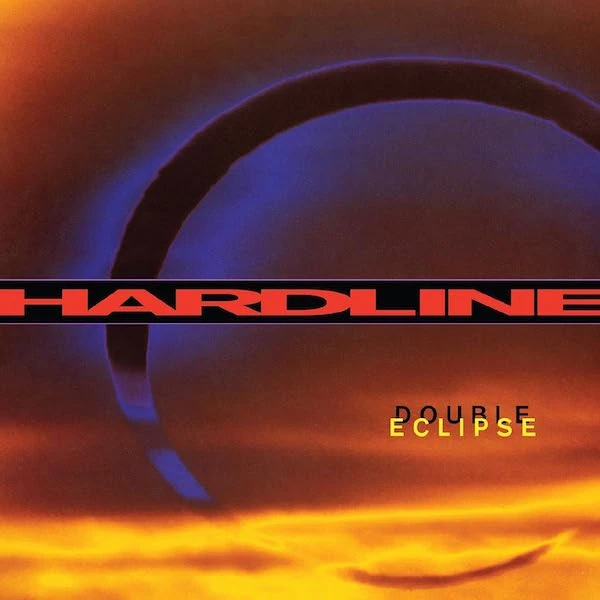
Hardline are one of the cleanest examples. Their first album, Double Eclipse, released by MCA Records on April 28, 1992, contained essentially everything an early-1990s American hard rock band needed to break through — except a marketplace willing to hear it. The personnel were exceptional, the production professional, the songwriting strong. It did not break through. Within eighteen months the band had dissolved as a functioning creative unit; within five years the members had scattered to other projects; within ten years the band had reformed in a substantially different configuration to record a follow-up the original lineup had no meaningful role in creating.
This is the story of those two records — not the full catalog, which now runs to eight studio albums at roughly one every three to five years since 2002, but the two that bracket the band’s actual commercial life. Double Eclipse is the album. II, released a decade later, is the follow-up the marketplace had moved past being able to receive. Everything between and almost everything after is a different kind of artifact.
The Personnel
The Hardline that recorded Double Eclipse in late 1991 was not a band in the conventional sense — musicians who had assembled organically, played local shows, developed a sound. It was a configuration built deliberately around two specific musicians and a specific industry calculation.
The two musicians were the Gioeli brothers. Johnny Gioeli, born October 5, 1967 in Brooklyn, had been chasing a singing career since his late teens; his older brother Joey was a guitarist. The two had played together in Brunette, a late-1980s Los Angeles hard rock project that recorded but never released marketable material and dissolved before producing a record. What Brunette did was establish Johnny’s voice as a known quantity in the LA scene — by 1991, A&R staff and working musicians recognized it as one of the more genuinely capable instruments in mid-tier American hard rock: high range, controlled vibrato, the dynamic delivery the AOR template required and that a great many frontmen of the era could not quite produce.
The calculation was Neal Schon’s. Schon — the Journey guitarist and a founding member of that band in 1973 — had spent the late 1980s in Bad English, the supergroup he formed with John Waite, Jonathan Cain, Ricky Phillips, and Deen Castronovo. Bad English recorded two albums, Bad English (1989, double platinum on “When I See You Smile”) and Backlash (1991, selling substantially less), before effectively dissolving by late 1991. Schon needed a new project, had heard Johnny Gioeli’s voice, and recognized what it could do. He proposed a band built around the brothers, with himself on lead guitar and the rest drawn from his own network.
The lineup was, on paper, one of the strongest assembled for an American hard rock debut in the early 1990s: Schon on lead guitar; Castronovo, Bad English’s drummer and a future Journey member, on drums; Todd Jensen — late-1980s David Lee Roth band, later Alice Cooper and a long roster of arena acts — on bass; Johnny Gioeli on vocals; Joey Gioeli on rhythm guitar. The deal was with MCA, signed in 1991 essentially on the strength of Schon’s involvement, on the expectation that his name plus the rhythm section plus Gioeli’s voice would compete with the late-period AOR cohort — Bon Jovi, the recently reunited Foreigner, the late-Journey catalog, the Aerosmith Get a Grip trajectory about to begin. In any normal commercial climate, a Schon-led hard rock band debuting in 1992 would have found an audience.
The Recording
Double Eclipse was recorded across late 1991 at Rumbo Recorders in Canoga Park, California — the studio Jonathan Cain had used for various Journey projects and that Schon knew from earlier work. Schon produced; Tony Phillips engineered; mixing was handled at Chapel Studios in London and Secret Sound–South Pacific; Bob Ludwig mastered at Masterdisk in New York. The production team alone represents the concentration of professional craft that a debut of any real commercial ambition required at the turn of the 1990s.
What emerged is, on careful listening thirty-four years on, one of the more accomplished late-period AOR-meets-hard-rock debuts of its era: twelve tracks, fifty-four minutes, a length that signaled a band confident it had enough strong material to fill a substantial record rather than the usual nine or ten. The arrangements are dense without being overwrought, and Schon’s guitar work shows what he could do outside Journey’s commercial constraints — more aggressive lead playing, less of the layered melodic structure Journey demanded, the straight-ahead hard rock he had been capable of since his Santana days but that had been gradually filtered out of Journey’s template.
The opener, “Hot Cherie,” set the tone. It is a cover — a 1983 Danny Spanos single written by members of the Canadian band Streetheart — but Hardline make it substantially more aggressive than the original: Schon’s playing direct and propulsive, Gioeli’s vocal sitting in the upper register where his voice was strongest, the rhythm section pushing without ever quite letting the arrangement breathe. It reached number 25 on the Billboard Mainstream Rock chart, the band’s best single placement and the only Hardline track to earn substantial rock-radio rotation — the closest the album came to the breakthrough single the marketing had been built around. “Takin’ Me Down,” the lead single released ahead of the album, reached number 37 on Mainstream Rock in June 1992. Co-written by the Gioeli brothers with Schon, it is the cleanest example of the band working its own material rather than reinterpreting someone else’s: a verse–pre-chorus–chorus build that AOR radio in 1991 would have welcomed without question, and that in mid-1992 received modest support before disappearing as programming logic pivoted toward the alternative material the Nevermind reorganization had made dominant.
The deeper tracks show the real quality. “Life’s a Bitch” is the most aggressive thing here, a blues-inflected workout with one of Schon’s strongest performances. “Can’t Find My Way” works the slower, layered Bad English template Schon was operating out of. “In the Hands of Time,” the closer at over seven minutes, is the most ambitious piece on the record — multiple movements, extended instrumental passages, the long-form construction that ties the band to the progressive tradition mid-period Journey had occasionally engaged, and one of the strongest album-closing tracks in late-period AOR. The remaining songs — “Everything,” “Rhythm from a Red Car,” “Bad Taste,” “Change of Heart,” “When Will I See You Again,” “Love Leads the Way,” “I’ll Be There” — vary in significance but hold the album’s level; there is almost no filler in the strict sense.
What the album lacks is the kind of distinctiveness that set the era’s strongest debuts apart. Mr. Big’s Lean into It (1991) had Eric Martin’s voice plus Paul Gilbert’s virtuosity plus Billy Sheehan’s bass plus “To Be With You” as a deliberate power-ballad vehicle. Skid Row’s Slave to the Grind (1991) had Sebastian Bach’s voice plus a deliberate heaviness that separated the band from its peers. Double Eclipse has the Gioeli voice and the Schon guitar work, but no defining song or identity that placed it as distinctly itself rather than as a high-quality member of its cohort. The album is excellent. In the specific terms mid-1992 required, it is not quite distinctive.
The Moment
Double Eclipse was released on April 28, 1992, and the date matters. By late April, the reorganization Nevermind had initiated the previous September was roughly seven months in. Nirvana had knocked Michael Jackson’s Dangerous off the top of the Billboard 200 on January 11, 1992; Pearl Jam’s Ten was building through the early months of the year toward platinum and saturation; Alice in Chains’ Dirt was still five months away, but the band’s Sap EP had appeared in February. The Mainstream Rock and Album Oriented Rock formats AOR had dominated were in the early stages of reorienting toward the alternative catalog that would, within a year, substantially displace the music Double Eclipse had been engineered to sit alongside.
The MCA campaign launched on the standard template — an MTV video for “Takin’ Me Down,” radio servicing to AOR stations, opening slots on the package-tour circuit. The band toured opening for Van Halen on the For Unlawful Carnal Knowledge tour and for Mr. Big. The reception was muted. Germany’s Rock Hard gave the album 8.5 out of 10, a strong notice in European hard rock terms; American coverage was mostly favorable where it appeared, but appeared far less than the album’s expectations had assumed. The singles charted modestly on Mainstream Rock and never crossed to the Hot 100, and the album did not chart meaningfully on the Billboard 200. By the end of 1992 it had sold enough to show it was finding some audience, not enough to justify the sustained commitment a push toward gold would have required.
What killed it was not, directly, the cultural shift — it was the granular consequence of that shift: the gradual closing of the marketing apparatus that AOR debuts had relied on. The MTV slots for “Takin’ Me Down” and “Hot Cherie” were finite. The programmers who would have played a Hardline track in 1990 were, by mid-1992, increasingly programmed against by their own corporate management to make room for alternative material. The tour bookings that would have continued past the first cycle did not materialize, because the headliners the band would have opened for were watching their own trajectories diminish. By early 1993 MCA had effectively walked away — no announcement, just a halt in marketing resources — and while the contract limped on briefly, it was non-functional. Whether the band was dropped or chose to leave is something Johnny Gioeli has been ambiguous about in retrospect; the practical outcome was identical. By mid-1993, Hardline had no label, no promotional apparatus, and no clear path forward.
What followed was less a collapse than a dispersal. Schon’s energies returned to Journey, then entering the reformation that would produce Trial by Fire (1996) and a long commercial revival; Castronovo would join Journey in 1998 and remain its drummer for most of two decades; Jensen continued as a session and touring bassist; Joey Gioeli essentially stepped away, returning to Hardline only intermittently. Johnny Gioeli, by 1998, had found his actual primary musical home as lead vocalist for the German guitarist Axel Rudi Pell, whose 1998 album Oceans of Time — the record generally credited with defining Pell’s mature sound — featured him as a member of the band. That collaboration has continued for over twenty-five years and more than a dozen studio albums. The Hardline name, from 1993 through 2001, was dormant: no touring, no recording, the band existing only as the artifact Double Eclipse had become.
The Gap
The ten years between Double Eclipse and II are the structural fact the standard rock-history narrative has no ready language for. Most bands do not vanish for a decade between albums; the ones that do have specific reasons — legal disputes, deaths, dissolution and reformation. Hardline had none of these. The Gioelis were alive and working, Schon was alive and working, Castronovo and Jensen were alive and working. The configuration was not dead so much as suspended, in a dormant state the late-1990s commercial-rock infrastructure offered no clear mechanism for resolving.
What changed in 2001 was the emergence of Frontiers Records as a serious vehicle for late-period AOR and melodic hard rock. The Italian label, founded in 1996 by Serafino Perugino, had spent the late 1990s building a catalog around exactly the music the majors had abandoned after Nevermind, and by 2000–2001 had positioned itself as the natural home for European melodic hard rock and the displaced American AOR catalog. Its strategy was specific: identify dormant bands from the late-1980s and early-1990s peak, propose reactivation projects, and market the results to a dedicated, primarily European audience the majors had stopped serving. Hardline were a natural candidate. Frontiers approached the Gioelis with a deal for what became II — a return album that would re-engage the existing audience without major-label expectations. The audience in 2002 was small but committed, the economics modest, and the artistic constraints looser: Frontiers was not going to demand a “Hot Cherie.”
The brothers accepted, and sessions began in 2001 with a substantially different lineup. Schon was committed to Journey and not available; nor was Castronovo, for the same reason; Jensen was not involved. What recorded most of II was Johnny Gioeli on vocals, Joey Gioeli on rhythm guitar, the journeyman Joey Tafolla (whose résumé included Jag Panzer) on lead guitar, Christopher Maloney on bass, Michael T. Ross on keyboards, and a drummer credited as “Bob Rock” — not the famous producer of the same name, but a different musician. Bob Burch produced.
The lead guitar position became a problem partway through: Tafolla was unable to finish his parts, and Josh Ramos — formerly of The Storm, the Gregg Rolie–led post-Journey project of the early 1990s — was brought in late to complete the lead work, recording all of it, by multiple accounts including Gioeli’s own, in two days under heavy pressure. The pressure shows. Ramos’s playing is technically accomplished but lacks the integrated relationship with the arrangements that distinguished Schon’s lead work on the debut; he was, in effect, a session player finishing a record rather than a member making one. There was also older material in the mix: four tracks — “Face the Night,” “Do or Die,” “Your Eyes,” and “This Gift” — had originally been cut for Double Eclipse and left off, and Gioeli framed their inclusion in 2002 interviews as part of giving listeners “a real Hardline record.” “This Gift” is a Neal Schon composition with Schon’s own guitar on it, which makes it the one piece of II that actually connects to the lineup that made the debut, even though Schon was not a member of the band recording the new album.
The Album That Tried
II was released in Japan on August 21, 2002 and internationally on September 23, by Frontiers (the Japanese edition on Avalon). The cover featured an eclipse, a deliberate reference to the debut, and Gioeli chose the bluntly sequential title himself: offered more interpretive options — the working titles included Hyperspace and Vicious Circle — he insisted on the number, meaning it to communicate, without ambiguity, that this was the continuation of what Double Eclipse had started.
The record is a substantially harder one than the debut, leaning toward heavy melodic rock and away from the AOR-influenced template, with denser keyboards and Ramos’s more shredder-influenced lead work in place of Schon’s. Burch’s production is competent without the layered atmosphere Schon had achieved. The strongest tracks work cleanly within the album’s 2002 vocabulary: “Hold Me Down,” the opener, establishes the heavier register, and “Y” is the album’s most genuinely successful single song, built on a strong vocal melody and an arrangement that gives Gioeli room to do what he does best — exactly the kind of melodic hard rock Frontiers had built its catalog around, and a small but real success in its context. “Paralysed” continues the harder direction; “Weight” and “The Way It Is, the Way It Goes,” both written by Tafolla, are the most distinctly 2002 material; “This Gift” closes the album on its one explicit connection to the debut’s lineup. The two Double Eclipse leftovers that surface here, “Face the Night” and “Your Eyes,” sit awkwardly — written for a different production aesthetic, they highlight the gap between the album’s two source moments — and “Do or Die,” “Hey Girl,” and “Only a Night” fill out the middle.
A reunion attempt at the Gods Festival in Bradford in June 2002, meant to revive the original Double Eclipse lineup live to mark the release, has been characterized by Gioeli himself as unsuccessful; the configuration could not reconstitute the cohesion it had had in 1992, and the recording was eventually released against his preference under Frontiers’ contractual right. The failed reunion became a small but telling symbol of what the band had become — a recording entity that could no longer reconstitute itself as a working live band. II sold modestly: a success by Frontiers’ expectations, reaching the dedicated European audience, drawing positive genre-press reviews, and supporting a small tour, but trivial by the broader expectations Double Eclipse had operated under, charting nowhere mainstream. The audience it reached was the one Frontiers had built its catalog to serve — small, dedicated, primarily European, and substantially separated from the commercial-rock infrastructure the debut had targeted.
What the Two Albums Are, Together
Read together, the two records are documents of two different commercial conditions, both of which the people involved considered worth making a record under. Double Eclipse is the album the original configuration made for a marketplace it assumed would still exist on release — built on the belief that a substantial commercial AOR audience continued to operate in 1992 and that professional craft, distinctive personnel, and strong material would find it. The assumption was wrong; the album is not. Thirty-four years on it stands as a well-made example of what the late-AOR template could produce with its elements at full capacity — the album an audience that had stayed inside the late-1980s framework would have welcomed, and that the same audience had largely abandoned by the time it shipped.
II is the album a different configuration made for a marketplace it knew existed but knew was small — built on the belief that a dedicated European melodic rock audience would welcome a return record even after the broader moment had passed. That assumption was correct, and the audience was small enough that the record could not restore the band to the trajectory the debut had been launching. The first was made under conditions that allowed high budgets, real promotion, and the working assumption of broad impact; the second under conditions that allowed only the dedicated remnant the collapse had left behind. Neither is the band’s worst, neither unambiguously its best. They are the two records that show what Hardline could do across two substantially different commercial environments, ten years and two lineups apart.
The albums that followed — Leaving the End Open (2009), Danger Zone (2012), Human Nature (2016), Life (2019), Heart, Mind and Soul (2021), and a record announced for 2026 — are real, made by professional musicians, and the European melodic rock audience has kept engaging with them; Gioeli’s voice has remained one of the genre’s more capable instruments throughout, and the songs are individually as strong as anything on II. But they exist under conditions that have been essentially stable for two decades: small label, dedicated audience, modest expectations. Nothing in the post-II trajectory connects, in any meaningful sense, to the commercial-rock infrastructure Double Eclipse was engineered for. Those records were made for the audience II had identified, and that audience received them.
A Coda on the Post-II Years
Beyond II, the catalog is substantial, though most of it belongs to Johnny Gioeli’s wider career rather than to Hardline as a band. His parallel work with Axel Rudi Pell has produced more than a dozen albums across twenty-eight years; his work with Crush 40, the project that scores the Sonic the Hedgehog franchise, has carried his voice to a wholly different audience of gaming enthusiasts; and his 2018 Set the World on Fire, recorded with Deen Castronovo under the Gioeli-Castronovo name, briefly entered the Billboard top 100 and reunited two original Double Eclipse musicians on record for the first time since 1992. Joey Gioeli’s involvement with Hardline ended after II.
None of which is to say the later material doesn’t matter — it clearly does, to the audience that has sustained the band. The point is that it is a different kind of artifact: the work of Gioeli’s continuing career under the Hardline name, in collaboration with musicians from the European melodic rock community, rather than the work of the band that recorded Double Eclipse — a band that effectively existed for about fifteen months in 1991 and 1992, dissolved when the marketplace it was built for vanished, and reconstituted a decade later as something substantially different.
Whether Hardline are a one-album band, a two-album band, or a continuing eight-album band depends on what counts as the band. By the strictest definition — the original lineup — they are a one-album band whose 1992 debut is the only artifact that configuration ever produced. By the catalog definition — every record under the name — they are an eight-album band still meaningfully active outside the mainstream their debut targeted. The most useful frame is the one in between: the two records that bracket their actual commercial life, and the ten-year gap that made the second the strange artifact it became. The first is the album they made trying to break through. The second is the album they made after the breakthrough had failed and the band, in a different form, decided to continue anyway. Together they are a documentary record of how the late-AOR collapse actually played out at the level of one band built to succeed in a marketplace that disappeared before it could ship its first record.
The eclipses on both covers are not coincidental. The two records are eclipses of each other — the second a partial reproduction of the first, made under conditions the first could not have anticipated. Double Eclipse is what Hardline was. II is what was left of it ten years later. Both exist; both are worth hearing; together they are the band’s actual catalog, and the rest of what carries the name is something else.