Retrospective
The Quietest Disappearance: White Lion, Vito Bratta, and the Career That Ended When It Was Just Beginning
Their second album sold two million copies and produced a number-three Hot 100 single. Their guitarist appeared on the cover of Guitar World and was widely positioned as the successor to Eddie Van Halen. Their fourth album was a substantial creative achievement that the marketplace declined to receive. The lead singer continues to perform their material into 2026. The guitarist has played in public exactly twice since 1991 — at a Brooklyn club reunion show in April 2007 — and has otherwise lived quietly on Staten Island for thirty-five years. A retrospective on White Lion, and on the fact that the band's most interesting story is what the guitarist did not do after September 1991.
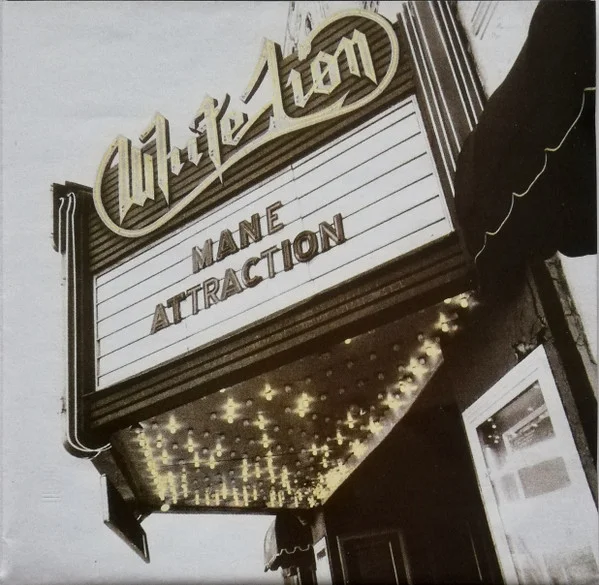
White Lion’s commercial career lasted about four years — from the June 22, 1987 release of Pride through the April 2, 1991 release of Mane Attraction. The first record went double platinum in the United States and produced two top-ten Hot 100 singles. The second sold half a million copies and reached number 19 on the Billboard 200. The third arrived into the most apocalyptic release window of the hair metal collapse — the spring and summer of 1991 — and was structurally incapable of finding its audience regardless of its actual quality.
What followed was not the standard dissolution the genre produced in such abundance. Most bands whose peaks collapsed in 1991 and 1992 kept operating in some configuration across the subsequent decades — smaller labels, the nostalgia circuit, the dedicated audience that has sustained the genre’s economy. White Lion did not. The band dissolved cleanly in September 1991 after a brief tour supporting Mane Attraction. The lead singer, Mike Tramp, has continued recording and touring across the thirty-four years since — through Freak of Nature, various solo records, Rock ‘n’ Roll Circuz, Band of Brothers, several “Mike Tramp’s White Lion” configurations, and most recently the 2022 and 2024 Songs of White Lion projects. The guitarist, Vito Bratta — in 1988 and 1989 widely positioned by the rock-guitar press as one of the most capable players of his generation, comparable in technical accomplishment to Eddie Van Halen — has played in public exactly twice since the dissolution. Both performances came in April 2007, at the L’Amour Reunion Shows in Brooklyn, the same club where Tramp and Bratta had first met in November 1982. He has not played publicly in the nineteen years since, continuing to live on Staten Island, in his childhood neighborhood, with periodic interviews and otherwise complete withdrawal.
This retrospective takes both trajectories seriously. The standard framing positions Mane Attraction as the album that killed the band — the dark, ambitious, commercially incompatible record whose release into the Nevermind-era reorganization made White Lion non-viable. That’s partly accurate: the album sold far less than its predecessors, and 1991 was catastrophic for any band at the band’s tier. But the more interesting fact is what happened to the two principal members afterward. Tramp continued; Bratta did not. The Tramp continuation is the standard hair-metal trajectory. The Bratta withdrawal is what makes the story genuinely distinctive.
The Setup: Copenhagen to New York
Tramp and Bratta arrived at their meeting from very different backgrounds. Mike Tramp — born Michael Trempenau in Copenhagen on January 14, 1961 — had begun professionally as a teenager in the Danish pop band Mabel, which represented Denmark at the 1978 Eurovision Song Contest with “Boom Boom,” finishing sixteenth of twenty and drawing the British delegation’s “nul points” — a small but affecting index of the pattern his pre-White Lion career operated within. Mabel had been a substantial concern in the Scandinavian and Spanish markets (Tramp would call the Spanish following “huge”), but it could not reach the broader European or American infrastructure. By 1981, with Mabel having morphed into the harder-edged Studs (a self-titled album on Hispavox that year), Tramp was living as a tax exile in Spain, looking for a path into the American scene his Scandinavian success had not provided. The opening came through David Lee Roth, who passed through Madrid in early 1982 and was chaperoned around the city by Tramp’s circle; the encounter convinced Tramp to engage the American moment directly rather than from the European periphery. He moved to New York in July 1982, under the band name “Lion.”
Vito Bratta — born July 1, 1961 in Staten Island — had been playing the New York club circuit since his late teens, having started guitar at thirteen. His pre-White Lion band Dreamer, a New Jersey cover band, played the circuit including L’Amour Rock Club in Brooklyn, one of the most substantial breeding grounds for the American hard rock cohort, and in 1982 he was reportedly a frontrunner to replace Eddie Van Halen had Van Halen left his own band — a brief rumor that captures how early the guitar community had identified him as a top-tier player. The two met in late November 1982 at L’Amour, where Tramp’s Lion and Bratta’s Dreamer shared a bill, and by March 1983 had decided to form a band together, Tramp moving over from Lion. The first recording lineup — Tramp on vocals, Bratta on guitar, drummer Nicki Capozzi, and bassist Felix Robinson (formerly of Angel) — carried the band into its first Elektra Records contract. The Brooklyn–Staten Island distinction is small but telling: the band would later be positioned as Brooklyn-based, partly through manager Mike Parente, who owned L’Amour, while Bratta’s actual Staten Island residence and family ties would become structurally relevant after the dissolution.
Fight to Survive (1985)
The first major-label experience was far less successful than the eventual peak would suggest. Elektra signed White Lion in 1984, but the completed recordings did not satisfy the label, which refused to release the album and terminated the contract; Capozzi and Robinson departed shortly after, partly over the disappointment and partly over the internal tensions that would dog the band’s lineup stability throughout. The replacements became the peak configuration: drummer Greg D’Angelo (formerly of Anthrax) joined first; bassist Dave Spitz (brother of Anthrax guitarist Dan Spitz) replaced Robinson briefly before leaving within a month to play with Black Sabbath; the eventual bassist was James LoMenzo, whose later career would include Megadeth and David Lee Roth’s solo band. The Tramp–Bratta–LoMenzo–D’Angelo lineup would hold through Pride and Big Game.
The Fight to Survive recordings, re-cut with the new rhythm section, were picked up by RCA’s Japanese imprint and released in Japan in February 1985, with no American release until 1986, when Grand Slamm Records issued a US version; the lead single “Broken Heart” did not chart, and sales were modest. Heard in 2026, it is a band that had not yet figured out how to translate its club capability into a recorded product — competent material, tight arrangements, Bratta’s technical capability already evident, but without the commercial-pop accessibility the next records would develop. Its standout tracks (“Broken Heart,” “All the Fallen Men,” “Cherokee”) deserve more than their initial reception, but the record does not anticipate the breakthrough to come.
Pride (1987) and the Tramp Phone Call
The pivot came through Atlantic, which signed the band in early 1987 — ironically, after Atlantic’s sister label Elektra had been the original signing four years earlier — and assigned the German producer Michael Wagener, whose CV by then included Mötley Crüe and Ozzy Osbourne. Pride was recorded in about six weeks and released June 22, 1987, but it did not break immediately. The lead single “Wait,” out June 1, did not chart, MTV did not initially rotate the video heavily, and by the standard mid-1987 calculation the album was already drifting toward the pile the labels had been quietly writing off.
What changed the trajectory was Tramp himself, who was not prepared to let it disappear. In a 2025 Louder interview, he described it: “MTV was playing that video once a day at 3am. So I called MTV, got the right person and read them the riot act. And the next week, when all of America had seen it, ‘Wait’ was at No. 1 on MTV’s Top 10 Most Requested. After that, it was Texas wildfire.” It captures how breakthroughs at the band’s tier actually worked — the promotional infrastructure existed but did not, by itself, generate momentum; bands had to intervene in their own cycles. The album’s two million U.S. sales, the eighteen-month tour, the whole 1988–89 peak traced back partly to a 3 a.m. phone call.
The trajectory that followed was substantial. “Wait” entered the Hot 100 in February 1988 — eight months after release — and climbed to number eight by May; the album peaked at number 11 and stayed in the top 200 a full year. “Tell Me” (August 1988) reached number 58 on the Hot 100 and 25 on Album Rock Tracks; “When the Children Cry,” the ballad written against Cold War nuclear anxieties, reached number three in February 1989; “All You Need Is Rock ‘n’ Roll” added more visibility. The album was gold by February 1988, platinum by May, double platinum by year’s end, and the tour took the band out opening for Aerosmith, Ozzy Osbourne, Kiss, and AC/DC. Bratta won “Best New Guitarist” from both Guitar World and Guitar for the Practicing Musician in 1988 and was on the cover of Guitar World in September 1989. What his playing actually accomplished is more interesting than the “second Eddie Van Halen” framing conveys — the comparison was accurate and limiting at once. He deployed the post-Van Halen vocabulary (two-handed tapping, artificial harmonics), but his phrasing integrated the lead lines into the song structures rather than hanging virtuosic displays off standard arrangements; the work on “Wait,” “When the Children Cry,” and the non-single “Lady of the Valley” demonstrated a player who had absorbed the technical vocabulary and developed original applications of it. The September 1989 cover was earned.
Big Game (1989)
The third album captures how the era’s pressures worked. Pride had spent a year on the chart and the tour had run about eighteen months; by spring 1989 the band was exhausted, but Atlantic and management were eager to capitalize before momentum faded, and the decision the band would come to regret — to enter the studio immediately rather than take the break the cycle warranted — was made under that pressure. Recorded across spring 1989 with Wagener again producing, its songwriting worked out in an intense three-day pre-production session, the album was released June 5, 1989, less than two years after Pride, and is the band’s weakest peak record: uneven arrangements, less cohesive than the Pride material.
What it contained, though, was more interesting than the retrospective dismissal suggests. “Goin’ Home Tonight” showed the band could still write the radio-accessible material Pride was built on; “Little Fighter,” the lead single, was written about the Greenpeace ship Rainbow Warrior, bombed by French intelligence in 1985, and reached number 52 — topical engagement the cohort rarely attempted; “Cry for Freedom” extended it; the cover of Golden Earring’s “Radar Love,” the third single, reached number 59. The album peaked at number 19, below Pride’s 11, went gold but not platinum, and toured through late 1989 into 1990. The tension it captured — between the band’s emerging interest in topical material and the pressure to keep producing radio ballads — would become far more visible on the fourth album. The cycle ended in late 1990, after nearly two continuous years on the road. The exhaustion was substantial.
Mane Attraction (1991): The Album and the Marketplace
The two years to Mane Attraction were the band’s most ambitious creative period and, simultaneously, the marketplace’s most decisive shift away from them — and the two collided at release. Recorded across 1990 into early 1991 with Richie Zito producing (replacing Wagener; Zito’s CV included Poison, Cheap Trick’s Lap of Luxury, and Mr. Big’s debut), the album was less a commercial-strategic positioning than a band pushing into territory the template had not been built to hold. The opener, “Lights and Thunder” — an eight-minute heavy rock epic Bratta has said was inspired by Led Zeppelin’s “Achilles Last Stand” — was, in Tramp’s own words, “a fuck you to the label that was pushing the band to write hit songs,” and contained some of Bratta’s most accomplished playing in the catalog; as the lead European single it peaked at number 95 on the UK chart, a figure that captures its incompatibility with mainstream rock radio. The twelve tracks ran about sixty-four minutes — longer than the standard early-1990s album and than anything the band had done — with topical material (“War Song”), multiple tracks over six minutes, and a fuller re-recording of the Fight to Survive track “Broken Heart.” It was the band’s most ambitious record and, in essentially every commercial sense, its least commercial; the two facts were causally related. Heard in 2026, it is a band working at the peak of its collective capability across material the marketplace was not prepared to receive — Bratta’s best playing, the most sophisticated arrangements, Tramp’s most emotionally direct vocals. It is, on careful listening, the band’s best record.
The release date matters, because the 1991 calendar was the single most apocalyptic year of the collapse. Competing for the same audience across that year: Mr. Big’s Lean Into It (March 26), with the eventual number-one “To Be with You”; Skid Row’s Slave to the Grind (June 11), which debuted at number one; Metallica’s “Black Album” (August 12), sixteen million U.S. copies; Pearl Jam’s Ten (August 27); Guns N’ Roses’ Use Your Illusion I and II (September 17), over fourteen million combined; and Nirvana’s Nevermind (September 24). Mane Attraction, out April 2, arrived directly into the moment the infrastructure was pivoting away from the music White Lion made.
The standard narrative — that Atlantic chose Skid Row over White Lion when forced to allocate promotion between label-mates — is partly accurate but oversimplified, since Slave to the Grind dropped two months after Mane Attraction. The label’s reduced commitment across the spring of 1991 reflected the album’s own modest initial response: the lead single “Love Don’t Come Easy” reached number 24 on Album Rock Tracks without cracking the Hot 100, “Lights and Thunder” charted at 95 in the UK, the “Broken Heart” re-recording peaked modestly, and the album itself peaked at number 61, well below the previous two. By the time Slave to the Grind hit number one in late June, the calculation was complete — Atlantic, like every major label that year, was redirecting promotion toward bands showing sustained momentum and away from those showing decline. The Mane Attraction tour ran briefly across summer 1991 at substantially smaller venues; by late summer, operating costs exceeded the diminished revenue. The band’s last show was at the Channel in Boston in September 1991. Tramp and Bratta agreed to end it, less than six months after release.
The Dissolution and the Bratta Withdrawal
What happened to Tramp is the standard trajectory in abundance. He relocated to Los Angeles, returned to Copenhagen, and across 1993–94 formed Freak of Nature with Danish guitarist Oliver Steffensen, recording two albums (the self-titled debut in 1993, Gathering of Freaks in 1994) before the post-grunge conditions made it unsustainable. His solo career launched in 1998 with Capricorn and has run across the subsequent twenty-eight years — nine solo albums plus assorted White Lion-branded and other-project material. By 2003 he had tried to reunite with Bratta to revive the band; Bratta declined. Tramp reactivated the brand across 2004–08 as “Mike Tramp’s White Lion” and then simply “White Lion” with new musicians, releasing Return of the Pride in March 2008, the only original-material album the post-Bratta version produced. The legal conflict that followed proved consequential: by 2010 Bratta had taken legal action over the name, and the out-of-court settlement transferred the White Lion brand to him. Tramp continued under his own name — the Songs of White Lion recordings (Volume I in 2022, Volume II in 2024) his most recent engagement with the catalog. The irony is substantial: the singer of one of the era’s most visible bands performs its material across decades without legal access to its name, while the guitarist who owns the name has not used it commercially since 2010.
What happened to Bratta is the more genuinely interesting story. The “quit the music industry” framing gets the outline right but misses the texture: the withdrawal was not a sudden decision in response to the dissolution but a gradual disengagement across the early-to-mid 1990s, each year producing less activity until, by the late 1990s, he had effectively stopped. The immediate post-band work was modest — producing an album for the band CPR (the Coven/Pitrelli/Reilly project) on Atlantic, contributing a solo on the track “E-11” and an AC/DC cover, and briefly forming a project called Civil War with singer John Levesque that dissolved without recordings — and by 1994 he had returned to his Staten Island neighborhood. The reasons he has given, across a sparse interview record, are specific and worth taking seriously. His father suffered a five-year illness through the mid-to-late 1990s that he has called “a nightmare” of medical complications and family pressure. In 1997 he injured his wrist playing classical guitar, an injury that has made sustained electric playing painful since — not preventing him from playing nylon-string guitar privately, but putting electric playing at the technical level his catalog required beyond his physical reach. The combination produced the conditions the decades-long withdrawal unfolded within.
His first major interview in over fifteen years came on February 16, 2007, as the in-studio guest on Eddie Trunk’s “Friday Night Rocks” on New York’s Q104.3. His answers were measured: he had not simply quit, but had encountered specific circumstances — the father’s illness, the wrist — that made public performance impossible at his former level; he would “love for it to happen today,” he said of a possible reunion, but did not “think it can happen today.” Two months later, in April 2007, he made his first public musical appearances in over fifteen years, across two nights at the L’Amour Reunion Shows in Brooklyn — not White Lion reunions, but sets with various musicians, including instrumental work that showed the capability he had retained. They remain the closest he has come to a return, and in the nineteen years since he has not performed publicly in any sustained sense, giving only periodic interviews.
The standard vocabulary has struggled to frame this. “Quit the industry” is accurate but understates it; “retired due to health issues” underweights the element of choice. The withdrawal was not, in any meaningful sense, a tragedy — Bratta has continued to live in his childhood neighborhood, with his family, with whatever the substantial earnings of the peak supported, playing classical guitar privately and speaking about music occasionally while declining to return. What the vocabulary does have language for is the pattern he violates: the standard post-collapse trajectory has involved continuing engagement with the nostalgia economy, so consistently that not engaging has become anomalous. Bratta is one of the few consequential members of his cohort who simply has not done what the others did.
What the Two Trajectories Document
The difference between Tramp’s thirty-four years and Bratta’s captures something about how musicians at the peak tier related to the post-collapse conditions. Tramp’s is the continuing-career trajectory — a once-prominent singer building the kind of sustainable life the nostalgia economy supports, now with a substantial solo catalog and extensive touring; by any reasonable measure, one of the more substantial continuing artists the generation produced. Bratta’s is something else: not a reduced-scale career, and not the familiar burnout-and-disappear arc either. He did not burn out. He remained a thoughtful, articulate person who happened to stop playing professionally, building a life substantially separate from the public identity his early career had constructed. The difference is not failure versus success. It is a difference of choice.
The broader point — one this magazine has built toward across several retrospectives — is that the standard vocabulary underweights the diversity of post-collapse trajectories. The musicians whose peaks ended in 1991 and 1992 did not all follow one arc of nostalgia-circuit decline; some, like Tramp, built substantial continuing careers, some, like Bratta, withdrew completely, and many occupied positions between. The 1991 collapse was, for the people living it, a moment of structural choice rather than a uniform catastrophe. The bands ended; the people continued; what they did next varied. White Lion’s version of that pattern is among the clearest in the entire cohort.
Coda
Mane Attraction exists, across streaming and reissue, and has accumulated an audience that consistently rates it well above its 1991 reception; Cherry Red Records’ 2024 box set All You Need Is Rock N’ Roll: The Complete Albums 1985–1991 gave the full peak catalog renewed visibility. That audience is not large — the genre’s nostalgia economy has continued at small scale — but it is real, and the records have kept finding listeners across the decades. On careful listening in 2026, they remain substantially better than the standard vocabulary has positioned them to be remembered.
Tramp continues to perform White Lion material under his own name, the acoustic Songs of White Lion re-recordings his most recent engagement with the catalog — personal-archive work rather than substitutes for the original Bratta-era recordings. Bratta continues to live on Staten Island. At 64 as of summer 2026, he has announced no return and no reunion; by his own framing the door remains formally open, but the circumstances that have kept it shut for three decades — the wrist, the family obligations, the broader temperament — have not changed. He is, as he put it, the same person he was at 30, except that he has not made a record or played a public show for thirty-four years.
The L’Amour Reunion Shows in April 2007 were his last sustained public performances, in the same Brooklyn venue where he met Tramp in November 1982 — twenty-five years earlier. The career had begun and ended at L’Amour. Whether Bratta will ever play publicly again remains, in the 2026 record, an open question: the door has not been formally closed, and it has not been opened in the nineteen years since. Both men are alive, and both have built substantial post-band lives in directions the peak years of 1987–1991 had not anticipated. One chose to continue; one did not. Neither choice was wrong, and that — far more than the album that supposedly killed the band — is what White Lion’s story actually documents.