Retrospective
Vain Saw It Coming: A Band Watching the Door Close in Real Time
They had the songs, the look, the magazine covers, and a debut album that critics still call a lost classic. Then their label collapsed, an ex-Guns N' Roses drummer walked into the picture, and the 1990s happened. A retrospective on a San Francisco band who kept making records nobody was listening for.
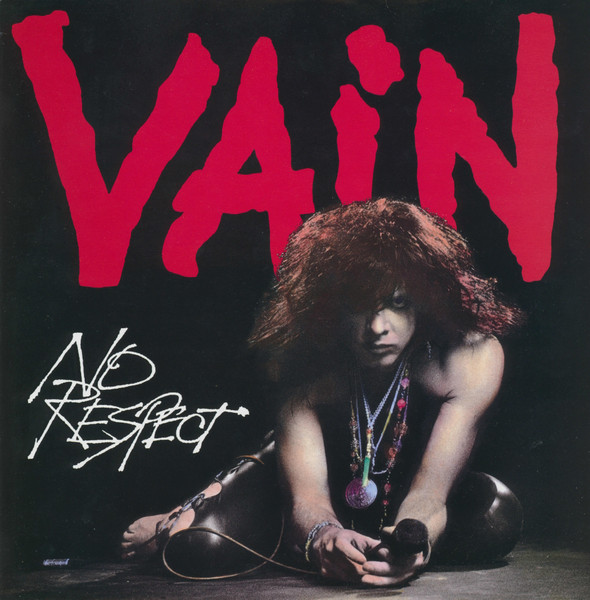
There is a particular kind of bad luck that runs through the second tier of late-1980s hard rock, and Vain caught all of it. They were from the wrong city, signed to the wrong label, recorded a sophomore album that came out on the wrong date in the wrong country, and watched their guitarist quit to audition for Ozzy Osbourne while their replacement drummer was a recovering addict who had recently been fired from the biggest rock band in the world. None of this was their fault. Most of it was avoidable only in retrospect. And through it all, Davy Vain kept making records — first because he believed in them, then because nobody told him to stop, then because, by the time anyone might have, he had stopped caring whether they were listening.
This is the story of a band that did everything right except being in the right place at the right time, and what happens to a band when the door closes between the first album and the second.
The Bay Area Outlier
The first thing you need to understand about Vain is that they were not from Los Angeles. In 1989, this mattered more than it sounds like it should. The Sunset Strip was not a place; it was an entire industry’s filtration system, the network of clubs and managers and label scouts and photographers who decided which bands graduated from the Whisky to Headbangers Ball. To be from somewhere else — Seattle, New York, Philadelphia, Charlotte — was to start at a disadvantage that publicists could only partially overcome. The Sunset Strip wasn’t where you got famous. It was where the people who decided who got famous happened to live.
Vain were from San Francisco. They had formed in 1986 around Davy Vain, a young record producer who had already produced Death Angel’s The Ultra-Violence — one of the more important albums in the emerging Bay Area thrash scene — and had recorded a demo with Kirk Hammett of Metallica. He was not, by background, a glam metal singer. He had ended up in glam metal partly through aesthetic affinity and partly through circumstance. By 1986, the genre was where the money and attention were, and Vain was a producer who happened to look the part.
The band he assembled — guitarist Dylana Nova Scott, second guitarist Danny West, bassist Ashley Mitchell, drummer Tommy Rickard — played the Bay Area circuit for over a year before regularly making the trip down to Los Angeles, where they opened for an as-yet-undiscovered Guns N’ Roses and built enough buzz to put themselves on the covers of Kerrang! and BAM before they had even signed a record deal. Kerrang!, in particular, fell hard. The British metal press treated Davy Vain as a leather-trousered, barefooted pin-up — the kind of frontman they had not had since the early days of Mötley Crüe.
In 1988, Island Records signed them.
No Respect (1989): A Lost Classic in Real Time
The album that emerged, No Respect, is the kind of record that critics retroactively decide should have been bigger. The reviews that have accumulated over the past thirty-five years are unusually consistent. The Rockpit’s critic, who was a teenager when it came out, remembered it as a record that “shone out like a beacon from the crowd” in a landscape of Poison clones — “sheer fucking gold.” The Nerd Bacon retrospective calls it “criminally underrated and forgotten.” A writer at Metal Express Radio describes Davy Vain’s voice as “both cool — as in cold and detached — yet passionate at the same time,” noting that where most glam metal lyrics about heartbreak felt like pretense, with Davy Vain “there was something genuine coming across.”
That last observation is closer than most critics get to what actually made the album distinctive. No Respect sounds like a glam metal record made by someone who had been thinking carefully about what glam metal was for. The hooks are there, the choruses are there, the leather is there, but the emotional register is wrong — or rather, it’s right in a way that almost nothing else from 1989 was. Davy Vain’s lyrics weren’t party songs about girls in tight jeans. They were songs about sex that admitted to being about sex, songs about wanting that admitted to the desperation in wanting, songs about insecurity that didn’t bother hiding it behind bravado. The title track features the lyric “Go ahead and use me baby / when it comes to you, ain’t got no self respect” — a kind of unguarded masochism that Warrant or Trixter would never have permitted themselves to record.
The Dig Me Out podcast’s 2025 retrospective got at the same thing from a different angle: where most glam metal had the “fun-and-danger balance” of the genre, No Respect had “an added sense of menace, as if San Francisco’s thrash metal undercurrent seeped into its DNA.” This is the Davy Vain difference. He had produced Death Angel. He knew what menace sounded like, and he understood — in a way that the LA bands largely didn’t — that menace was not the opposite of melody. You could have both. No Respect has both.
The album peaked at number 154 on the Billboard 200. Two singles, “Beat the Bullet” and “Who’s Watching You,” got MTV play and modest radio attention. Kerrang! voted it among the top twenty albums of 1989 and among the top five glam albums of the year. None of this was nothing. But none of it was enough.
The Metal Channel’s retrospective offers the standard explanation: Island Records, “better known for signing U2 than sleazy rock bands, didn’t have the infrastructure to market glam metal.” This is partly true. Island was a label with one identifiable rock band on its roster — U2 — and a portfolio that ran toward reggae, world music, and adult contemporary. Vain was an experiment, and labels that experiment with genre rarely commit the marketing dollars that genre incumbents do. The Dig Me Out essay adds a second factor: “the band’s San Francisco origins also worked against them.” Bay Area thrash was a real scene; Bay Area glam was almost a contradiction. There were no clubs that wanted them, no DJs predisposed to play them, no scene infrastructure to leverage. They were, as that piece puts it, “left to grind it out in small clubs while bands like FireHouse played to thousands every night.”
By the end of 1989, the band was on a tour bus heading into 1990, with a sophomore album already being written, and every reason to believe the next two years would be the ones that finished what No Respect had started.
All Those Strangers (1991): The Album That Didn’t Exist
The second album was called All Those Strangers. The band recorded it with producer Jeff Hendrickson, with what most retrospectives describe as a clear sense that they had grown — that the bones of the No Respect sound were still there, but darker, more developed, less indebted to the LA template. Pre-release cassettes circulated. Release plans were drawn up in Japan. The album was advertised. And then, in 1991, Island Records was bought by PolyGram, and Vain — along with most of the rock acts on Island’s roster — was dropped before All Those Strangers could come out.
The album would not see official release for nineteen years.
What killed Vain at this moment was not, strictly speaking, grunge. Nevermind would not be released until September 1991, and Vain was already in the wind by then. What killed them was the consolidation logic of the major-label music business, which periodically devours mid-tier acts during ownership transitions for reasons that have nothing to do with whether they would have found an audience. PolyGram’s executives looked at Island’s roster, saw a glam metal act that had not had a hit, and made the rational corporate decision. They did not know — and could not have known — that grunge was about to make the decision look prescient.
This distinction matters, because the standard narrative of late hair metal collapse is that Nirvana ended it overnight. For most bands that’s only partly true; the genre was already overcrowded, the audience was already drifting, and the labels were already nervous. But for Vain specifically, the death was administrative, not cultural. The label collapsed before the audience disappeared. They were among the first casualties of a war that had not yet been declared.
The album itself, when finally released by Davy Vain on his own Jackie Rainbow Records in 2010, was greeted by critics who had been waiting for it like an artifact returned from a closed archive. The Austin Chronicle’s Raoul Hernandez compared it to Mother Love Bone, noting that the album “initially came on like a comedown from its fast, trashy birth mother” but “now proves no slump.” Metal Express Radio called it “better than the next Vain releases” — those being Move On It, Fade, and On The Line — while admitting that it “did not feel like the free streaming Vain that was known up until then.” It was, in essence, the album that history had decided wasn’t important enough to release in 1991, made important by the simple fact of having been missing for two decades.
Road Crew (1991): The Steven Adler Detour
Here is where the story turns from misfortune into something stranger.
In late 1991, with the band collapsing and Danny West and Tommy Rickard having departed, Davy Vain got a phone call from Steven Adler. Adler had been fired from Guns N’ Roses about a year and a half earlier, in mid-1990, during the recording sessions for what would become Use Your Illusion I and II. His heroin addiction had reached a point where Axl Rose, Slash, and the rest of the band had decided to replace him with Matt Sorum. He had, however, still appeared on the track “Civil War” from Use Your Illusion II, and the lawsuit he would file against his former bandmates over royalties and the circumstances of his firing was still working through the courts.
Adler was now trying to put together a new band called Road Crew — the revival of a 1983 group he had founded with Slash and Duff McKagan, which had effectively been the prototype for Guns N’ Roses before Axl Rose and Izzy Stradlin came into the picture and everything was renamed. Adler wanted Davy Vain to be the singer.
The arithmetic of this offer in late 1991 was extraordinary. Use Your Illusion I and II had been released in September 1991 and were sitting at the top of the charts. Guns N’ Roses was, at that moment, the biggest rock band in the world. The afterglow attached to anyone who had been in or near that band was significant. Steven Adler — even fired, even with documented drug problems — was a name that opened doors. A band fronted by Davy Vain and drummed by Steven Adler, with Vain’s existing guitarist Dylana Nova Scott in the lineup, was, on paper, a real proposition.
Davy Vain said yes. Vain went on hiatus. Road Crew added guitarist Shawn Rorie and bassist Ashley Mitchell, recorded an album, and began attracting genuine label attention. And then, in a story that is more or less the standard story of every Steven Adler project from 1990 onward, Adler’s drug use overwhelmed the sessions, the band fell apart before the year was out, and the album was never released.
What’s striking, looking back, is how plausible Road Crew briefly was. The Guns N’ Roses afterglow gave the project initial momentum that Vain itself had never quite had — managers and labels who would not return Davy Vain’s calls in 1990 were now returning them in 1991, because the email subject line had changed. The lesson, which Davy Vain seems to have absorbed without bitterness, was that the music industry’s interest in talent is mediated almost entirely by adjacency. You can be a great singer for five years and get nowhere; you can announce that you’re singing for an ex-Guns N’ Roses drummer and become temporarily interesting. None of this had anything to do with whether the songs were any good.
When Road Crew fell apart, Davy Vain went back to making music under his own name. The audience that had briefly become available through proximity disappeared. He has not, to my knowledge, ever discussed the Adler episode with any particular emphasis. It was a thing that happened, then didn’t.
Move On It (1993): Released in Japan, Visible Nowhere Else
Vain reformed in 1993 with Danny Fury, formerly of The Lords of the New Church, on drums. They recorded what would technically be their third album but functionally their second-released record. Move On It came out in 1993 on Polystar Records — in Japan only.
This is the part of the Vain story that requires the most translation for American readers, because it doesn’t fit any pattern American rock journalism is good at narrating. By 1993, the United States had effectively stopped buying glam metal. Grunge had displaced it on radio, MTV had pivoted hard toward alternative, and the major-label infrastructure that had pushed hair metal to mass audiences had been redirected toward Pearl Jam and Soundgarden. But Japan had not made the same pivot. The Japanese rock market — long a refuge for European progressive rock, AOR, and second-tier American hard rock — continued to buy glam and hard rock records well into the late 1990s. For a band like Vain, with a small but devoted following and a producer-frontman who could keep recording cheaply, Polystar’s offer was the only offer.
Move On It itself is — depending on which critic you read — either an underrated continuation of the No Respect sound or a “never-was glam metal” record that “sinks fast in a sea of cliched and uninspired songs.” The latter assessment is from a RateYourMusic user; the former is the consensus among the Vain fan community, which has consistently rated the album higher than the broader critical community ever did. The track most often singled out for praise involves a guest appearance from Steven Adler, who plays drums on one track — a small footnote to the Road Crew episode, and a reminder that even in 1993 the Adler name still had marginal residual value.
Most importantly, Move On It sounded like a Vain record. The band had not pivoted to grunge, had not added flannel, had not tried to retrofit their sound for an alternative-rock audience. They were still doing what they had been doing in 1989. In 1993, this looked like stubbornness; in retrospect, it looks like the only honest move available to them. The audience that had liked No Respect was either still there or had moved on permanently. Either way, the band was not going to win the second group back by chasing them.
The American rock press did not review Move On It. There was no marketing campaign in the United States. The album existed, in the country where it had been made, only as a Japanese import for completists. AllMusic’s later summary captured the trajectory in a single phrase: “a bevy of lineup changes cast a shadow over the band’s next two studio albums.”
Fade (1995): The Sound of a Band Alone
By the time Vain began recording the fourth album, the lineup had collapsed again. Scott had departed to audition for Ozzy Osbourne, West had left to release a solo EP. Fury was gone. By the sessions for Fade, Davy Vain himself was handling both vocals and guitar — and producing the record alone, in his own studio. Ashley Mitchell remained on bass. New drummer Louie Senor was brought in. That was the band.
Fade, released in 1995, is the most interesting record in Vain’s middle period precisely because it sounds like what it is: the work of a singer-songwriter producing himself, with diminishing collaborators, after the audience has gone home. Its tracklist runs to longer songs — “Powder Blue” at 6:26, “Hollow and Spun” at 6:36 — and the energy is moodier, more inward, more interested in atmosphere than in choruses. Reviewers at the time who heard it at all noted a drift toward psychedelia, a willingness to let songs breathe past the radio-edit length. One RateYourMusic commenter described Move On It as “moving a bit towards the psychedelia of the final record” — meaning Fade — which positions the two records as the band’s tentative experimentation outside genre.
It is tempting to call Fade a transitional record, but transitional to what? There was no destination available. Glam was dead in the American market. Grunge was already curdling into post-grunge. There was no scene Vain could have credibly joined. Fade is the sound of a band making music for the audience that had stuck around — an audience small enough to fit in a Polystar contract — and trying things, because there was no reason not to.
Like Move On It, Fade was released in Japan first, then licensed to small European labels (Saraya in 1996, Revolver also in 1996) for limited release. It received no significant American review coverage. AllMusic’s summary handles it in the same sentence as its predecessor: 1994’s Move on It and 1995’s Fade, both of which were released via Polystar. Two sentences in a career biography.
The Long Quiet
After Fade, Vain as a band went largely dormant for nearly a decade, even as Davy Vain himself continued working as a producer and engineer. He spent the late 1990s in his own studio, The Groove Room. In 2000, he released a solo album called In From Out of Nowhere, with Mitchell and Senor and guitarist Craig Behrhorst — a record made for the same reasons all the late-period Vain records were made, which is to say, because Davy Vain was still writing songs. The same year he worked as the assistant engineer and Pro Tools engineer on Christina Aguilera’s Stripped, a credit that would have astonished anyone who had read his 1989 Kerrang! cover story.
The band reformed properly in 2005, re-released No Respect through the UK label Gott Discs, toured the United Kingdom for the first time since 1989, and recorded a new album, On The Line. Kerrang! writer Steve Beebee, reviewing a 2005 Nottingham show, wrote that the gig “leave[s] you genuinely amazed, and more than anything, angry that a trend-fixed music industry could possibly have suppressed this awesome band for 15 years.” Subsequent albums followed at the band’s own pace: Enough Rope in 2011, Rolling With The Punches in 2017, Disintegrate Together in 2024 — the latter reviewed by The Rockpit as the closest the band had come to recapturing the No Respect sound, and by Maximum Volume Music as “the most sleazy they’ve sounded for about 35 years.”
By 2024, most of the original No Respect lineup was playing together again. The Dig Me Out retrospective notes how rare this is for a band of their vintage: most hair metal acts either self-destructed or became revolving-door tribute versions of themselves. Vain’s longevity, that piece argues, “speaks to a deeper truth: bands like Vain endure because they’re driven by passion, not passing trends.”
That’s the standard fan-press summary. It’s also, more or less, true.
What the Story Actually Is
The temptation, with a band like Vain, is to write the story as a tragedy of timing. No Respect arrived too late — 1989 was the genre’s overripe peak, and the album, however good, was always going to be one of dozens released that year. All Those Strangers arrived even later, into a label that no longer existed. Move On It and Fade arrived during a cultural moment that had no place for them in their home country, and were essentially Japanese-export records by default. The timing was bad. The label situation was bad. The luck was bad. End of story.
But that framing doesn’t quite get at what’s distinctive about Vain, which is how the band responded to all of it. They did not pivot. They did not put out a grunge record in 1993, or a post-grunge record in 1995, or a nu-metal record in 1998. They did not change their look, file the serial numbers off the No Respect sound, or attempt to reinvent themselves as anything other than what they had been when they started. The body of work they produced between 1991 and 2024 is, with minor variations, the body of work a band who believed in No Respect would have produced if the world had simply kept letting them. The fact that the world stopped letting them, for about fifteen years in the middle, did not change what they made — only how many people heard it.
This is unusual, and worth taking seriously as an editorial choice rather than as a failure of imagination. Most second-tier hair metal bands who survived the early 1990s did so by metamorphosing — Mötley Crüe’s John Corabi album, Skid Row’s Subhuman Race, Warrant’s Ultraphobic, the various attempts by Slaughter and Trixter and Kix to look heavier or grungier or angrier than they had been on their debut. These attempts mostly failed, both critically and commercially, but they were attempts. They were the sound of bands trying to find a place in a culture that no longer needed them. Vain didn’t try. Davy Vain seems to have concluded, quite early, that the culture was going to do what it was going to do, and that his job was to keep making records that sounded like Vain records. If that meant releasing on Polystar to a Japanese market, fine. If it meant self-releasing on Jackie Rainbow Records in 2010, also fine. The work was the point. The audience would be whoever was paying attention.
There is a version of this story in which that’s a cautionary tale — a band who refused to adapt, and paid for it. There is another version in which it’s the only honorable response available to a band who knew exactly what they were good at and refused to pretend otherwise. Both versions are true. Which one you find more interesting probably says more about you than about Vain.
What’s certain is that No Respect belongs on any serious list of the most underrated debuts of the late 1980s, that All Those Strangers would belong on a list of the great lost sophomore albums if anyone bothered to make such a list, and that the catalog Davy Vain has assembled since is more coherent, more honest, and more interesting than nine-tenths of what his more famous peers have produced in the same decades. The fact that nobody noticed at the time is not really Vain’s problem to solve. It’s the problem of the music journalism that was supposed to be paying attention, and wasn’t.