Long Plays
Their Heaviest Mistake: The Story of Mötley Crüe's Self-Titled Album
In 1994, the biggest glam metal band in America fired their lead singer, hired a stranger with a different voice, and made the most ambitious record of their career. It debuted at number seven on the Billboard 200 and was certified gold within seven weeks. Then the audience walked away, the tour collapsed into half-filled clubs, and within three years the experiment was over. A long play on the album that was supposed to save Mötley Crüe and instead got quietly written out of their own history.
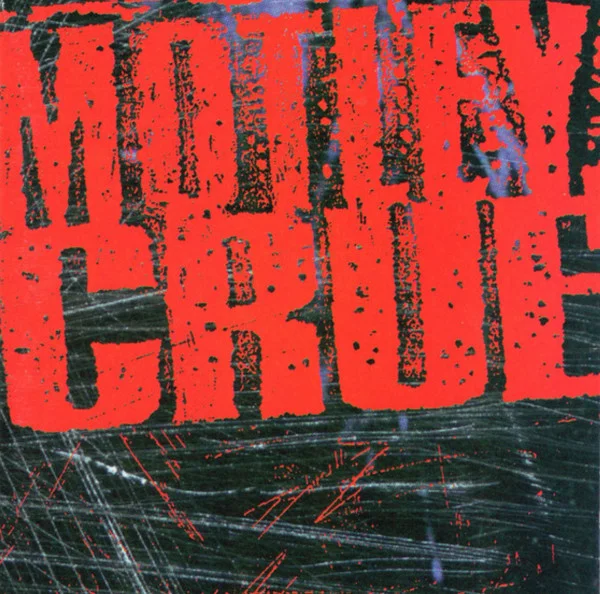
In late February 2025, Mötley Crüe’s 1994 self-titled album vanished without announcement from Spotify, Apple Music, iTunes, and Pandora. Its twelve tracks were no longer searchable; playlists that contained them showed greyed-out, unplayable entries. Only the lead single, “Hooligan’s Holiday,” survived — and only in the form it took on the 1999 compilation Supersonic and Demonic Relics. The rest of the record, a Bob Rock production that had cost Elektra Records two million dollars, was simply gone from the platforms where modern music lives.
As of early 2026 the album remained on Amazon Music and YouTube. It had not been formally pulled from sale, and no statement came from the band, the label, or the singer who appears on it. Every other Mötley Crüe studio record — Too Fast for Love, Shout at the Devil, Theatre of Pain, Girls, Girls, Girls, Dr. Feelgood, the post-Corabi material — stayed in normal circulation. The 1994 album, alone in the catalog, had been quietly disappeared.
That detail tells you most of what you need to know about how the band has treated this record for three decades. Mötley Crüe was the only studio album they ever made with John Corabi as lead singer, and the heaviest, longest, and most ambitious thing they ever recorded. It debuted at number seven on the Billboard 200 and went gold in seven weeks. Then the audience that had bought Dr. Feelgood six million times stopped engaging with the band entirely. The tour collapsed, the label killed the follow-up, and by 1997 Vince Neil was back and Corabi was being written out of the official story.
This is the story of what that album was, what the band thought they were making, why it failed in precisely the way it did — and why, thirty-two years on, it is still possible to argue it might be the best record Mötley Crüe ever made.
The Setup: After Dr. Feelgood
Released September 1, 1989 and produced by Bob Rock at Little Mountain Sound Studios in Vancouver, Dr. Feelgood was the record Mötley Crüe had spent nearly a decade working toward. It topped the Billboard 200 — the only Mötley Crüe album ever to do so — and was eventually certified six times platinum in the United States. Four of its five singles became major rock-radio hits: “Dr. Feelgood,” “Kickstart My Heart,” “Without You,” “Don’t Go Away Mad (Just Go Away),” and “Same Ol’ Situation.” It earned two Grammy nominations for Best Hard Rock Performance and won the 1991 American Music Award for best heavy metal/hard rock album, and the supporting tour hit every major arena and stadium market in the world.
It was also their first record made entirely sober. Nikki Sixx had nearly died of a heroin overdose in December 1987, and the band had gone through rehabilitation together; the cleaner mixes, tighter arrangements, and disciplined songwriting were the audible product of musicians no longer working through a narcotic haze. Bob Rock’s clean, layered, radio-engineered production handed them the sonic vocabulary of an arena act.
What it did to the band internally was clearer in hindsight. By 1990, Mötley Crüe had achieved everything they had set out to do when they formed in 1981 — biggest rock band in America, sober, rich — and, by their own later accounts, were also exhausted, bored with one another, and at odds about where to go next.
Sixx has been candid about the tensions. He wanted to push toward the heavier, darker textures coming out of Seattle and Chicago; Vince Neil, by Sixx’s account, did not. “Vince is a creature of habit,” Sixx said in 1994. “He’d wear the same socks because he was superstitious, the same shoes. He didn’t want to change musically or otherwise.” Neil’s version differs — he has suggested he was driven out by his bandmates’ creative drift rather than by any resistance of his own.
The accounts diverge on specifics but converge on the fact: by early 1992, roughly halfway through writing what was meant to be the band’s sixth album, the two sides had reached an impasse. On February 11, 1992, the band announced Neil was no longer their singer, attributing the split to his lack of commitment — a framing Neil immediately disputed, saying he had been fired.
In commercial terms this was a substantial gamble. Glam-metal frontmen were not interchangeable; audiences bound bands to specific voices and personalities, and replacing the singer of a group that had just sold six million copies of an album was exactly the move labels counseled against. Elektra Records — which held a large financial stake in the band and would later sign them to a lucrative new contract — was not consulted before the firing went public. By several accounts the band concealed Corabi’s hiring from the label for a time, fearing Elektra would reverse the decision or renegotiate on worse terms.
The New Singer
In 1992 John Corabi was a known quantity on the Los Angeles hard-rock scene without being a star. He had fronted The Scream, whose 1991 album Let It Scream was produced by Eddie Kramer (Jimi Hendrix, Led Zeppelin, Kiss) and released on Hollywood Records to respectful but modest response; before that he had played in the Philadelphia-area band Angora. He was thirty-three, and his voice did not fit the glam-metal template — bluesier, grittier, lower in its natural register, with the harmonic depth of a soul singer rather than the high theatricality of a hair-metal frontman. He also played rhythm guitar, and brought that capability with him.
The audition, by the band’s accounts, was less about the voice than about the guitar. Tommy Lee: “It was a pretty natural evolution when John came in to audition. We were looking for a singer. He came in, strapped on a guitar, and we were like, ‘Whoa, what’s going on?’ All of a sudden the sound got twice as fat, and all these things just started coming.” Mötley Crüe had been a three-instruments-plus-vocals band for their entire existence; with Corabi they could become something denser and heavier.
The musical consequences followed from his range. Corabi could not produce the high nasal squeal that anchored “Looks That Kill” and “Girls, Girls, Girls”; what he could do — the bluesy roar, the dynamic shifts, the lower-register intensity — was a different kind of singing, and the songs written with him in the room would be different songs because of it.
Writing began in earnest in mid-1992, first in Vancouver and then at A&M Studios in Hollywood, with Bob Rock returning for his second consecutive Mötley Crüe album and pushing them to write unlike they had for Dr. Feelgood. The working title was Til Death Do Us Part. Recording stretched to nearly two years — far longer than any previous record, a function of both the project’s ambition and the difficulty of working out what this new four-piece actually was.
The Album That Emerged
Mötley Crüe arrived on March 15, 1994: twelve songs, just over sixty minutes, longer than anything they had released. The genre tags later attached to it — heavy metal, alternative metal, hard rock, grunge — capture its instability accurately enough. It is not a grunge record and not quite a hard-rock record; it is a band that had defined one specific 1980s genre trying, in real time, to work out what they sounded like in 1994.
The opener, “Power to the Music,” is the loudest statement of intent the band ever made, built on a riff that owes more to early Soundgarden than to anything in their own catalog, with Corabi entering low and aggressive in phrasing impossible to imagine from Neil. Its subject — the redemptive power of rock and roll — is a slightly defensive starting position for a band that by 1994 had reason to wonder whether its genre still mattered.
“Uncle Jack,” the second track, is the strangest thing they ever recorded: a sliding blues riff under a first-person account of a predatory uncle and child abuse. The band that made “Girls, Girls, Girls” was now writing about sexual violence against a child — and the song is genuinely good, controlled and harrowing rather than exploitative. It is also a song almost no one who bought Dr. Feelgood was prepared to encounter.
The two singles were not the album’s strongest material. “Hooligan’s Holiday,” released in February 1994, is the closest the record comes to a traditional Mötley Crüe sound — a mid-tempo, riff-driven song with a hooky chorus, edgy without being challenging — and it reached number sixteen on the Billboard Mainstream Rock chart, a respectable but steep drop from the Dr. Feelgood singles, all of which had been Top 10 entries. The second single, “Misunderstood,” is a six-minute-and-fifty-three-second power ballad with backing vocals by Glenn Hughes (Deep Purple, Black Sabbath), built across multiple movements in a way the band had never attempted; some have called it the most ambitious song they ever wrote. MTV refused to play the video.
What is most striking across the full hour is how unified it feels. Nearly two years with a single producer produced a record whose concerns — addiction, abuse, the limits of hedonism, what comes after success — recur in a way that suggests deliberate thematic construction rather than the song-by-song approach of earlier albums. Corabi’s performance is consistent throughout, and the production is dense, layered, and willing to take risks Dr. Feelgood’s commercial calculus would not have allowed.
On release, the band was unanimous about what they thought they had made. Sixx, to MTV in early 1994: “We’re obsessed with making this the most invigorating album Mötley have ever done.” Lee spoke of Corabi having changed everything about the band’s sound. Mick Mars, characteristically quieter, has since called it the most musically satisfying work of his career. Corabi himself has always spoken of it with a mix of pride and grief — proud of the record, grieving what happened to it.
The Reception: A Top-Ten Debut That Disappeared
What happened commercially is one of the strangest stories in mid-1990s rock, because it was not, at least at first, a flop.
Mötley Crüe debuted at number seven on the Billboard 200 in the chart week of April 2, 1994. For a band whose previous album had hit number one and gone six times platinum that was a decline, not a catastrophe, and the gold certification on May 3 — seven weeks out, roughly half a million units shipped — meant that by the metrics the 1994 industry used, the release had succeeded.
What never came was the second phase. Dr. Feelgood had not merely sold on release; it kept selling for years, eventually six million in the United States alone. Mötley Crüe moved its initial half-million and essentially stopped. It never reached platinum, and would go on to sell fewer copies than any Mötley Crüe album since their 1981 debut Too Fast for Love. The cliff was sudden and decisive.
The reviews were more divided than the standard narrative allows. Rolling Stone was lukewarm and Spin dismissive, but the dedicated rock press that had championed the band through their peak was more receptive: Kerrang! gave it four K’s out of five and Metal Hammer called it a creative reinvention worth attention. Looking back, most of the hostile reviews objected less to the album than to its release under the Mötley Crüe name — the implicit charge that this was not really a Mötley Crüe record, and that keeping the name was a bad-faith attempt to hold a brand the music had abandoned.
What killed it was not the reviews but the audience’s refusal to follow. The fans who had bought Dr. Feelgood six million times did not show up for the Corabi record, and the heavier, more serious adult-rock audience that might have appreciated it — the one that overlapped with Alice in Chains, Soundgarden, and Stone Temple Pilots — could not get past the name.
MTV compounded the problem. The “Hooligan’s Holiday” video drew only modest rotation, and the “Misunderstood” video was refused outright, reportedly after Sixx had walked out on the network’s reporters earlier that year in a dispute over their coverage of the band’s image change. MTV had been Mötley Crüe’s primary commercial engine in the late 1980s; by 1994 its hours belonged to Nirvana, Pearl Jam, Stone Temple Pilots, Nine Inch Nails, and the second-tier alternative acts rising in their wake. Whatever the new album sounded like, it was not what MTV wanted to play.
The Tour That Didn’t Happen
The supporting tour is among the most documented — and most mythologized — commercial failures in mid-1990s hard rock.
Management’s early-1994 plan had been a substantial U.S. arena headlining run, on the expectation that the number-seven debut and a deep catalog of arena-tested hits would carry the band back to Dr. Feelgood-era venues. By June 1994, three months after release, the plan had been scaled down sharply; tour manager Mike Amato was booking smaller rooms, and the band still struggled to sell them out. By the end of the year they were playing theaters and clubs. The arc is legible in the venues: Madison Square Garden in 1990, rooms in the one-to-three-thousand-seat range by late 1994. Sixx tried to spin it as a choice — “I’d rather play theaters than arenas. That’s because of where I’ve been. Playing smaller venues brings back the connection to the fans we lost when things got too big” — a framing with some artistic truth to it and an obvious public-relations function.
The collapse is clearest in 1995, when the band that had filled arenas for nearly a decade played exactly one show: a benefit on January 30 at Club Shelter in Pasadena, organized for guitar tech Sammy Sanchez, who had recently lost his daughter in an accident. That was the entire year’s touring.
Corabi has since pushed back on the empty-venues mythology, arguing that the reduced 1994 schedule and the missing 1995 one owed as much to internal dynamics, contractual disputes with Elektra, and the simple absence of new material as to audience rejection. He is partly right: the rooms the band did play were often two-thirds or three-quarters full, meaningfully different from half-empty. But the larger pattern is undeniable — a band earning eight-figure tour revenues in the Dr. Feelgood era was, by 1995, not touring at all.
The Quaternary EP
In April 1994, a month after the album, the band released a companion EP, Quaternary, initially only as a mail-in offer to buyers of the album’s first million copies, in a print run of twenty thousand. (It reached wider circulation on the 2004 box set Music to Crash Your Car To: Vol. 2.) Its working title had been Leftovers, and both names describe it accurately: material that hadn’t made the album.
Its structure was unusual. During the sessions, Bob Rock had asked each of the four members to write and record a solo track with no input from the others — partly a creative exercise, partly a diagnostic of what each sounded like left alone. Those four tracks, plus a full-band song called “Babykills,” made up the EP. Tommy Lee’s “Planet Boom” was an industrial-techno piece reflecting his developing interest in electronic music — he befriended Trent Reznor in this period and drummed, uncredited, on two mixes of Nine Inch Nails’ “Closer.” Mick Mars’s “Bittersuite” was darker and more brooding, showing his range outside the band’s standard configuration. Nikki Sixx’s “Father” was a confessional piece about his absent father. John Corabi’s “Friends” was the most conventionally structured of the four.
“Babykills” opens with an unscripted argument among the members about whether the song will even work, recorded during the actual sessions and left on the final mix — a small but revealing detail. By April 1994 the new Mötley Crüe was unguarded enough to put its own infighting on a commercial release rather than present a unified front.
The Japanese edition added two tracks: a demo of “Hammered,” structurally close to the album version and suggesting the song was largely complete before final recording, and “10,000 Miles,” which Corabi later judged the kind of more conventional hard-rock song that might have given listeners an easier entry point than the album’s actual opening sequence. Quaternary’s commercial impact was, predictably, minimal; its lasting value is as a document of the band’s internal state — willing to experiment, willing to put its disagreements on record.
What the Album Actually Sounds Like
Heard in 2026, Mötley Crüe is markedly better than its reputation. The arrangements are denser, the lyrics more considered, the performances more dynamic than anything on the band’s polished earlier records, and Corabi’s range — which contemporary critics used as a stick to beat the album — now sounds like one of its real strengths: a frontman who could reach emotional registers Neil’s voice could not.
It is, though, a transitional record, and the weaker tracks expose a band not yet sure what to do with the new configuration. “Smoke the Sky” has a strong opening riff but won’t fully commit to its own heaviness; “Loveshine” sits closer to the old balladry without bringing the new lineup’s strengths to bear; “Welcome to the Numb” gestures at the heaviness of the best material without quite reaching it. The deeper cuts are where the case becomes hard to dismiss: “‘Til Death Do Us Part,” the song the album was nearly named after, broods across nearly six minutes toward the long-form atmosphere of mid-period Pink Floyd and Achtung Baby-era U2; “Hammered” is heavier than anything on Dr. Feelgood; “Poison Apples,” “Droppin’ Like Flies,” and the closer “Driftaway” show a band willing to slow down, sit in atmosphere, and let songs build over longer arcs than it had ever allowed itself.
The useful comparison set is not the grunge bands the album is sometimes measured against, but the records other late-1980s arena acts were making in the same window: Skid Row’s Subhuman Race (1995), Warrant’s Dog Eat Dog (1992), Whitesnake’s Restless Heart (1997), Queensrÿche’s Promised Land (1994). The category is not “glam metal trying to sound like grunge” but “established hard-rock bands making serious adult records at the moment their genre had been declared dead.” Against that set, Mötley Crüe is among the strongest entries. Subhuman Race is arguably as ambitious and Promised Land has more unity, but the Mötley Crüe album has more songs that work as songs, more variety across its hour, and a stronger central vocal than most of them.
What the Band Said
The members’ public statements have shifted over thirty years in revealing ways.
In 1994 they were united in defending the record: Sixx gave dozens of interviews about the creative direction, Lee spoke enthusiastically about Corabi, and Mars, reserved as ever, made clear he was proud of the music. Whatever private doubts they had about the trajectory, none surfaced during the release cycle.
As the commercial reality set in, the posture grew defensive. By 1995, with the tour gone and the Pasadena benefit the band’s only appearance, Sixx was increasingly framing the small venues as a creative choice — a quiet retreat from “the best album we’ve ever made” to “a brave experiment the audience wasn’t ready for.” By 1996 and 1997, with Elektra refusing to fund a follow-up unless Neil returned, the framing shifted again: now the album was a detour, something the band had needed to “get out of their system” before returning to their core identity. Corabi, still officially the singer through 1996, found himself marginalized in the band’s own talk about its future.
Corabi himself has been remarkably consistent — pride in the album, frustration with how it was promoted and how the band has since treated it, complicated feelings about being tied to work he considers genuinely good and the market declined to recognize. In one early interview after his departure he admitted having contemplated suicide over losing the gig, something he has since contextualized rather than recanted; the tenure had been at once the most rewarding period of his career and, in its collapse, the most devastating.
The qualifier “deep down” does a great deal of work in that sentence.
The most interesting member to hear from has been Mars. Since his 2022 departure over health issues and contractual disputes, he has spoken more directly about the album than he did as an active member — but the key statement predates the acrimony: in a 2012 interview he called the Corabi record his favorite Mötley Crüe album outright. Coming from the band’s guitarist and most consistent musical conscience, whose view of the catalog carries more weight than almost anyone’s, that is a substantive position, not a courtesy.
Why It Failed
The easy explanation is that grunge killed it — that the moment had turned against the band. There is something to that. Mötley Crüe came out on March 15, 1994, about three weeks before Kurt Cobain’s death on April 5; the cultural conversation that spring was almost entirely about alternative rock and what would follow grunge’s first wave, and a new Mötley Crüe album was not a release that moment was prepared to take seriously.
But that explanation is too simple, and it misses what is distinctive about this particular failure. The problem was not that the album sounded like the wrong genre; it was that it sat between two genres, and neither would claim it. The audience that wanted glam metal wanted Neil singing about strippers and Sunset Strip mythology. The audience that wanted serious alternative rock wanted bands that had emerged from the alternative infrastructure, not a band that had been on the cover of Circus in 1987. By their own choice Mötley Crüe in 1994 were neither — a third thing, a serious adult rock band that happened to share a name with its glam-metal predecessor, and that third thing had no clear marketplace.
The band’s own decisions sharpened the trap. Releasing the album under the Mötley Crüe name was the central commercial error: as the debut of a new band it might have found an audience, but as a Mötley Crüe record it asked the existing fanbase to accept a new singer making different music while asking new listeners to see past a brand they had spent a decade dismissing. Neither was willing to do that work.
The label finished the job. Having paid the band a reported twenty-five million dollars under a new contract, Elektra had expectations the album did not meet; when the gold certification arrived in May 1994 and the sales curve flattened, the pressure for a more commercial follow-up began and intensified through 1995 and 1996. By the time work started on what became Generation Swine in 1996, Elektra had effectively conditioned further funding on Neil’s return — leaving the band to choose between bringing him back or hunting for a new label at the worst possible moment for any hard-rock act to do so. They brought Neil back and let Corabi go in 1997. Some of the material he had written for the Generation Swine sessions ended up on the album with Neil’s vocals over it; Corabi took co-writing credits on a handful of tracks but no real compensation for songs the reconstituted band would tour and promote.
The Reappraisal That Hasn’t Quite Happened
For three decades the album has held a strange place in the catalog. It exists; it drifts on and off streaming services, the February 2025 disappearance only the latest sign of its commercial fragility; and it draws occasional retrospective defenses — Louder Sound’s Album of the Week Club piece in 2022, Ultimate Classic Rock’s thirtieth-anniversary retrospective in 2024, the scattered “this deserved better” think-pieces of the past decade.
None of it has taken hold. The album appears on no serious “great lost albums” list; most casual fans either don’t know it exists or file it under the period when the band “wasn’t really Mötley Crüe.” The band itself has done nothing to rehabilitate it, treating it as an episode it would rather not discuss.
That is precisely what makes it a Long Plays subject worth taking seriously. The standard story of mid-1990s hair-metal collapse treats the genre’s late records as a generation of bands chasing trends that didn’t suit them. Mötley Crüe does not fit that story. It is not a band chasing a trend; it is a band trying to work out what it could be once the trend it had defined was over. The result is uneven, sometimes uncertain, occasionally remarkable — and far more interesting than its commercial reception implied.
The clearest argument for it has come from Corabi, who has performed the album in full on tour more than once — the 2014 Motley ‘94 run took every track to clubs and small theaters across North America, documented on the 2018 live album Live ‘94: One Night in Nashville. That is what a musician does when he believes his work was misunderstood and wants to make the case in his own voice.
The standard story of Mötley Crüe in the 1990s is that they chased grunge, failed, and went back to what they did best — Neil out front and a long run of nostalgia-cycle records that have kept them touring profitably ever since. The more complicated story, the one this album makes, is that the version of the band that recorded Mötley Crüe in 1994 was the one most willing to take a real artistic risk, and that the risk produced a body of work the rest of the catalog cannot match. They made their heaviest record. It was not, whatever their later trajectory implied, a mistake.