Retrospective
Lillian Axe and the Long Pursuit of a Hit
They had Ratt's manager. They had Ratt's guitarist as their producer. They were nearly fronted by Warrant's Jani Lane. For seven years across four albums, Lillian Axe were the band the industry kept handing the right introductions to, and the audience kept walking past.
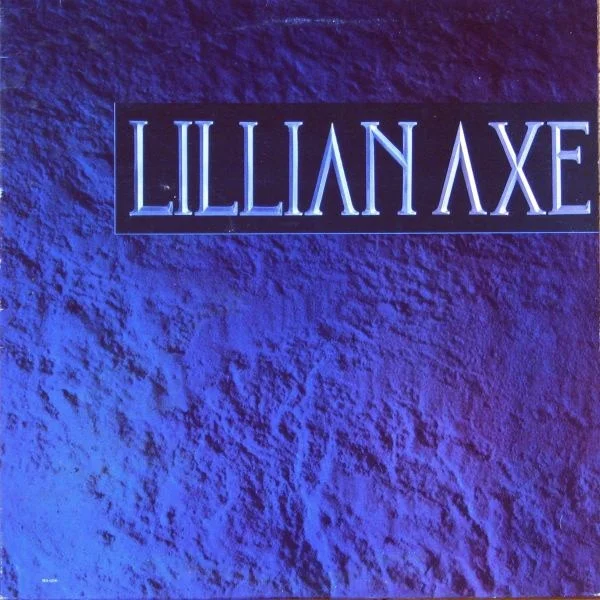
Of all the second-tier hard rock bands of the late 1980s, Lillian Axe came closest to having the industry write their breakthrough story for them. Their manager was the same man who managed Ratt — at that moment one of the biggest hard rock bands in America. Their debut album was produced by Ratt’s guitarist, Robbin Crosby, fresh off Ratt’s multi-platinum run. Their label was MCA, then home to a deep roster of credible rock acts. Warrant’s Jani Lane spent four days in New Orleans considering whether to front the band before deciding he wanted to write his own songs. The introductions were the introductions a band of their tier was supposed to need, and almost no band of their tier ever actually got. And yet, across four albums and five years between 1988 and 1993, Lillian Axe never made it past the lower reaches of the Billboard Heatseekers chart. They were the band the industry kept handing the right tools to, and the audience kept declining to notice.
This is the story of those four albums — the two-album MCA run that was supposed to launch them, the IRS Records pivot that almost worked, and the darker, more ambitious 1993 record that arrived at exactly the moment the cultural ground beneath it disappeared.
Oz, Stiff, and the Singer Who Wasn’t There
The first thing to understand about Lillian Axe is that the band that signed to MCA in 1987 was, in most respects, two different bands stitched together six months before the contract was signed.
Steve Blaze, born Stephen Nunenmacher, had been leading hard rock bands in New Orleans since the early 1980s. The band that immediately preceded Lillian Axe was called Oz, and by 1986 it had developed enough of a local following that it was beginning to attract industry attention. The Oz lineup featured Blaze on lead guitar and the songwriting credits, with bassist Michael “Maxx” Darby and a rotating cast of other musicians. The problem, by Blaze’s own later account in a 2013 Louder Sound interview, was substance abuse: “Quite honestly the way things were going at the time, some of the things had gotten so out of hand that I thought that we wouldn’t wind up lasting much longer in that capacity.”
The breakthrough opportunity arrived in mid-1987, through a chain of introductions that started with Lillian Axe opening for Ratt on a Louisiana tour stop. Ratt’s manager, Marshall Berle — nephew of Milton Berle and one of the more well-connected figures in 1980s hard rock management — saw the band and was impressed enough to start working the phones. The deal he brokered was specific in a way that mattered: MCA Records wanted to sign Steve Blaze, the songwriter and band leader, not necessarily the band around him. The label’s offer was conditional. If Blaze wanted to take the deal, he was going to need to rebuild the lineup around a more stable group of musicians.
There was a further twist. Berle’s first suggestion for a new lead singer was Jani Lane, then in the early stages of his own band Warrant’s negotiations with Columbia Records. “He said Robbin Crosby from Ratt loved the band and wanted to produce our record,” Blaze recalled to Louder Sound. “So MCA sent a bunch of the top brass down to see us play and all was cool, or so I thought. Then the phone rings again: ‘Hey Steve, we love what you do, your songs are amazing, but we want to re-form the band around you.’”
Lane flew to New Orleans and spent four days with Blaze — attending Lillian Axe shows, talking through what a collaboration might look like, getting a sense of the local scene. The two songwriters apparently got along well, but the meeting clarified what was probably already obvious: both men were the leaders of their respective bands, and neither was going to be comfortable taking direction from the other. Lane returned to Los Angeles. Warrant signed with Columbia. Dirty Rotten Filthy Stinking Rich would be released in early 1989 and go double platinum within months. The path Lane chose worked out for him, at least for a while.
The path Blaze chose involved a different singer. The new lineup that emerged in August 1987 brought in three members of another regional band called Stiff — vocalist Ron Taylor, rhythm guitarist Jon Ster, and bassist Rob Stratton — to join Blaze and his existing drummer Danny King. Stiff had been criss-crossing the country trying to land their own deal; when Blaze called Taylor with the MCA opportunity, Taylor agreed to come, but only on the condition that Ster and Stratton came with him. Blaze made it happen. The classic Lillian Axe lineup — Taylor, Blaze, Ster, Stratton, King — signed with MCA one month later.
It’s worth pausing on what the band was, structurally, at this point. Three of its five members had been a different band a few weeks earlier. The drummer had been with Blaze since the Oz days. The lead guitarist and songwriter had been writing for what was essentially a different group, with a different singer, in his head. The cohesion the band would eventually develop on record was not the cohesion of a band that had grown up playing together; it was the cohesion of a band that had been assembled, quickly, around a record deal that was already in place.
Lillian Axe (1988): The Debut That Sounded Like Dokken
The first album, released June 25, 1988, was recorded at Cherokee Studios in Los Angeles with Robbin Crosby producing. Crosby had never produced a record before; the assignment was as much a favor to Berle and a vote of confidence in his own ear as it was a commercial decision. By Blaze’s account, the sessions were collegial and productive: “We immediately got with Robbin and went into pre-production. We were all new to each other and producing was new to Robbin. It was a great deal of fun and a huge learning experience. We worked hard and knocked it out of the park.”
What emerged was a polished, hook-driven hard rock record that critics have spent thirty-five years describing through other bands’ sounds. The Heavy Metal Addiction review of the 2007 reissue lists the comparison set this way: “Dokken, Winger, Black ‘N Blue, and Hurricane.” The same review goes further, noting that the opening riff of “Misery Loves Company” bears an unmistakable resemblance to the main riff from Dokken’s “Breaking the Chains.” Other contemporary reviewers reached for similar comparisons. What is striking, in retrospect, is how few critics reached for Ratt as a comparison — despite the band’s clear Ratt-orbit pedigree, the actual sonic fingerprint of Lillian Axe owed more to Dokken’s brand of melodic hard rock than to Ratt’s grittier Sunset Strip sound.
This is one of the small ironies of the Lillian Axe story. The industry positioning was as a Ratt protégé project: Ratt’s manager, Ratt’s guitarist as producer, Ratt-adjacent press coverage. The actual music was something different. Ron Taylor’s vocal approach — clean, soaring, controlled — was closer to George Lynch-era Dokken’s Don Dokken than to Stephen Pearcy’s signature snarl. Blaze’s guitar playing emphasized clean melodic lines and harmonized leads rather than Crosby and Warren DeMartini’s blues-based riff approach. The Lillian Axe debut sounds like what it is: a melodic hard rock record made by a band whose strongest instincts were closer to the cleaner end of the genre than to its grittier end, produced by a Ratt guitarist whose own band sounded only loosely like the band he was producing.
The record’s strongest tracks demonstrate this independence. “Dream of a Lifetime,” the lead single and the song that did most of the album’s work on MTV, is built on a stacked-harmony chorus that is closer to Winger’s territory than to Ratt’s. “Picture Perfect,” with its tight verse-chorus construction and clean lead lines, is the kind of song Dokken would have been proud to record on Tooth and Nail. “Vision in the Night” has a more atmospheric quality, with extended instrumental passages that hint at the more progressive direction the band would eventually take. “Waiting in the Dark,” the closing ballad, demonstrates Taylor’s range over a sparser arrangement than the rest of the album allows.
What the debut lacked, and what most contemporary reviewers eventually circled around to, was a distinctive identity. The album was good. The songs were professional. The performances were tight. But there was nothing on the record that announced Lillian Axe as a band rather than as a configuration of musicians playing late-1980s melodic hard rock competently. Compare the debut to Skid Row’s debut, released the following year — Skid Row (1989) had Sebastian Bach’s signature voice, Snake and Scotti’s distinctive playing, and a tougher New Jersey edge that immediately marked the band as different from its competitors. Lillian Axe had no equivalent identifier. The band sounded like ten or fifteen other bands of its tier, and the marketplace responded accordingly.
The commercial outcome was modest. “Dream of a Lifetime” got MTV play and modest radio attention. The band toured opening for Krokus, Stryper, and Lita Ford, and headlined small venues throughout the southern circuit. But the album did not chart on the Billboard 200, and MCA’s commitment to working the record was, by Blaze’s later account, undermined by a “regime change” at the label that put the people who had originally signed the band into less powerful positions.
Love + War (1989): The Album That Should Have Worked
The second album arrived faster than most second albums did, which was itself a sign that MCA had not given up on the band but had also not been satisfied with the first record’s performance. Love + War, released July 20, 1989, was tracked in November 1988 — barely five months after the debut had come out — with a new producer, the British engineer-turned-producer Tony Platt. Platt’s resume was significantly more impressive than Crosby’s: AC/DC, Cheap Trick, Foreigner, Krokus. The choice signaled a clear commercial intent. MCA wanted a more polished, more radio-friendly record.
Love + War delivered exactly that. The hooks were sharper, the production was glossier, and the songs were structured for maximum radio impact. “Show a Little Love,” the lead single, became the band’s biggest MTV moment to date. “She Likes It on Top” pushed the band’s sound into more sexually-explicit territory in a way that aligned with the late-1980s glam metal commercial template. “Diana,” “Down on You,” and “The World Stopped Turning” each had clear single potential. The album opened with “All’s Fair in Love + War,” a six-minute mini-epic that demonstrated the band’s growing capacity for longer-form songwriting.
Crucially, the band also included a cover — a version of “My Number” by the NWOBHM-era British band Girl, originally recorded for their 1980 album Sheer Greed. The cover choice was deliberate and revealing. Stiff, the band that had given Lillian Axe three of its members, had played “My Number” in their live sets; including the song on Love + War was both a nod to Taylor’s pre-Lillian Axe history and a signal that the band was reaching beyond the standard American glam metal influence set toward something more cosmopolitan.
Ron Taylor, looking back on the album years later, called it his favorite Lillian Axe record. “I really liked the styles of ‘Ghost of Winter’ and ‘World Stopped Turning,’ that darker kinda stuff,” he told the 80’s Glam Metalcast in 2023. “I think we were struggling a bit because Stiff came in as a glam type band. More glam than Lillian ever was. I feel like we stuck our grubby little fingers in there a bit with songs like ‘Down On You’ and ‘She Liked It On Top.’” The phrasing is interesting: Taylor describes the glammier tracks as the influence the Stiff contingent brought to Lillian Axe, suggesting that Blaze’s instincts as a songwriter were already pulling toward the darker, more progressive direction the band would eventually take on later records.
The reviews, where they appeared, were respectful. Rock Hard gave the album 8/10. The album was later ranked at number 296 on a 2005 list compiled by the same magazine of the 500 greatest rock and metal albums of all time — a retrospective recognition that mattered to fans even if it had no commercial implications at the time. AllMusic’s later assessment treated Love + War as a credible second album that demonstrated genuine growth from the debut.
The commercial outcome was, again, modest. “Show a Little Love” got real MTV play and radio rotation. The band toured more substantial venues. But the album did not chart meaningfully on the Billboard 200, and the gap between the band’s critical reputation and its commercial performance was widening rather than closing.
By 1990, MCA had decided to cut its losses. The label dropped Lillian Axe.
The Interregnum: A Compilation, a Lineup Shuffle, and the IRS Deal
The eighteen months between Love + War’s tour ending and the band’s next album arriving were defined by a slow rebuilding. The band lost bassist Rob Stratton and drummer Danny King during this period; their replacements were Darrin DeLatte on bass and Gene Barnett on drums, both Louisiana-based musicians whose recruitment kept the band’s center of gravity in New Orleans rather than relocating it to Los Angeles.
In April 1991, the band found a new label home: Grand Slamm Records, a subsidiary imprint of IRS Records, which had been founded by Miles Copeland in 1979 and was best known for signing alternative and new wave acts (R.E.M., the Go-Go’s, Squeeze) rather than hard rock bands. IRS’s existing hard rock roster was thin — Black Sabbath had been on the label briefly — and Lillian Axe arrived as part of a small genre experiment. The arrangement was generous enough to let the band release a transitional compilation, Out of the Darkness Into the Light, drawing material from their two MCA records, which IRS distributed as a way to introduce Lillian Axe to a new audience without immediately demanding new product.
The new product was already being written. By late 1991, Blaze had completed the songs for what would become Poetic Justice.
Poetic Justice (1992): The Album That Should Have Been the Breakthrough
Poetic Justice, released January 14, 1992, is the album most Lillian Axe fans now consider the band’s commercial peak — and the one that came closest to delivering the breakthrough that the MCA years had failed to produce. Produced by the Swedish producer Leif Mases (whose credits included Jeff Beck and Black Sabbath), recorded at Sheffield Audio-Video Productions in Maryland and The Terminal in Jackson, Mississippi, the record represented a step up in production sophistication and a clear refinement of the band’s songwriting.
The hit was “True Believer,” a propulsive mid-tempo rock single with a chorus that, by Lillian Axe standards, was a genuine commercial hit. The song reached number 37 with a bullet on the Radio & Records (R&R) charts — the trade publication that tracked rock radio airplay — and the music video for the band’s cover of Badfinger’s “No Matter What” got MTV rotation. The album itself peaked at number 28 on the Billboard Heatseekers chart, which tracked albums that had not yet broken into the main Billboard 200. For a band on a small label, with limited marketing budget, this was a meaningful commercial achievement.
The album’s strengths were Blaze’s strengths intensified. “Innocence,” “Body Double,” “Living in the Grey,” and “Dyin’ to Live” demonstrated more sophisticated songwriting than anything on the MCA records. The arrangements were more layered, the production more textured, the band more confident in its identity. The Badfinger cover was an inspired choice — a recognition that Lillian Axe’s strongest instincts were in melodic, harmony-driven pop-influenced hard rock rather than in the cruder Sunset Strip template their packaging had implied.
The tour that followed was substantial. Lillian Axe spent most of 1992 on the road, criss-crossing the United States and, for the first time, playing European dates in England, Wales, Scotland, France, Belgium, Holland, and Germany. The European reception, in particular, was strong — Germany’s Rock Hard magazine had championed Love + War in 1989, and the German hard rock press maintained an interest in Lillian Axe that the American press never quite matched.
Looking at Poetic Justice in isolation, the record looks like the beginning of a genuine commercial breakthrough. Looking at it in the context of what was happening to American rock radio in 1992, it looks like the last album Lillian Axe was going to be able to make in this style. The same week Poetic Justice was released, Nirvana’s Nevermind was sitting at number one on the Billboard 200, having displaced Michael Jackson’s Dangerous on January 11. The genre Lillian Axe were operating in was being remade in real time. The Heatseekers chart success and the radio bullet on “True Believer” were genuine accomplishments — and also, in retrospect, the last of their kind. The next album would arrive into a fundamentally different marketplace.
Psychoschizophrenia (1993): The Album That Saw the End Coming
By the time Lillian Axe entered Sheffield Audio-Video Productions in the spring of 1993 with Mases returning to produce, the cultural calculation had changed. Nevermind had been on the charts for over a year. Pearl Jam’s Ten had become a permanent fixture. Alice in Chains’ Dirt (September 1992) and Soundgarden’s Badmotorfinger (October 1991) had both established that grunge was not a single-album phenomenon but an entire commercial reorientation of rock radio. The bands that had been Lillian Axe’s commercial peers in 1989 were either pivoting (Warrant’s Dog Eat Dog had been an attempt at exactly this kind of pivot, with similarly muted results) or disappearing.
Lillian Axe chose to pivot. Psychoschizophrenia, released August 9, 1993, is the band’s darkest and most ambitious record — a deliberate move away from the polished melodic hard rock of Poetic Justice toward something heavier, more progressive, more aligned with the cultural moment. Tommy Scott replaced Gene Barnett on drums, but the more significant change was in Blaze’s writing. The songs were longer. The arrangements were denser. The lyrical content moved away from love songs and party anthems toward darker themes — psychological collapse, religious doubt, social commentary. The album’s title was itself a clear signal of the new direction.
The contemporary critical reception, where it appeared, was respectful and confused in roughly equal measure. AllMusic’s later retrospective classified the album as “Heavy Metal, Alternative/Indie Rock” — the kind of dual classification that captured the album’s actual sonic position. One RateYourMusic reviewer, in a comment that captured the album’s defenders, wrote: “Lillian Axe altered their sound for the Psychoschizophrenia album, pushing the hair force sound of the eighties to the side for a more serious collection of cuts. Main man Stevie Blaze penned songs that deviated from the typical rock ‘n’ roll cliches for the 1993 effort, which takes on a darker and sobering edge. The opening track, ‘Crucified’, is a battering anthem that centers around holding your ground and standing tall.”
Another reviewer, working through the band’s catalog years later, was more direct: “I always felt Louisiana’s Lillian Axe one of the better melodic ‘hair bands’ to have emerged during the late ’80s, but believed the group didn’t truly hit its stride, didn’t locate its true musical path or reach its full potential, until its loud-and-driving fourth album came along. On Psychoschizophrenia, Lillian Axe tosses aside the hairspray and the ‘just want to have a party’ attitude and gives its sound/style a major revamp, creating a darker, ‘less immediate’ album, one more progressive, free of the ‘hair-metal’ genre’s worst clichés, and displaying some welcome maturity.”
The standout tracks supported the case. “Crucified,” the opener and lead single, was the heaviest thing Lillian Axe had ever recorded — a grinding mid-tempo riff against lyrics about persecution and resistance. “Moonlight in Your Blood” was the album’s AOR concession, a more melodic track positioned for radio. “Letter to Earth” and “The Needle and Your Pain” demonstrated Blaze’s growing capacity for longer-form, multi-section songwriting. The arrangements throughout incorporated elements that had not appeared on previous Lillian Axe records — heavier guitar tones, more aggressive vocal delivery from Taylor, longer instrumental passages, more deliberate use of dynamics.
The commercial outcome was a disaster. Psychoschizophrenia did not chart on any meaningful Billboard chart. “Crucified” did not get the radio traction “True Believer” had. The album received almost no review coverage from the mainstream American rock press. The European market that had supported Poetic Justice responded somewhat more positively, but European success at this point did not change the fundamental financial reality. IRS Records was not in a position to underwrite a touring campaign substantial enough to build the album’s audience over time, and the touring circuit that had supported melodic hard rock in 1989 had largely disappeared.
What is genuinely strange about Psychoschizophrenia is how well it has aged. Listened to now, the album sounds less like a 1993 capitulation to grunge and more like a band who had been moving in a darker, more progressive direction all along — and who used the cover of the grunge moment to make the record they had been wanting to make. The pivot that hurts most late-1980s hard rock bands when they attempt it (Warrant’s Ultraphobic, Skid Row’s Subhuman Race) is the pivot that feels obviously commercial. Lillian Axe’s pivot doesn’t feel commercial. It feels authored. The songs are not Alice in Chains pastiches; they are Lillian Axe songs, played heavier, with darker concerns, by a band whose lead guitarist and songwriter had clearly grown tired of writing the radio-ready melodic hard rock his first three records had emphasized.
The audience was not interested. The band continued touring through 1994 and into 1995, but the financial math had become untenable. In 1995, Lillian Axe disbanded.
What Lillian Axe Actually Were
Steve Blaze, looking back on the band’s commercial trajectory in his 2013 Louder Sound interview, offered a line that captures the irony better than any critical assessment could: “Grunge was taking off, and yet we were having our two biggest albums. It makes me wonder how well they’d have done had they been out in 1987.”
The observation is precisely correct, and it is the right frame for understanding Lillian Axe’s first four albums. The MCA debut and Love + War were credible, professionally produced melodic hard rock records released into a marketplace that was already saturated with credible, professionally produced melodic hard rock records — and the band did not have the distinctive identity or the major-label promotional commitment to break through that saturation. Poetic Justice and Psychoschizophrenia, released on a smaller label with a less prominent marketing apparatus, were better records than the MCA albums had been — and they arrived at a moment when the audience that should have appreciated them was being told, by every cultural signal the music industry could produce, that hard rock was over.
The band’s industry connections — Marshall Berle, Robbin Crosby, the MCA deal, the Jani Lane near-collaboration — turned out to be both the source of their initial opportunity and a kind of distraction from understanding what kind of band they actually were. Lillian Axe were never really a Ratt-adjacent band, however well-connected to Ratt they happened to be. They were a melodic hard rock band whose strongest instincts pointed toward something more like progressive Dokken — clean melodic lines, harmony-driven choruses, more sophisticated arrangements than the genre’s mass-market template called for. The Robbin Crosby production credit on the debut was the kind of credential that opened doors in 1987 and 1988. It was not the credential that would help anyone understand what the band actually sounded like.
The deeper problem was that Lillian Axe’s identity, as it eventually crystallized on Psychoschizophrenia, was an identity that the marketplace had no place for in 1993. The progressive, darker, more ambitious direction the band took on the fourth album was the direction a band with Blaze’s instincts would have taken naturally — and possibly the direction that would have given the band the distinctive identity it had previously lacked. But by 1993, the audience that would have appreciated that direction had already left the genre entirely, and the audience that remained wanted the melodic hard rock of the band’s earlier records, not a more sophisticated and serious version of it.
There is a counterfactual version of the Lillian Axe story in which a debut album with the Psychoschizophrenia aesthetic, released in 1987 instead of 1988, becomes a foundational record of the late 1980s — a band that helps define what late-period hard rock could sound like before grunge displaced the genre entirely. There is another counterfactual in which a band with Blaze’s songwriting instincts is given the kind of major-label promotional commitment that turned bands like Skid Row into household names, and Lillian Axe’s distinctive melodic hard rock becomes a defining sound of the era. Neither counterfactual happened. What happened instead was four albums, gradually improving in ambition and craft, released into a marketplace that was less interested in each successive release than in the one before.
Lillian Axe disbanded in 1995. Steve Blaze would reactivate the project in 1999 and has continued to release records under the Lillian Axe name for the past quarter-century — most recently From Womb to Tomb in 2022 — with a constantly shifting lineup that has included multiple lead vocalists since Ron Taylor’s eventual departure. The post-1993 catalog is genuinely substantial, and includes records (2007’s Waters Rising, 2009’s Sad Day on Planet Earth) that some critics rank higher than the original MCA debut. None of them have sold meaningfully.
The first four albums remain the band’s most discussed and most accessible work, partly because of the industry-adjacent stories surrounding them and partly because they document a specific kind of late-1980s commercial near-miss that the genre’s standard narrative has not quite figured out how to accommodate. Lillian Axe were not big enough to become a cautionary tale and not obscure enough to become a cult discovery. They were, instead, what most bands actually are: a group of working musicians who made a real body of work that the marketplace, for reasons mostly outside their control, declined to elevate. The four albums are still there. They are better than their commercial trajectory suggests. They reward listening. They are not the records that defined their era — but they are records the era should have made room for, and didn’t.