Long Plays
Commercial Suicide: Def Leppard, Slang, and the Album That Refused to Be Hysteria
In May 1996, the band that had built one of the most commercially perfect rock albums of the 1980s deliberately stopped making music that sounded like that album. They wrote in a Spanish house. They produced themselves without Mutt Lange for the first time in sixteen years. They cited Soundgarden's Superunknown as inspiration. They jokingly called the album Commercial Suicide while they were making it. They were not, in retrospect, joking. A long play on the album that broke Def Leppard's platinum streak and which the band continues to defend as one of the most important records they ever made.
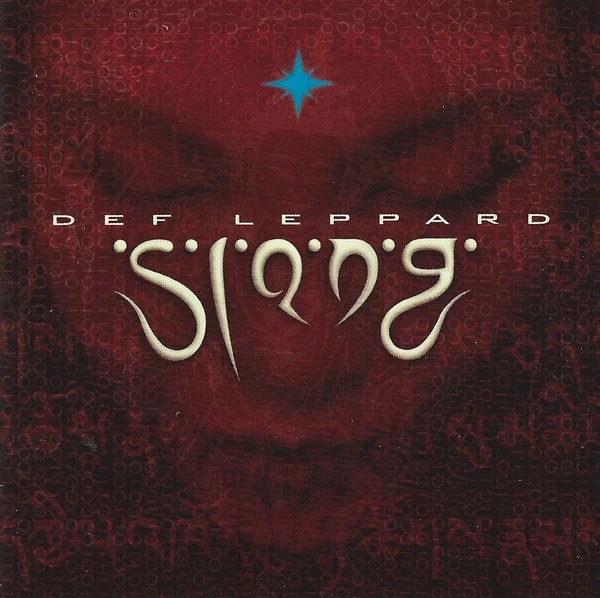
The question of what Def Leppard were trying to do with Slang is, in retrospect, easier to answer than what they thought they could expect from it. The first question has clear documentary evidence — interviews from 1996 onward, Joe Elliott’s retrospective reflections, the liner notes the band wrote for the 2014 reissue, Vivian Campbell’s repeated references to Soundgarden’s Superunknown as the sonic touchstone. The second is harder, because the commercial calculation has always sat in tension with what the band said they wanted the record to be. The working title during the Marbella sessions, by Elliott’s own account, was “Commercial Suicide.” The band was being self-deprecating about the risk they were taking. They were also, in a more honest reading, being absolutely accurate about what they understood themselves to be doing.
This is the structural fact the standard “they tried grunge and it didn’t work” framing entirely misses. Def Leppard in 1994 and 1995 were not attempting to “go grunge” the way the Mötley Crüe Corabi album or the Warrant Ultraphobic sessions had attempted similar pivots. The band understood, with unusual clarity for musicians at their tier, that chasing the Nevermind moment would produce the worst possible outcome — the kind of cynical genre-imitation listeners detect immediately and punish. What they were trying to do was more ambitious: to make the kind of record that being Def Leppard in 1995, after the deaths and the divorces and the exhaustion of their peak years, actually warranted. Slang is the album where they tried to stop being the band that had made Hysteria. The attempt was substantially successful in creative terms; the commercial consequences were severe enough that the band has, in retrospect, partially recanted the decision while continuing to insist the album is genuinely substantial work. Both positions are defensible. It is both the record they needed to make and the record that demonstrated, in the most direct commercial terms, that the audience that had carried them through the peak years was not prepared to follow them into whatever came next.
The Setup: What Def Leppard Were Before Slang
The four albums Def Leppard made with Robert John “Mutt” Lange between 1981 and 1992 — High ‘n’ Dry (1981), Pyromania (1983), Hysteria (1987), and Adrenalize (1992, Lange executive-producing with Mike Shipley) — constituted one of the most commercially successful band-producer partnerships in mainstream rock. Pyromania sold over ten million copies in the United States, Hysteria over twelve, and the two together produced thirteen Top 10 American singles. What’s worth being precise about is how that was built: Lange’s method was an unusually meticulous layering — instruments recorded one at a time, each note separately, vocal stacks assembled across dozens of takes, the entire architecture built piece by piece over recording periods that stretched across years. Hysteria alone took three years and reportedly over four million dollars, and produced a record that sounded like no other of its era — a Def Leppard sonic identity the marketplace recognized as a discrete genre unto itself.
The cost was less visible from outside. By the time the band began thinking about an Adrenalize follow-up in 1993 and 1994, the assumption that any Def Leppard album required years of Lange-led layering had become structurally exhausting. Steve Clark, the band’s lead guitarist and a primary songwriter, had died in January 1991 of alcohol-related causes, having collapsed during the Adrenalize sessions; the band finished that album without him, Phil Collen recording most of the guitar, before recruiting Vivian Campbell for the tour and beyond. The Adrenalize tour ran 244 shows across eighteen months, and by the time the band came off the road in late 1993, the cumulative weight — touring through grief, executing Lange’s template, watching the cultural moment shift decisively away from the music they had spent a decade perfecting — was enough that they could not continue in the same register.
There were also personal storms the commercial press of the era did not fully register. Elliott was navigating a divorce; so was Collen. Rick Savage had been diagnosed with Bell’s Palsy, the facial paralysis that had affected his performing, and his father had recently died. Rick Allen — who had lost his left arm in a 1984 car accident and continued with a specially designed kit — was finally working through the delayed trauma of that accident a decade later, and had been arrested for spousal abuse in the period leading into the sessions; Elliott had also been arrested for assault. Campbell was still finding his place in a band whose dynamics had been built around members who had played together since their teens in late-1970s Sheffield. The configuration that arrived at the Slang sessions in late 1994 was, in every personal dimension, no longer the band that had made Hysteria — and the album the Hysteria-era band would have wanted to make was not the album the post-Adrenalize band could honestly make. Elliott would later describe Slang as the album that “brought life into the equation,” the substantive difference between material written from a position of commercial momentum and relative stability and material written by musicians whose actual lives no longer permitted the upbeat anthemic register the peak had been built within.
The Decision to Move On From Lange
Recording Slang without Lange was the central creative decision the album turned on. He had not been the strict producer on Adrenalize — that was credited to the band and Mike Shipley with Lange as executive producer — but his structural shadow over the recording approach had remained. By mid-1994 the band had concluded that the Lange-influenced method was incompatible with the album they wanted to make, and the decision to record without him was simultaneously a creative liberation and a commercial risk they understood clearly. The producer they brought in, Pete Woodroffe — a substantially less established figure, chosen for creative compatibility rather than commercial track record — would co-produce, engineer, and mix. Putting a lesser-known producer in the chair Lange had occupied for sixteen years was itself the signal: they were not trying to make another Hysteria with a different producer, but something else entirely, and the absence of Lange’s template was central to making that possible.
The recording took place in two phases across roughly fifteen months. The initial sessions began in late 1994 at a rented house in Marbella, Spain — recording outside a conventional studio a deliberate departure in itself. The band lived together, wrote together, and recorded together as a unit in ways the layered method had not required; as one retrospective put it, this was “no more Lange style of one instrument, one note at a time,” the band playing through collaboratively developed arrangements in the same room, producing a looser, more organic foundation than they had ever worked from. The Marbella sessions ran through most of 1995 before the band relocated to Bow Lane Studios in Dublin, near Elliott’s home in Ireland, for the final phase in January and February 1996, with additional recording at Phil’s Sweat Shop in California and mixing at The Enterprise in Burbank. The total timeline of around fifteen months was a sharp compression of the band’s Lange-era norms — and the compression was partly deliberate, on the theory that the protracted earlier timelines had constrained their options, and a faster process would retain more of the immediacy of the actual creative experience.
The Soundgarden Influence
The specific reference point the band kept returning to was Soundgarden’s 1994 Superunknown, and particularly “Black Hole Sun.” Campbell has been direct: “We were listening to Nirvana and Pearl Jam just like everybody else, and especially to Soundgarden — the Superunknown record. That was the record that we referenced in terms of the sonics and the mood of it… it gave us the chance to grow up a little.” The choice is revealing. By 1995 the conversation about alternative rock had moved past the original Nevermind moment, and Superunknown represented a more sophisticated, harmonically worked-out version of the vocabulary than the original Seattle bands had typically deployed — which made it the alternative-rock record that most accommodated a band like Def Leppard’s existing capabilities. They could not realistically make a Nirvana record; they could plausibly make a Superunknown-influenced one, because that album had been the kind of dense, layered, harmonically sophisticated work that bands with substantial production experience were equipped to engage with. Elliott put it more bluntly: “We couldn’t just go out there and make an album sounding like Nirvana. That’d be ridiculous. That would have been like cashing in, bandwagon-style. But what we did do is just strip back a lot of the harmony stuff and just made a much more lyrically honest record.” The calibration was precise — not to imitate the dominant sound but to extract its permissions: to make a less polished record, write more directly, abandon the upbeat-anthemic register, without losing what had made Def Leppard a substantial creative project to begin with.
The Album
Slang was released on May 13, 1996 — eleven tracks, forty-six minutes — and the track list alone signaled the intent. “Truth?,” opening with a question mark, established the interrogative register from the first track; “Turn to Dust” incorporated Indian instrumentation no previous Def Leppard recording had used; the title track deployed funk-influenced rhythms closer to the Red Hot Chili Peppers than to anything in the catalog; “Work It Out,” written entirely by Vivian Campbell — his first sole Def Leppard credit — featured an Elliott vocal he would compare to Iggy Pop.
Heard in 2026, the album is a band succeeding at nearly every specific goal it set itself. “Truth?” establishes the harder, more direct identity immediately — Collen’s guitar more aggressive and less layered, Rick Allen’s drumming (now a more acoustic-leaning kit rather than the triggered electronic sounds of the peak) with more dynamic range, Elliott’s vocal in a lower, more conversational register than the soaring upper-register signature. It is recognizably Def Leppard and recognizably not the band that made Hysteria, and that dual identity holds across the running time. “Turn to Dust” is the most surprising track and the one that pushes furthest — dhol by AV Singh, intro and outro sarangi samples from recordings by Ram Narayan and Shyam Vatish, strings conducted by Craig Pruess — sitting closer to George Harrison’s late-1960s Indian experiments than to anything in the band’s prior work, and largely succeeding at the reach. The title track is the funk experiment, the Chili Peppers-adjacent territory punctuated by Spanish voices (Gloria Flores and Oscar Contreras counting “Uno, Dos, Tres, Cuatro!”); it should not work as well as it does, and it reached number 17 on the UK Singles Chart.
“All I Want Is Everything” is the emotional centerpiece, a slower, more meditative ballad than the catalog had occupied, its interrogative lyric (“Why don’t you tell me?”) darker and more vulnerable than the Hysteria-era ballads allowed — “Love Bites” had been about possessive intensity; this is more complicated territory. “Work It Out” is the most revealing track of what the band was demonstrating: Elliott’s Iggy Pop-influenced delivery (in Kerrang!: “If you played ‘Work It Out’ to someone without telling them who it was, they’d never guess, because I’m singing like Iggy Pop”), an alternative-leaning arrangement, and a reflective lyric (“We show the world a brand new face / It’s taken us all this time”) — in every measure the kind of song the band would not have written during the peak, and proof that the direction was a genuine artistic shift rather than a marketing calculation. “Breathe a Sigh” and “Blood Runs Cold” work the more conventional ballad register; “Deliver Me” and “Gift of Flesh” sit closer to the Adrenalize-era hard rock; “Where Does Love Go When It Dies” and “Pearl of Euphoria” round out the new vocabulary. That variety was both a strength and a structural problem: the album works as a coherent emotional statement, but its range meant no single radio format had a clear commercial reason to commit. Hard rock stations could play “Truth?” and “Gift of Flesh” but had no use for “Turn to Dust”; alternative stations could engage “Work It Out” but not the ballads.
The Commercial Reception
Slang peaked at number 5 on the UK Albums Chart and number 14 on the Billboard 200. The UK position was respectable — Def Leppard remained a substantial concern at home regardless of the broader shift — but the American figure was far below the band’s norms. Pyromania had peaked at number 2, Hysteria at number 1 (with 96 weeks on the chart), Adrenalize debuting at number 1 in 1992; number 14 was the first time a Def Leppard studio album had missed the Billboard Top 10 since 1981’s High ‘n’ Dry (number 38). It was certified gold for sales over 500,000 but never reached platinum — the first Def Leppard studio album since 1980’s On Through the Night to fail platinum, where Pyromania, Hysteria, Adrenalize, and the 1995 compilation Vault had all crossed it substantially. The album sold roughly a tenth of what Hysteria had. The singles were similarly modest: “Slang” reached number 17 in the UK in April 1996; “Work It Out,” the US first single, reached number 31 on Mainstream Rock without a Hot 100 entry; “All I Want Is Everything” followed in September; “Breathe a Sigh,” in November, peaked at number 43 in the UK with no video. The band’s relationship with mainstream rock radio had structurally changed during the three-year gap, and Slang was not the vehicle to restore it.
The Critical Reception
The 1996 critical reception was substantially better than the commercial performance. Q gave the album a four-star rave and later named it among its Top 10 albums of the year, David Quantick’s review capturing the mood of the more sophisticated press: “The whole thing is potty, but in a supple and melodic way — even the ballads lack the usual Def Leppard sense of having been written for lead-lined hippos to sing. Slang is the sound of a band doing something fast and interesting, at the exact point in their lives when most bands are taking up golf and inhaling the contents of aquariums in country manors.” The American reception was more uneven — some reviews engaged seriously with the ambition, others applied the default “veteran band tries grunge and fails” posture, a position Sputnik Music’s later retrospective captured: “in progressing outside of their comfort zone, their limitations have become a little too apparent.” Not entirely wrong about the coherence problems the variety created, but missing what the album was actually doing. The retrospective verdict, particularly since the 2014 deluxe edition, has been markedly warmer, with multiple reassessments engaging the record on its creative terms; The Lep Report’s was direct: “Many ‘casual’ Def Leppard fans fled around the time of Slang*, or simply didn’t give the album a fair chance. They missed out on some excellent music.”*
The Tour and the Aftermath
The Slang World Tour ran through 1996 and into 1997 at substantially smaller capacities — theatres and smaller arenas rather than the multi-night stadium runs of the previous cycles — with the UK and European audiences engaging the new material reasonably enthusiastically and the American audiences more conservative, many of the casual peak-era fans having simply lost interest. Elliott’s stage presentation drew its own attention; The Lep Report described “biker shorts and a dead mouse/skull t-shirt, capped off with a beret and what looked to be a bathrobe” — a deliberate departure from the arena-rock aesthetic that also alienated part of the audience, consistent with both the creative decision the album represented and its commercial consequences. By late 1996 the band had begun discussing what came next, and the decision they reached — to bring Mutt Lange back for at least some involvement, aim for a more accessible direction, and produce Euphoria in 1999 as a deliberate course correction toward the Hysteria template — was, in retrospect, their acknowledgment that the Slang experiment carried consequences they were not prepared to keep absorbing. Euphoria was more successful commercially and substantially less interesting creatively. Choosing the commercial register over the creative one was the choice bands at their tier almost always made in this period; it was defensible, and it is also what made Slang the specific artifact it became.
The 2014 Deluxe Edition
What demonstrates that the band did not write the album off, despite the commercial failure, is the 2014 deluxe reissue. Released February 11, 2014 on Bludgeon Riffola/Mailboat Records — the band’s own label, after they had finally extracted themselves from long-running disputes with Mercury — it paired the eleven remastered album tracks with a second disc of eighteen bonus tracks (twenty-six on the iTunes edition): demos, alternate versions, first-draft rough mixes, and four previously unreleased originals from the sessions, with a 26-page booklet, 51 rare Ross Halfin photographs, and extensive liner notes by Elliott. Bands typically reserve that level of archival investment for their Hysteria-tier releases, not their Slang-tier ones; that Def Leppard gave Slang the full treatment signaled what they thought of it, framing it in their own communications as an “overlooked release” deserving the care their commercial-peak catalog had received — a marketing position and a substantive critical claim at once. The bonus material confirmed what the original release had partly obscured: the album was more creatively coherent than its reception suggested, and the unreleased tracks documented the breadth of the Marbella experimentation, including songs left off because they did not fit the eventual eleven-track sequence rather than because they were inferior. (Two — “Burnout” and “Worlds Collide” — had surfaced earlier as B-sides to the Euphoria singles in 1999.)
What the Album Actually Was
After Slang’s underperformance, the band returned to the template it had departed from. Euphoria (1999) was a deliberate reset, and the subsequent catalog — X (2002), the covers album Yeah! (2006), Songs from the Sparkle Lounge (2008), the self-titled Def Leppard (2015), Diamond Star Halos (2022) — has operated largely within the commercial vocabulary the peak years established, with only periodic gestures toward the territory Slang explored. Nothing since has departed from the established sound as far. Slang exists as the discrete experiment in the catalog; everything before and after operated under different conditions.
That is the reframe the standard narrative misses, and it matters because the attempt is one that working musicians at their tier almost never make. It succeeded creatively — the album is a coherent and accomplished piece of mid-1990s rock by a band whose actual musicianship and songwriting was greater than the Hysteria template had been designed to demonstrate — and it failed commercially in ways that constrained the band’s later options. That combination of creative success and commercial failure is the specific category Slang occupies, the one bands of comparable tier almost always avoid because the consequences are too severe to absorb. The “commercial suicide” the band joked about was never the album they made; it was the decision to make it at all — knowing the likely consequences, knowing what the safe path would have provided, knowing the Hysteria audience would not follow. They made the choice anyway, and the working title turned out to be exactly accurate. Both registers — the real commercial cost, the real creative achievement — continue to operate three decades later, in the assessment of an album the discography places between Adrenalize and Euphoria and that essentially nothing else in the catalog corresponds to.
The cover does not feature the band’s iconic pyrite-font logo — the only Def Leppard studio album that doesn’t. The omission was deliberate: the band was, briefly, attempting to be a different band than the one that had earned the logo. They returned to it for the next album and have used it on every one since. Slang’s cover, without the logo, is the visual record of the one period when the band was something other than what it had been before and would be after — and the album is the audible record of the same brief stretch. The album Def Leppard made when they were temporarily not Def Leppard is the one they continue, three decades on, to defend as essential to understanding what they actually are.